
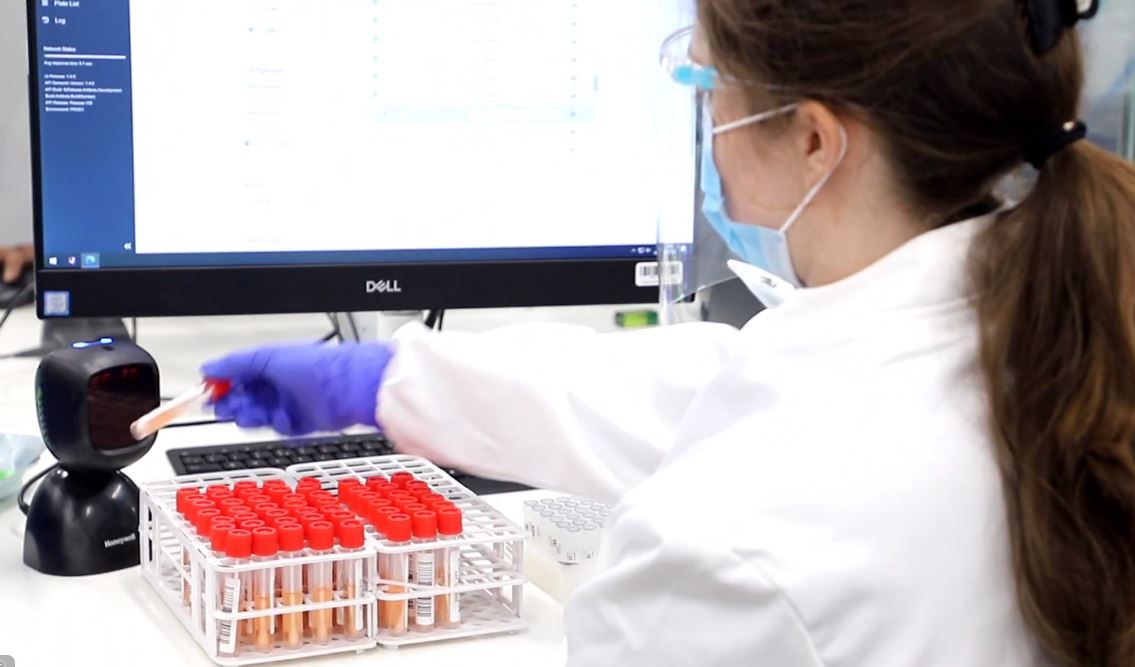

There is a specific type of ASX stock that consistently appears in the portfolios of long-term investors but doesn’t produce much noise, such as viral earnings calls or breathless analyst upgrades making the rounds on social media. That type of business is Sonic Healthcare. Having been listed since April 1987, it has quietly grown to become one of the biggest pathology companies in the world, with operations in North America, Europe, Australia, and New Zealand. Additionally, as of September 2026, its share price is currently trading significantly below its previous level, which tends to pique the interest of patient investors.
The share price of Sonic Healthcare is currently down about 13.4% from the beginning of the year, at 19.62 AUD. By all accounts, that decline is not catastrophic, but it is sufficient to move the stock significantly closer to its 52-week low of 18.26 than to its high of 24.27. For comparison, the overall S&P/ASX 200 is only marginally up so far this year, indicating that SHL has underperformed the index in 2026—not significantly, but noticeably. When dividends are taken into account, year-to-date returns stand at 8.61 percent, which presents a marginally more optimistic picture than the raw price movement indicates.
It is worthwhile to wait for the dividend. In comparison to where the stock is trading, Sonic Healthcare is generating a sizable income stream at a forward yield of about 5.5%. The quarterly dividend amount is currently 27 cents per share, and the ex-dividend date was earlier this month. A yield above 5% from a healthcare company with international operations is something that income-focused investors, particularly those who are watching bank deposit rates remain stubbornly below what they were a few years ago, don’t quickly discount. This income attraction may be one of the factors preventing SHL from declining any further.
It becomes truly interesting when you look at the valuation picture. Sonic Healthcare’s price-to-sales ratio is currently at about 1.07 times, which is lower than its five-year average of about 1.94 times. That difference is noteworthy. It doesn’t necessarily imply that the stock is inexpensive in any straightforward sense, but it does imply that the market is valuing this company significantly less than it has in the past.
Over the previous 12 months, revenue was approximately 10.87 billion AUD, and net income attributable to shareholders was roughly 608 million AUD. Although the underlying business is still making real profits, the profit margin of 5.6% is lower than it was during the COVID testing boom years, when pathology volumes were exceptional.
The profit trajectory is the more intricate aspect of the SHL narrative. The company reported a profit of about 1.3 billion Australian dollars three years ago. It was 511 million AUD in the previous fiscal year. The unwinding of testing revenues from the pandemic period, which momentarily inflated Sonic’s results, is reflected in that significant compression. From 2020 through the majority of 2022, the company processed massive amounts of COVID PCR tests across its global lab network; those revenues are now nonexistent. The company you are currently looking at is more in line with the normalized earnings baseline; it is still a very respectable company, but it is not the same as the one that investors valued in 2021 and 2022.

Some analysts believe that the market has been overcorrecting in the opposite direction and has been slow to fully price in the normalization. Analysts covering SHL have set an average 12-month price target of 22.46 AUD, with the highest estimate being 27.50 AUD. Although analyst consensus targets are helpful as a directional signal rather than a destination, they are never a guaranty of anything. This suggests significant upside from current levels. For a multinational healthcare company with Sonic’s size and market position, the current P/E ratio of roughly 15.95 times trailing earnings is not costly.
It is noteworthy that the net debt is approximately 3.87 billion AUD. Depending on the metric, the company’s debt-to-equity ratio ranges from roughly 55.9 to 68.76 percent, indicating significant leverage. This indicates that the company has less flexibility than a net-cash company would have and adds some sensitivity to the direction of interest rates, but it’s not concerning for a company of this size and earnings consistency. A modest rather than impressive return on equity of 6.8 to 7.5 percent indicates that the company isn’t currently compounding shareholder value at a particularly aggressive pace.
When looking at Sonic Healthcare’s stock over this time, it appears to be a company in transition rather than one that is having problems. The fundamental services—imaging, pathology, laboratory medicine, and general practice medicine in several nations—remain intact and in high demand. Diagnostic testing volumes are consistently driven by aging populations in its major markets in Australia, Germany, the United States, and the United Kingdom. There will always be a structural tailwind. Whether the SHL share price is fully pricing in that long-term context or if it is still obscured by how favorable the numbers appeared during the pandemic years remains to be seen.
