

Amazon (NASDAQ: AMZN) plans to invest roughly $3bn to expand its quick-commerce business in India by 2030, according to two sources cited by Reuters. The retailer would split the spending, putting in $1bn by the end of 2027 and a further $2bn by 2030.
Amazon declined to comment on the investment figures when approached by Reuters, and there is no confirmation of the numbers in any public filing. The plan, as described, remains prospective rather than a signed commitment.
The Amazon quick-commerce investment and what it would fund
The bulk of the money would go toward expanding Amazon Now, the company’s rapid-delivery service, according to the Reuters sourcing. Amazon is targeting around 1,300 Amazon Now stores by April 2027, up from roughly 750 today, the report said.
Spending would also go on tightening inventory management and building out AI-driven demand forecasting, the sources told Reuters. Amazon’s quick-commerce arm has crossed $1bn in annualised gross sales over the past three months, which the company has described as its fastest-growing e-commerce business in India’s history, Reuters reported.
A late entrant chasing a lead
The scale of the catch-up is the more telling number. Amazon holds just 6.2% of India’s quick-commerce market, according to the Reuters sourcing, while Blinkit, Swiggy Instamart and Zepto between them dominate the rest. Blinkit alone, owned by Eternal (formerly Zomato), controls roughly 46-50% of the market, according to ClickPost data drawn from Reuters-sourced figures.
India’s quick-commerce sector is valued at $19bn and is projected to more than double to $41bn by 2030, according to Datum Intelligence figures cited by Finimize. That growth trajectory explains why Amazon is prepared to commit fresh capital to a segment it has so far struggled to crack, even as rivals with years of head start keep expanding their own warehouse networks.
India remains a strategic priority for Amazon beyond quick commerce. The company is simultaneously expanding data-centre, cloud and e-commerce operations there, even as it navigates the country’s tight foreign e-commerce rules and a regulatory case dating back to 2024, Reuters reported.
No filing trail yet
Nothing in Amazon’s disclosures to the US Securities and Exchange Commission references an India quick-commerce capital commitment of this size. There is no 8-K or discrete filing tied to the figures reported by Reuters, and the numbers stem entirely from sources described as familiar with the plan rather than from company statements.
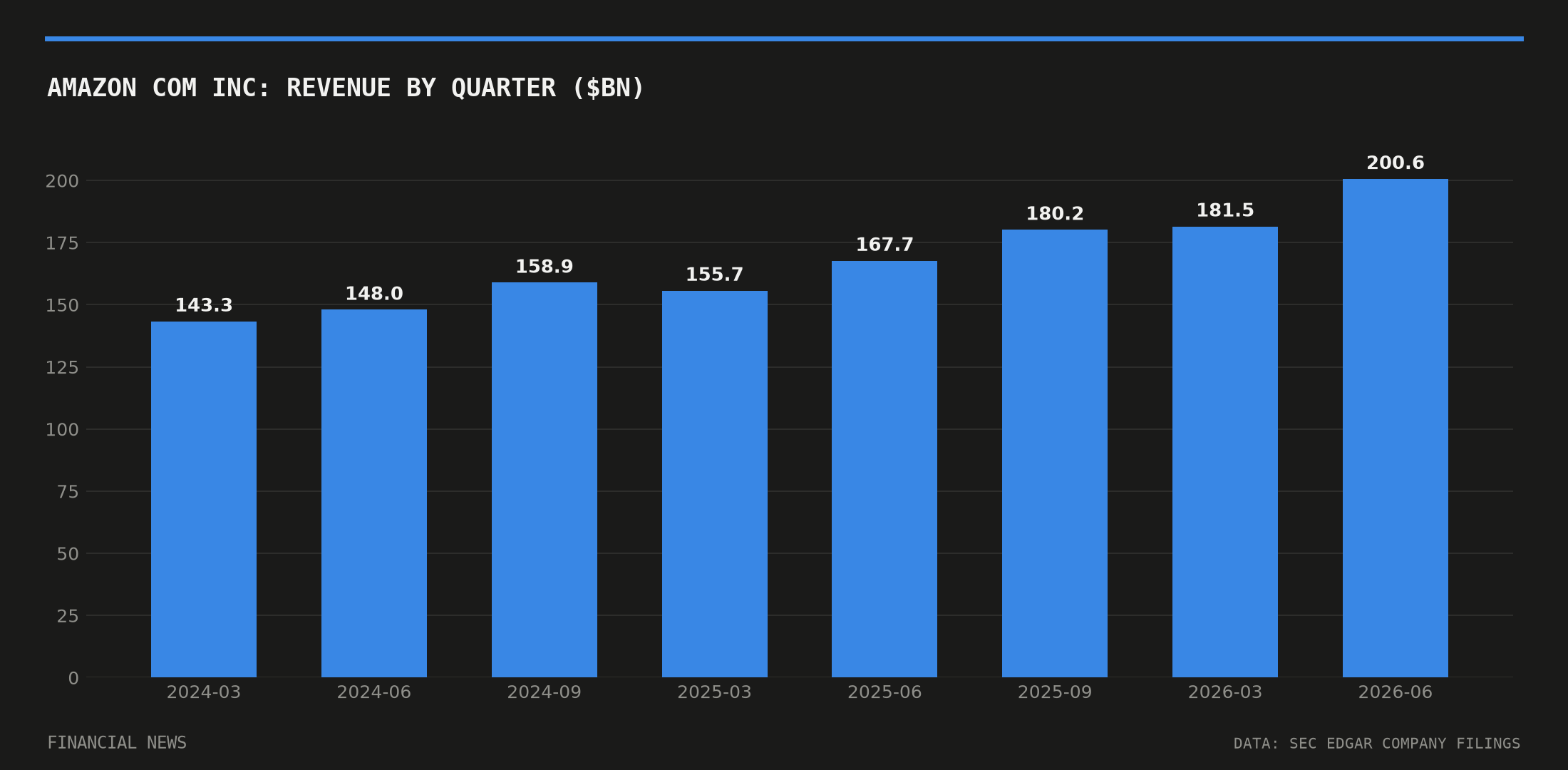
What is on the record is Amazon’s balance-sheet capacity to fund such a push. The group reported net income of $62.647bn for the quarter ended 30 June 2026, on revenue of $200.606bn for the same three months. A $3bn commitment spread to 2030 would be a modest slice of that earnings base, even allowing for the multi-year timeframe involved.
Shares steady, no unusual positioning
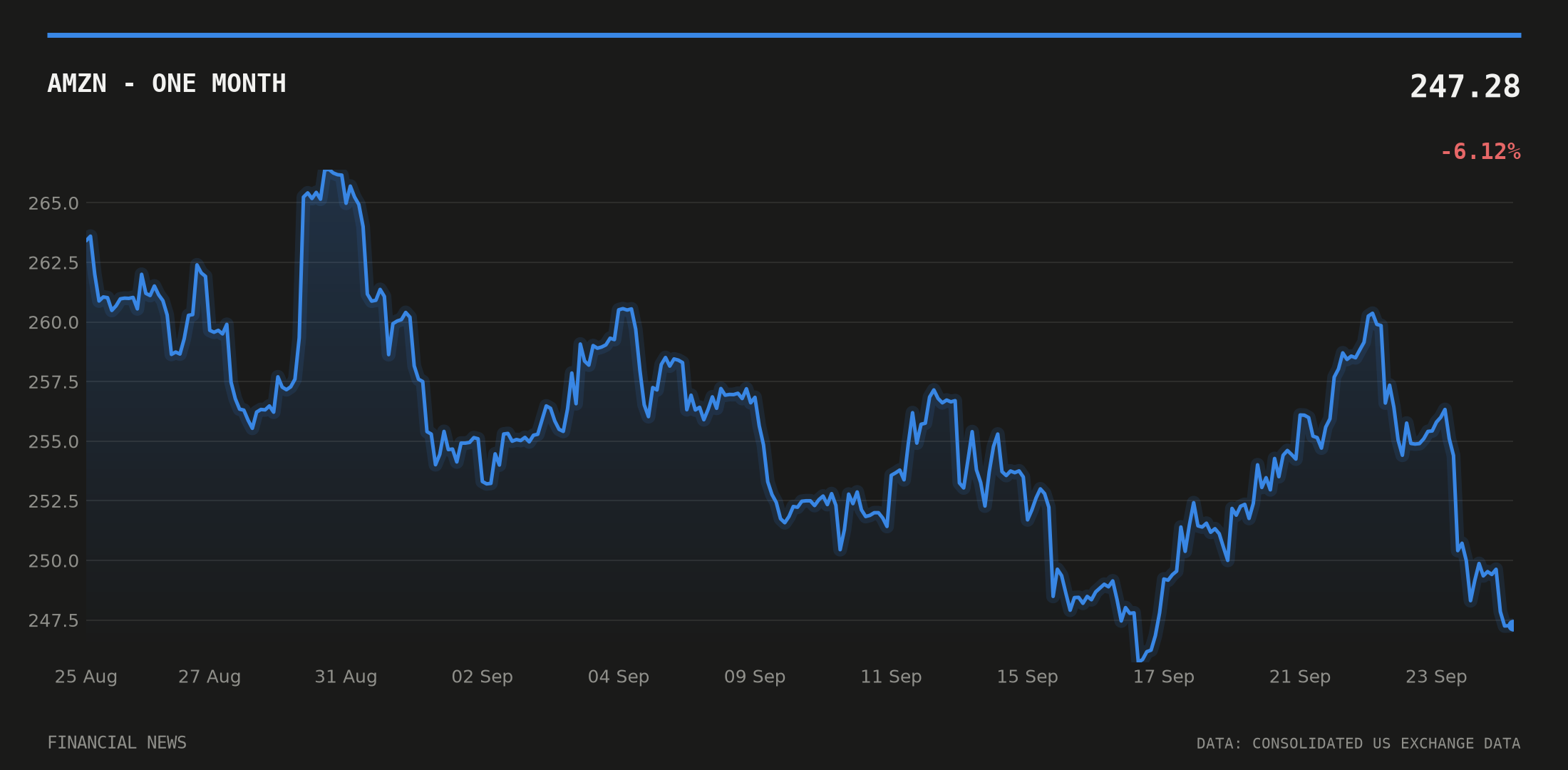
Amazon shares closed at $247.26 as of 09:00 UTC on 24 September 2026, down 1.04% on the day and 3.19% over the preceding 20 days, according to consolidated US exchange data. The stock has traded in a 20-day range of $245.73 to $260.56.
Short-interest data show nothing out of the ordinary around the report. FINRA’s daily short-sale figures put Amazon’s short ratio at 0.237 on 23 September, within a ten-day range of 0.237 to 0.447, according to FINRA data – a pattern that suggests the India news has not triggered any notable bearish positioning shift.
The test now is execution rather than announcement. Amazon’s own timeline points to April 2027 as the first checkpoint, when the retailer is targeting roughly 1,300 Amazon Now stores against today’s 750. Whether that expansion narrows the gap with Blinkit, Instamart and Zepto – or simply buys Amazon a bigger foothold in a market moving faster than any single entrant – will depend on execution over the next eighteen months, not on the headline figure reported this week.
This article is for information only and is not investment advice or a recommendation to buy or sell any asset. Markets move quickly; figures are correct as sourced at the time of writing. Always do your own research before making financial decisions.
