

American Electric Power (NASDAQ: AEP) plans to invest roughly $4bn in a Wyoming fuel cell project to supply power to Google, the utility said on Wednesday 14 October 2026.
The 702-megawatt facility near Cheyenne will run under a 20-year power purchase agreement with Google, as first reported by Reuters.
Google will buy electricity from Cheyenne Fuel Cell, LLC, a project entity roughly 92% owned and controlled by AEP, with the remaining stake held by funds advised by Basalt Infrastructure Partners. Construction is due to start this year, with the plant fully operational by the end of 2028, according to the Wall Street Journal.
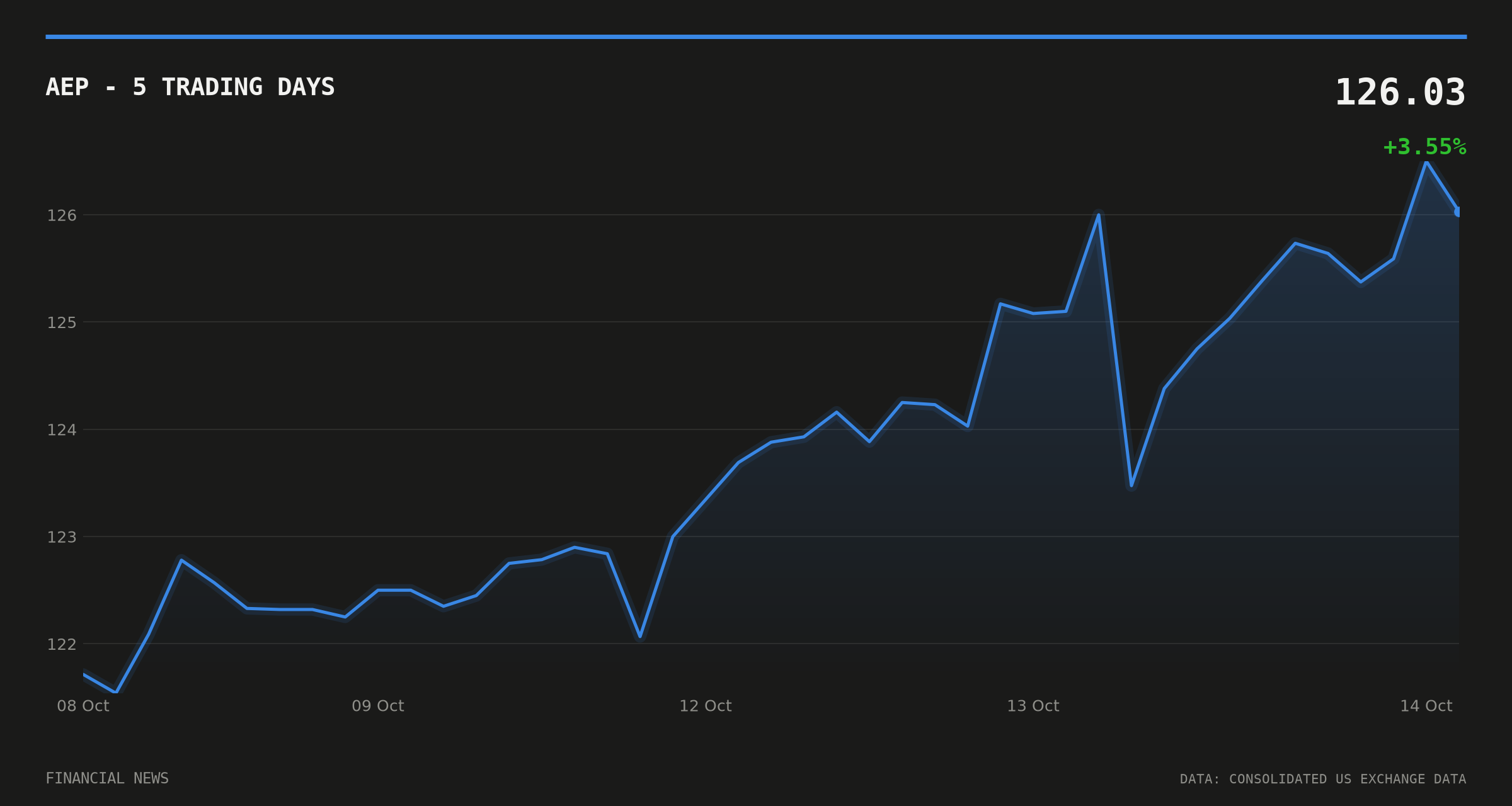
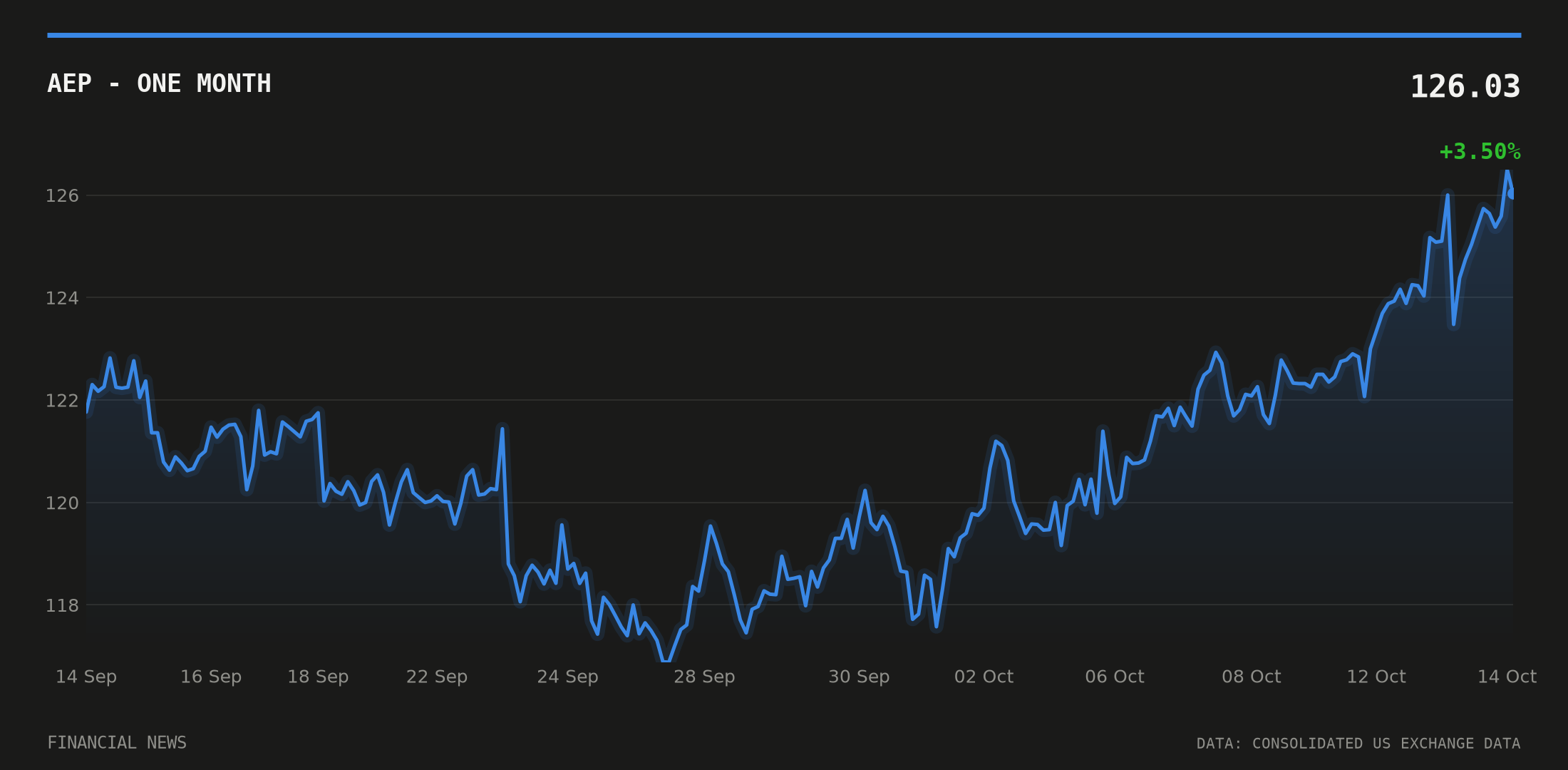
AEP shares traded at $125.985 shortly after the announcement, up 0.76% on the day and 6.25% over the prior 20 sessions, close to their 20-day high of $126.50. Volume ran at 0.76 times the 20-day average, suggesting the move had been partly priced in.
The customer AEP wouldn’t name
The structure behind this week’s news is not new. AEP disclosed in a regulatory filing on 4 January 2026 that a subsidiary had executed an unconditional purchase agreement worth approximately $2.65bn for solid oxide fuel cells, alongside a 20-year offtake arrangement for a facility near Cheyenne with what it described only as a “high investment grade third party customer”.
That filing traced back to a smaller deal from November 2024, when the AEP unit first agreed to buy 100 megawatts of fuel cells with an option on a further 900 megawatts. Wednesday’s announcement completes the picture: the mystery customer was Google all along, and the total project investment has grown to around $4bn once construction and associated infrastructure are included, not just the equipment purchase.
Bloom Energy supplies the solid-oxide fuel cells for the project, according to Bloomberg. Bloom’s shares had already jumped in January when AEP’s equipment purchase became public, even before the utility named its counterparty, based on reporting from Investing.com.
Part of a much larger demand wave
The Google agreement sits inside a far bigger shift in AEP’s customer base. The utility’s fourth-quarter 2025 earnings release disclosed signed agreements for an additional 28 gigawatts of large-load demand since the prior October, taking total incremental commitments to 56 gigawatts by 2030. Data centres and other hyperscaler-linked loads account for much of that growth.
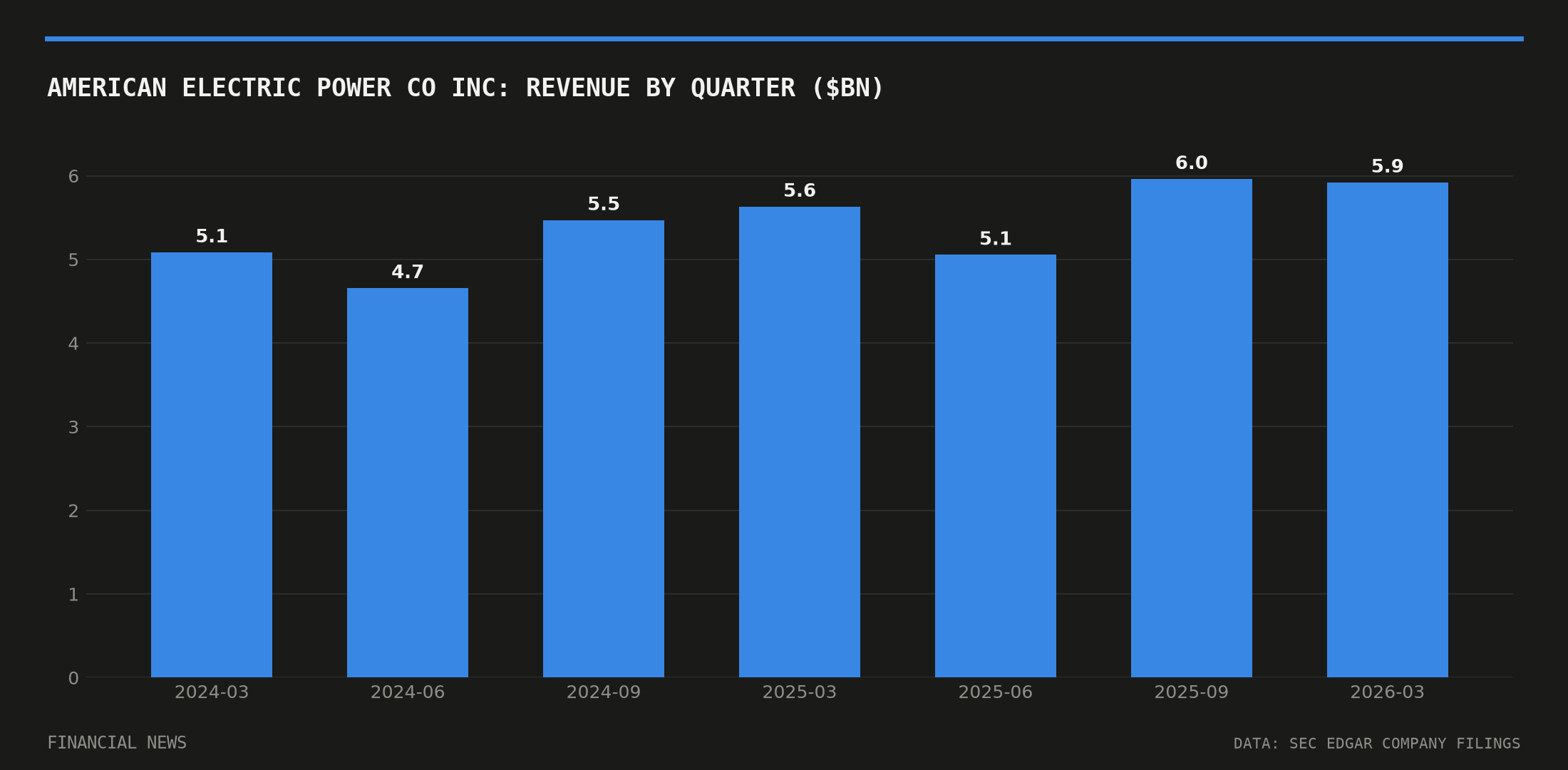
AEP generated $5.92bn in revenue in the first quarter of 2026, according to its 10-Q filing, giving some sense of scale against the roughly $4bn Wyoming commitment. Diluted earnings per share for the same quarter came in at $1.60.
Financing against a higher-rate backdrop
The commitment lands at a time when borrowing costs for capital-intensive utility projects remain elevated. The 10-year US Treasury yield stood at 5.24% on 9 October 2026, up from 5.22% a week earlier, while the 2-year yield sat at 4.80%, according to Federal Reserve data. That keeps financing costs for multi-billion-dollar, multi-year infrastructure builds higher than utilities have faced in recent years, even as demand from data-centre operators pushes them to sign ever-larger power deals.
Fuel cells offer a faster route to new generation than waiting years for grid interconnection queues, which has made them an increasingly common choice for utilities racing to serve hyperscaler demand. AEP’s structure, with a minority stake held by Basalt Infrastructure Partners, also spreads the capital outlay rather than putting it entirely on the utility’s own balance sheet.
Construction on the Cheyenne site is expected to begin this year, with first power flowing to Google by the end of 2028 under the terms AEP has disclosed.
This article is for information only and is not investment advice or a recommendation to buy or sell any asset. Markets move quickly; figures are correct as sourced at the time of writing. Always do your own research before making financial decisions.
