
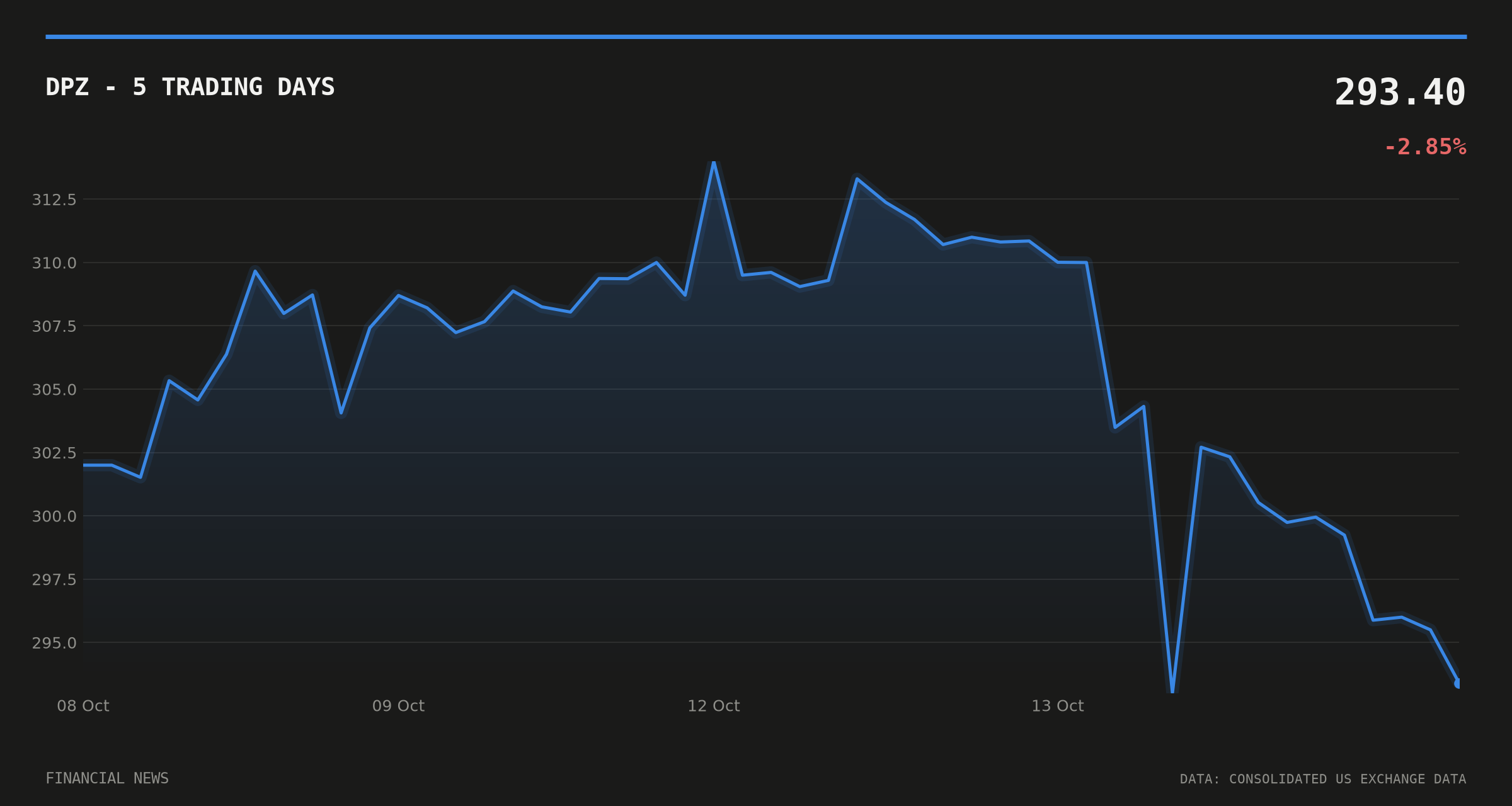

Domino’s Pizza (NASDAQ: DPZ) beat Wall Street’s third-quarter profit and revenue forecasts on 13 October 2026. Shares fell anyway, closing 2.37% lower at $293.40.
Diluted earnings per share came in at $4.60, above a consensus estimate of roughly $4.33 to $4.36 tracked by analysts, according to the Associated Press. Revenue of $1.19bn also topped Street forecasts, up 3.4% on the year.
Domino’s Q3 earnings beat masks a slowdown at home
The headline numbers tell only part of the story. US same-store sales rose just 0.3% in the quarter, a sharp pullback from the 5.2% gain recorded a year earlier, as first reported by Quartz.
Management also trimmed its outlook for US store openings, guiding to 125 to 150 net new stores for the year, on new chief executive Joe Jordan’s first earnings call since taking the role, according to BigGo Finance.
International performance stayed weak too. The company flagged ongoing issues tied to master-franchisee Domino’s Pizza Enterprises, which operates stores outside the US, as reported by Yahoo Finance‘s summary of the earnings call.
Net income and EPS climbed year on year
Net income for the quarter reached $152.2m, up from $139.3m in the same period last year, filings show. Diluted EPS of $4.60 compares with $4.08 a year earlier, a gain of roughly 12.7%, according to a transcript carried by Motley Fool.
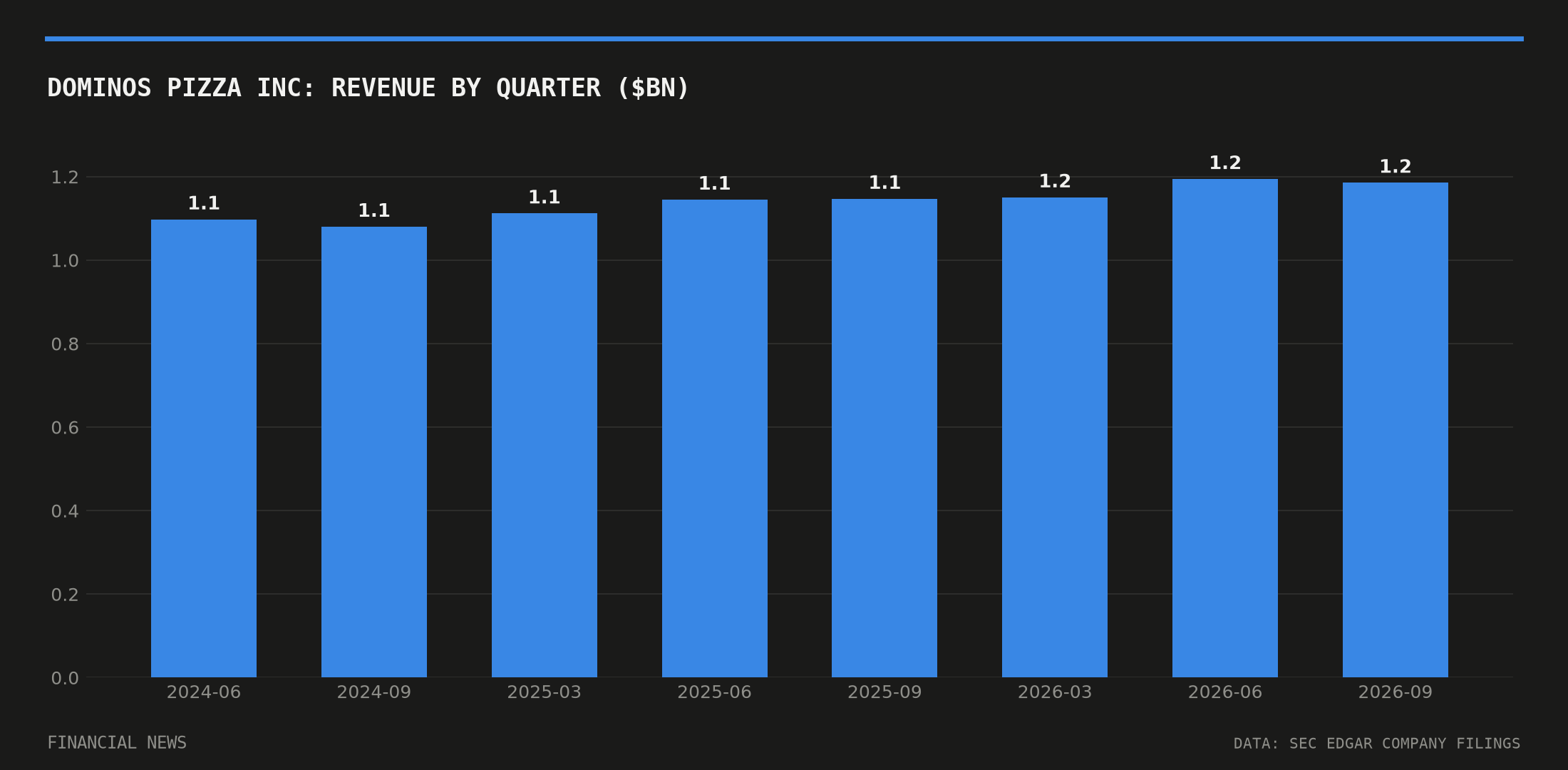
The beat follows a wobblier run of prints. In the second quarter of 2026, Domino’s missed estimates, delivering EPS of $4.07 against a forecast of $4.11, a shortfall of roughly 1%. That quarter’s revenue of $1.19bn still marked a sequential high before easing slightly in the third quarter to $1.186bn, SEC filings show.
Looking further back, quarterly net income has moved in a fairly narrow band over the past two years: $142.0m in the second quarter of 2024, $146.9m in the third quarter of 2024, $149.7m in the first quarter of 2025, $131.1m in the second quarter of 2025, and $139.3m in the third quarter of 2025, filings filed with the SEC show. The latest $152.2m print is the highest in that run, though revenue growth has slowed from the double-digit percentage gains the chain posted earlier in the decade to low single digits more recently.
Shares fall despite the beat
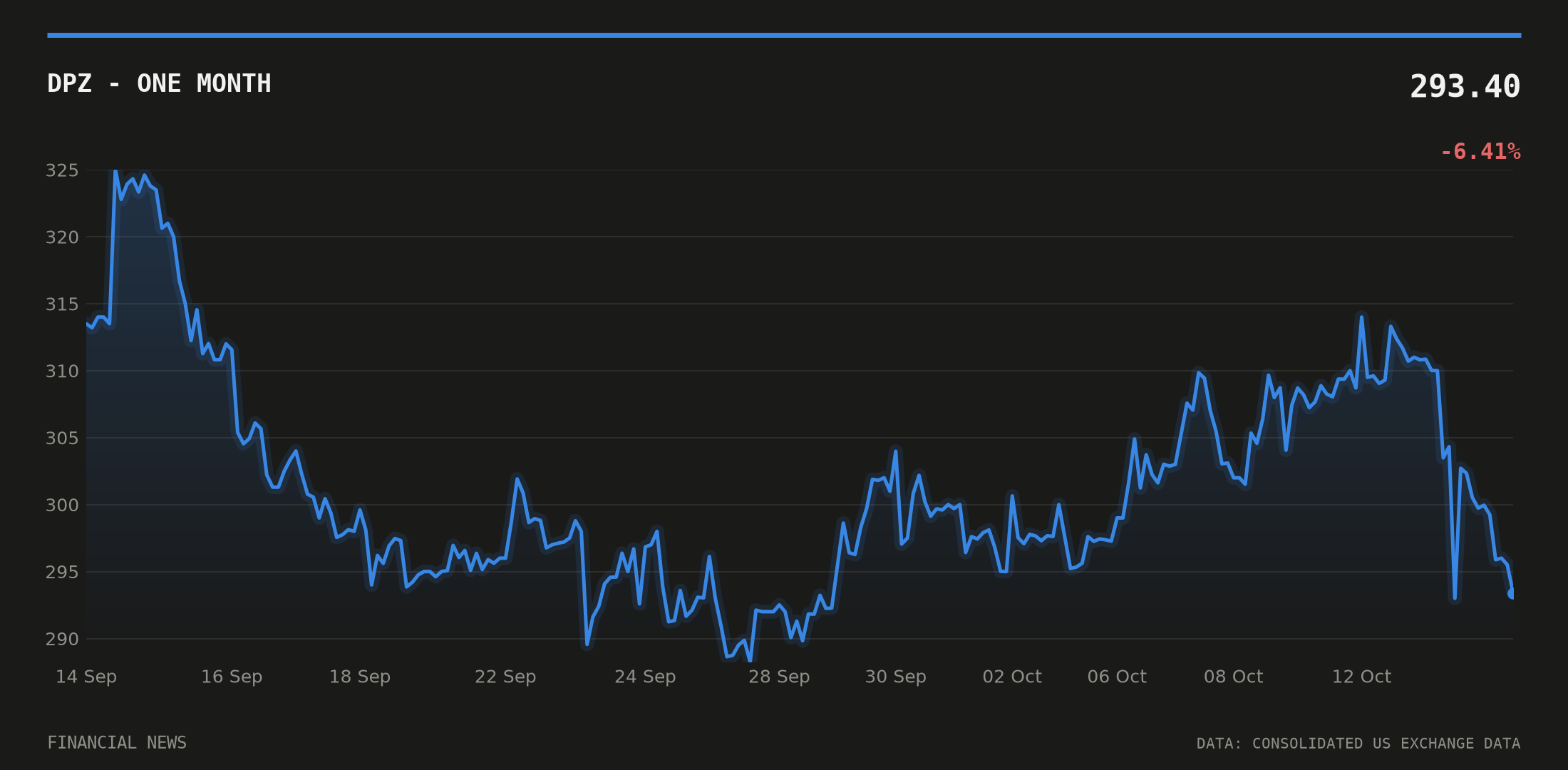
Domino’s stock dropped on the day of the results even as both profit and revenue topped forecasts, a pattern noted by Investing.com. The shares traded 1.8% lower over the preceding 20 days and changed hands within a 20-day range of $288.23 to $314.00, trading data show.
Volume on the day ran 1.8 times the 20-day average, consistent with investors repositioning around the figures rather than simply absorbing routine turnover.
Short-interest data from FINRA showed no unusual build-up ahead of the print. The daily short-sale volume ratio for DPZ ran between roughly 0.46 and 0.71 over the two weeks before results, settling at 0.592 on the day itself, according to FINRA data. That range suggests traders were not unusually positioned for a negative surprise heading into the release, even though the stock ultimately fell.
The broader backdrop remains unhelpful for discretionary spending on takeaways and dining out. The 10-year US Treasury yield stood at 5.24% around the report date, versus 5.22% a session earlier, while the unemployment rate ticked up to 4.2% in September from 4.1% the prior month, according to Federal Reserve Bank of St. Louis data. Higher borrowing costs alongside a softening labour market tend to weigh on the kind of discretionary purchases that drive pizza-chain same-store sales, though Domino’s results do not establish a direct causal link.
Investors now face a question the headline numbers alone cannot answer: whether Jordan’s cut to store-growth guidance marks a temporary reset or a longer pause in the US expansion that has underpinned the chain’s growth story for much of the past decade.
This article is for information only and is not investment advice or a recommendation to buy or sell any asset. Markets move quickly; figures are correct as sourced at the time of writing. Always do your own research before making financial decisions.
