
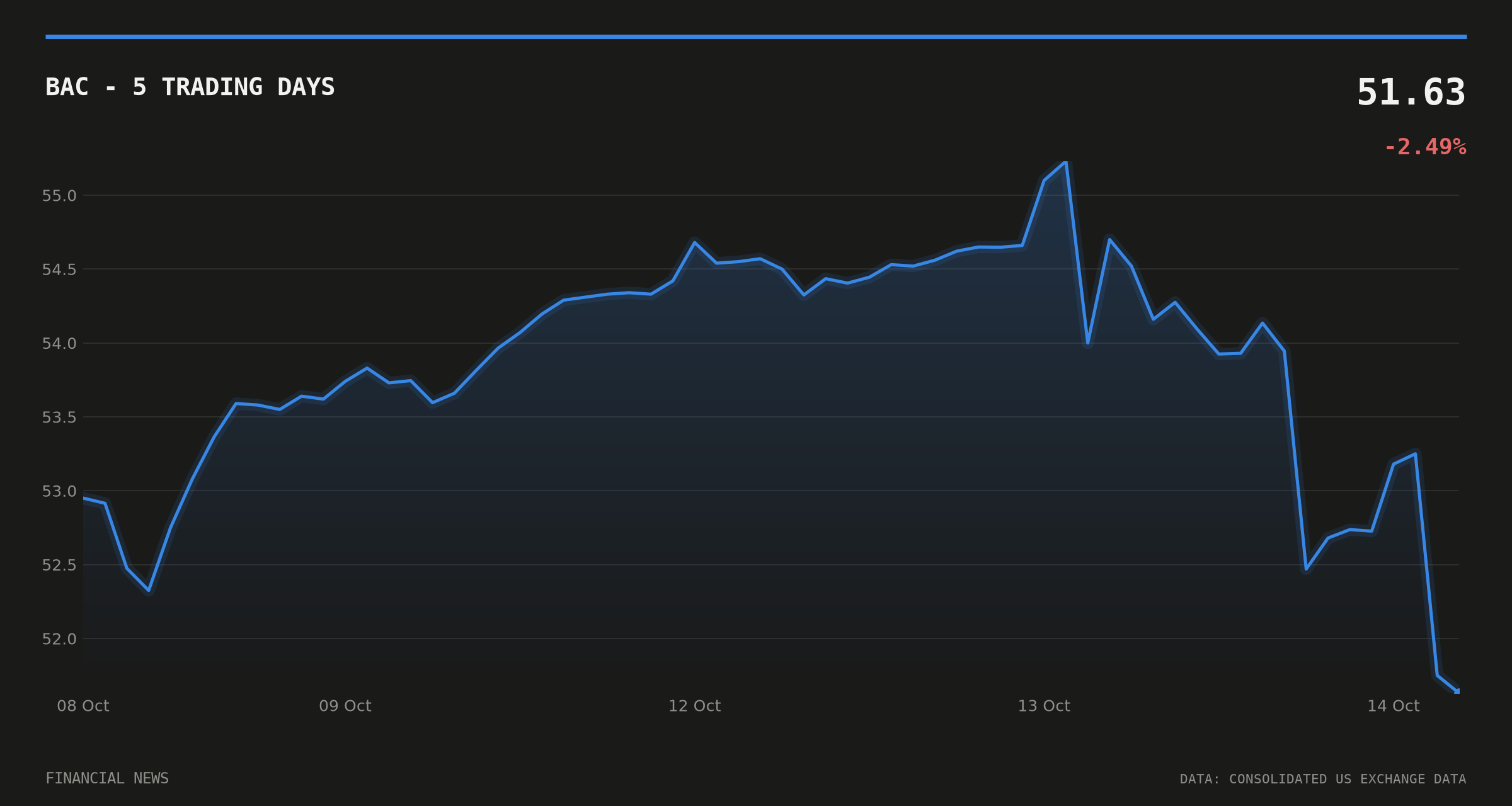

Bank of America (NYSE: BAC) shares fell on 13 October after the US Treasury Department disclosed a $1.2bn penalty over anti-money-laundering failures, the Financial Crimes Enforcement Network said.
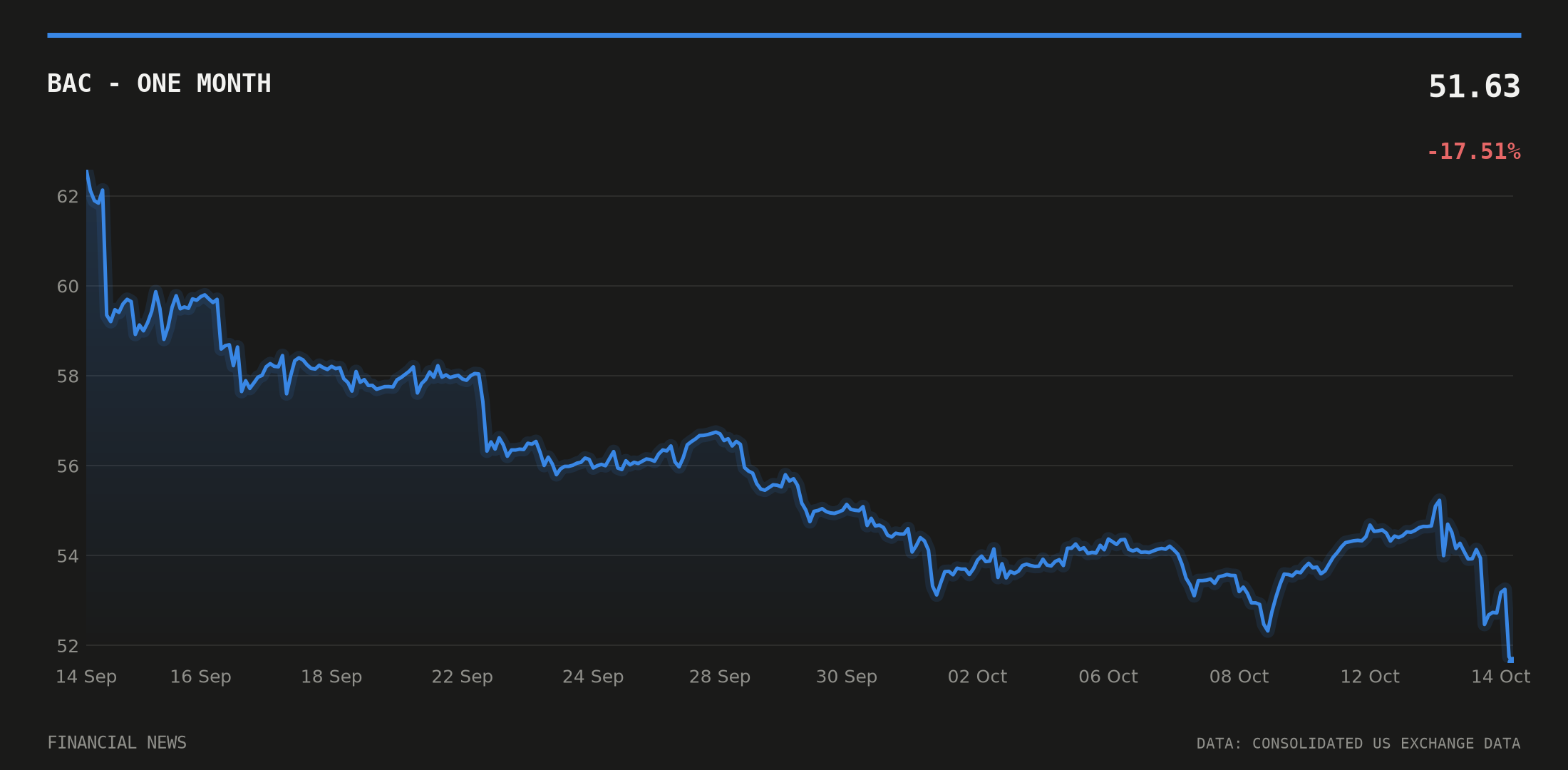
The Bank of America fine is the third-largest enforcement action in Treasury’s history, according to reporting from NBC New York. Shares closed 1.64% lower on the day and are down 7.85% over the past 20 trading sessions, touching a 20-day low of $51.61, Nasdaq reported.
What the Treasury found
FinCEN said Bank of America failed to mitigate and report priority national security risks, including Chinese money-laundering networks and illicit finance tied to the southwest border. The agency’s own release names the $1.2bn figure directly.
Within that total, the Office of the Comptroller of the Currency assessed a $750m civil penalty for a deficient anti-money-laundering programme, the largest such fine in OCC history, credited against the combined sum, The Hill reported. The Treasury’s Office of Foreign Assets Control separately settled sanctions-related violations, covering Iran, Russia, narcotics and terrorism-linked transactions, for $11.6m.
As a consequence of the compliance gaps, Bank of America failed to report more than $5bn in suspicious transactions in a timely manner, CNN reported, citing the Treasury findings.
Bank of America fine meets a disputed earnings narrative
Reuters and MarketWatch both tied the penalty to Bank of America’s third-quarter results this week, with Reuters saying the fine hurt quarterly profit and MarketWatch going further, framing the same report as a profit miss compounding the regulatory hit.
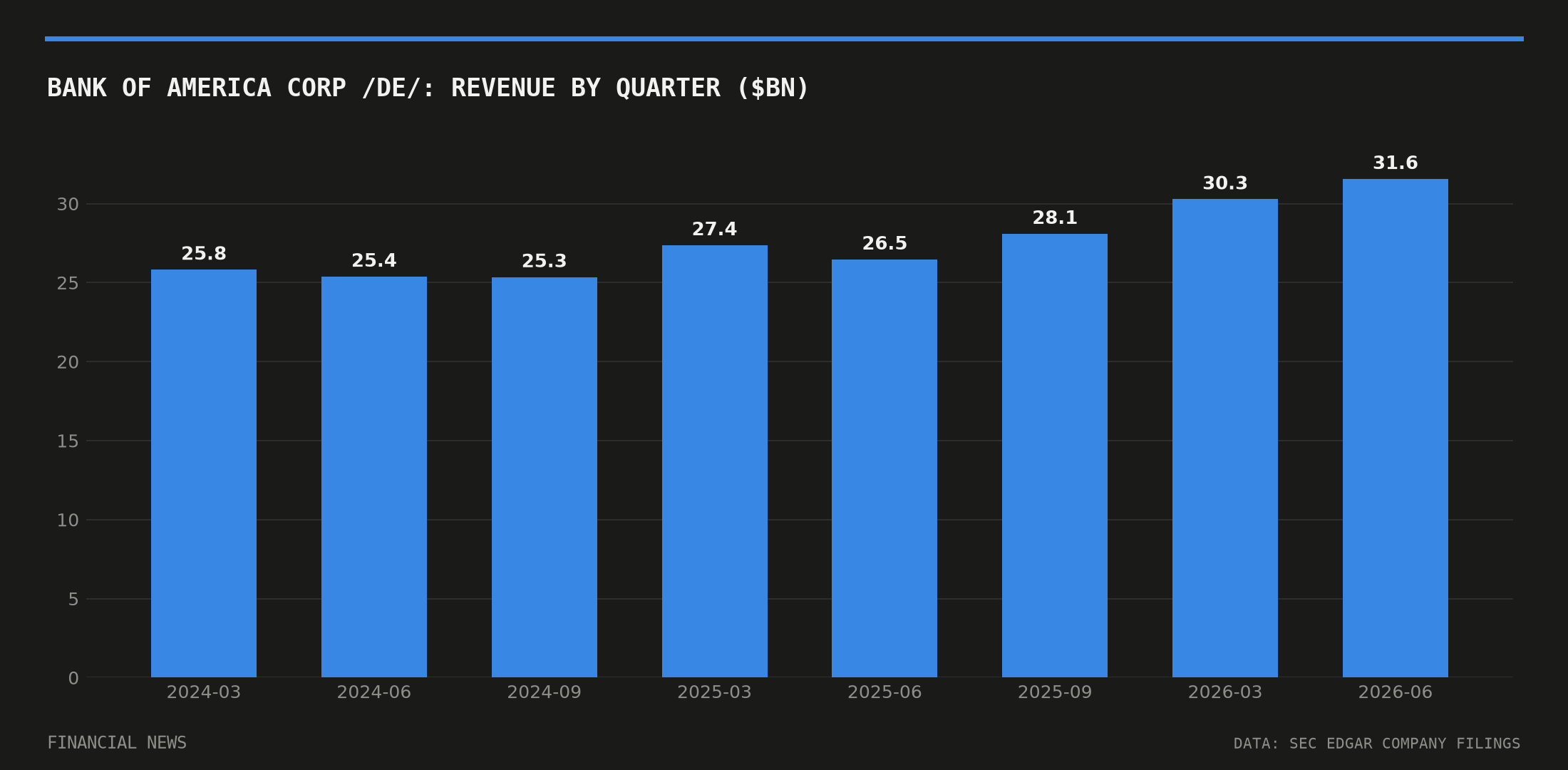
That claim cannot be checked against the bank’s own disclosures. The most recent quarterly figures on file with the Securities and Exchange Commission cover the second quarter of 2026, when Bank of America reported net income of $9.074bn and diluted earnings per share of $1.21, up from $8.584bn and $1.11 in the first quarter. No verified third-quarter net income or EPS figure was available at the time of writing, leaving the scale of any “miss” unconfirmed.
A $1.2bn charge would represent a material one-off hit to any single quarter’s results, equivalent to roughly 13% of the bank’s second-quarter net income, even if underlying lending and trading income held up. That distinction, between a reported-earnings dent from a one-time penalty and a genuine deterioration in operating performance, is not one the current reporting resolves either way.
Positioning shifts ahead of the announcement
Short-sale activity in Bank of America stock picked up in the run-up to the fine. The FINRA short-sale volume ratio rose from 0.156 on 8 October to 0.332 on 13 October, the day the penalty was announced, according to FINRA daily data. Trading volume on the day was around 60% of the stock’s 20-day average, Nasdaq figures show, suggesting the move lower came on lighter-than-usual turnover rather than a rush for the exit.
The penalty lands against a backdrop of a flattening US yield curve, with the 10-year Treasury yield at 5.24% and the 2-year at 4.80% as of 9 October, narrowing the 10-year/2-year spread to 0.42 percentage points, according to Federal Reserve data. US unemployment stood at 4.2% in September, up from 4.1% the prior month, per the same series.
Bank of America’s third-quarter results, filed as an 8-K with the SEC on 14 October, will be the document investors and analysts turn to for a clean read on whether the fine translated into an actual earnings shortfall or simply a one-off charge against an otherwise improving run of quarterly profit.
This article is for information only and is not investment advice or a recommendation to buy or sell any asset. Markets move quickly; figures are correct as sourced at the time of writing. Always do your own research before making financial decisions.
