
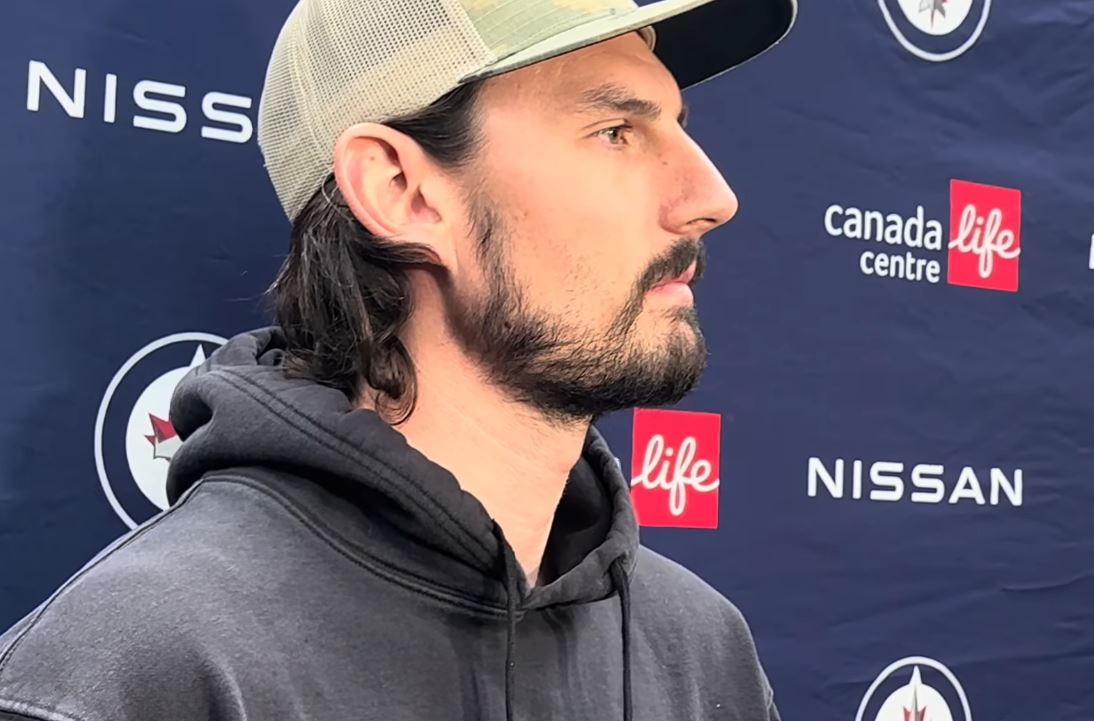

Last season, Connor Hellebuyck stood in front of the cameras and helped the Winnipeg Jets have yet another successful regular season. However, something had already changed behind the scenes. Hellebuyck had informed general manager Kevin Cheveldayoff in private that he wanted to leave the Jets by the start of the summer. For months, there was no response to that request. He then made it public in late August 2026 by issuing a statement via his agent that was precise in its wording but clear in its meaning. He had had enough waiting.
The Buffalo Sabers had been considering this option prior to the June NHL Draft. The goaltending issue had never entirely been resolved for a team that ended a drought dating back to 2011 by making a postseason comeback in 2026. Before a Game 7 overtime loss to the Montreal Canadiens sent the building silent, Ukko-Pekka Luukkonen and Alex Lyon led the team through a run that included a division title and an appearance in the Eastern Conference Semifinals. Enough to get there. Not quite enough to continue. Hellebuyck, a former Vezina winner with a $8.5 million cap hit through 2030–31, was precisely the kind of solution the Sabers were looking for.
It’s noteworthy how close it actually came. Hellebuyck reportedly agreed to waive his entire no-movement clause in exchange for a trade to Buffalo. That’s a big deal. Seldom do players with that level of contractual protection open the door so voluntarily, and his willingness to do so indicated a sincere desire to relocate to Western New York. According to reports, the Sabers offered a package that included a player, a prospect, and a first-round pick. The fourth overall draft pick turned out to be a major point of contention during the draft negotiations.
That fourth pick was desired by Winnipeg. It appears that Sabers general manager Jarmo Kekalainen, who joined the team in December and contributed to its turnaround, was open to including it but insisted on receiving the Jets’ eighth overall pick in exchange. Cheveldayoff refused to change his mind. The agreement stalled. After that, the summer continued unresolved, Hellebuyck failed to show up for training camp, and the Jets suspended him in retaliation, which resulted in an odd kind of leverage inversion. Winnipeg’s realistic expectations for any potential trade decreased as time went on.
In any renewed negotiations, there is a plausible claim that the Sabers still have the upper hand. The offers made for Hellebuyck following his public statement were deemed “terrible,” according to TSN’s Darren Dreger. This is understandable given that teams are aware that a player sitting out of camp gives the acquiring team negotiating leeway while placing the holding team in an increasingly awkward situation. Stuart Skinner was signed by Winnipeg as a backup during the summer, but Skinner is not Hellebuyck, and the Jets aren’t designed to just move on without dealing with their losses.
A number of trade scenarios involving Ryan McLeod, Luukkonen, prospect Radim Mrtka, and a 2027 first-round pick going to Winnipeg are being discussed by analysts and supporters. Mrtka, a 6-foot-6 defenseman with real potential, is thought to be a promising addition. Winnipeg may or may not be listed among protected teams due to Luukkonen’s inclusion, which presents additional challenges. If it does, Buffalo’s return would be somewhat undermined because Kekalainen would have to find a third team for Luukkonen and send Alex Lyon to the Jets instead.
It seems as though both parties have been negotiating with one eye on what they need and another on what they are afraid to give up as this has unfolded. That’s typical. However, the window of opportunity for a clear resolution is getting smaller. The cautious non-answer felt like a door left purposefully open, and Kekalainen stated during training camp that he would always look for ways to improve the roster—neither confirming nor denying the Hellebuyck conversations. How serious this Sabers rebuild is may depend on whether he makes it through.
