

Brady Corporation (NYSE: BRC) reported record full-year revenue and profit in its fourth-quarter earnings call on Thursday, but the stock fell as investors weighed integration risk from its newly closed Honeywell acquisition.
Full-year sales reached $1.66bn, up 9.8% from $1.51bn a year earlier, Brady’s sixth consecutive record year.
Brady fourth-quarter earnings top estimates
Fourth-quarter sales rose 10% year on year to $436.9m, driven by 8.4% organic growth, according to the company’s SEC filing. Adjusted diluted earnings per share climbed 17.5% to $1.48, from $1.26 a year earlier, Brady said in a statement carried on GlobeNewswire.
For the full year, net income came to $205.4m and diluted EPS reached $4.30, while adjusted EPS rose 15% to $5.29. Brady’s finance team has now delivered six straight years of record adjusted earnings, a streak that stretches back well before the Honeywell deal closed.
Honeywell integration dominates the call
The results follow Brady’s completion of its acquisition of Honeywell’s Productivity Solutions and Services business, a $1.4bn deal that closed on 3 August 2026 and has been rebranded Intelligent Productivity Solutions, or IPS. From fiscal 2027, Brady will report two segments: legacy Identification Solutions and the newly acquired IPS unit, as first reported by Yahoo Finance.
Vineet Nargolwala, who became chief executive roughly three months before this call, cast the acquisition as a pivot away from what he called a “classic industrial company” toward an “industrial technology company,” according to the same report.
FY2027 guidance and the accretion math
Brady expects IPS to contribute approximately $1.15bn in revenue in fiscal 2027 and has guided combined adjusted diluted EPS of $6.25 to $6.75, including roughly $0.80 of accretion from the acquired business, according to the earnings call transcript. At the midpoint, that guidance implies adjusted EPS growth of 23%, Brady said in its results statement.
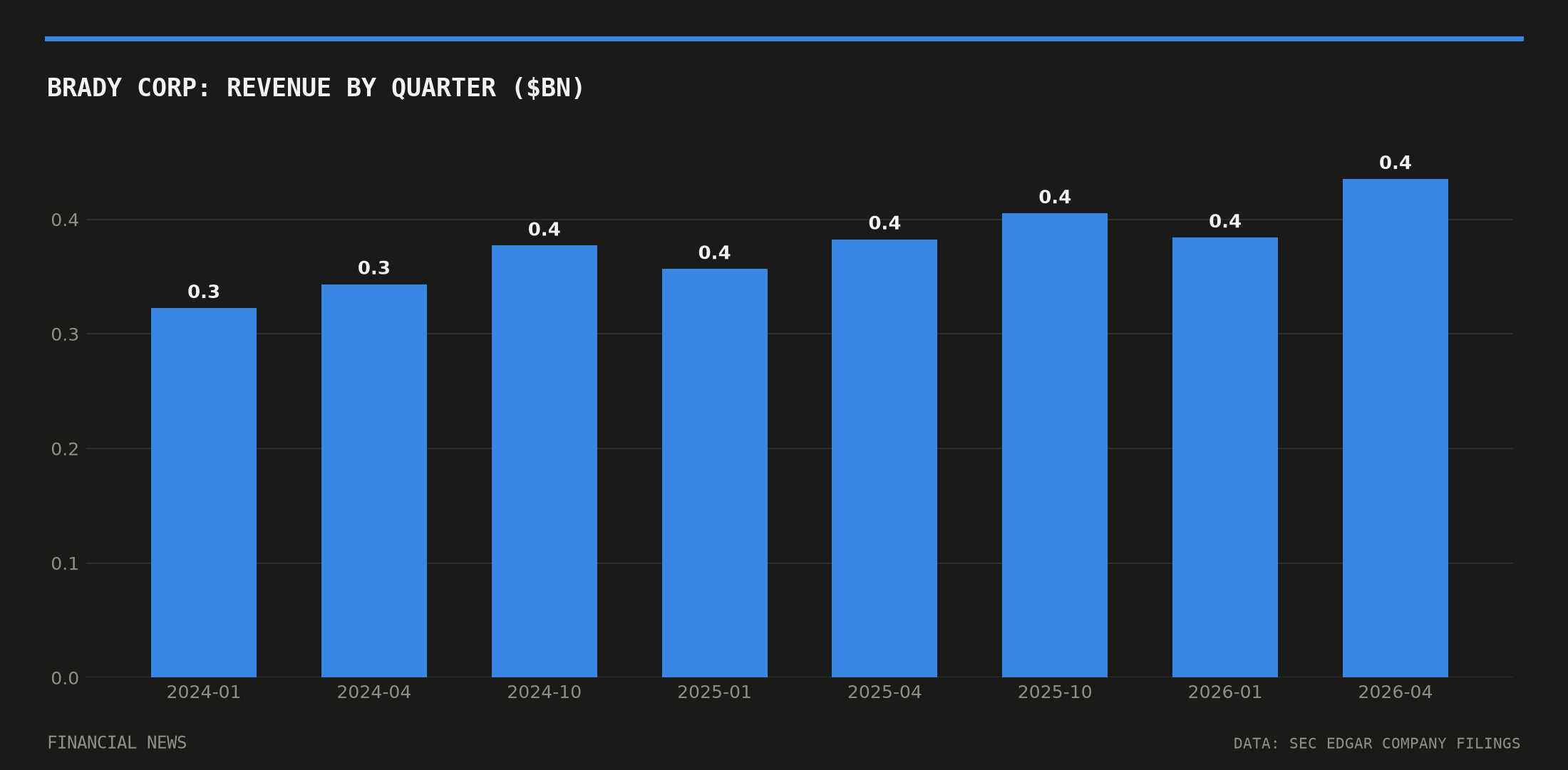
Management described the deal as immediately accretive, with integration work focused on new product development and cross-selling between the two businesses. Brady’s own quarterly filings show revenue building steadily through the year, from $405.3m in the first quarter to $435.2m in the third, before the fourth-quarter jump to $436.9m — a trajectory that sums to the reported $1.66bn full-year total.
Shares fall despite the beat
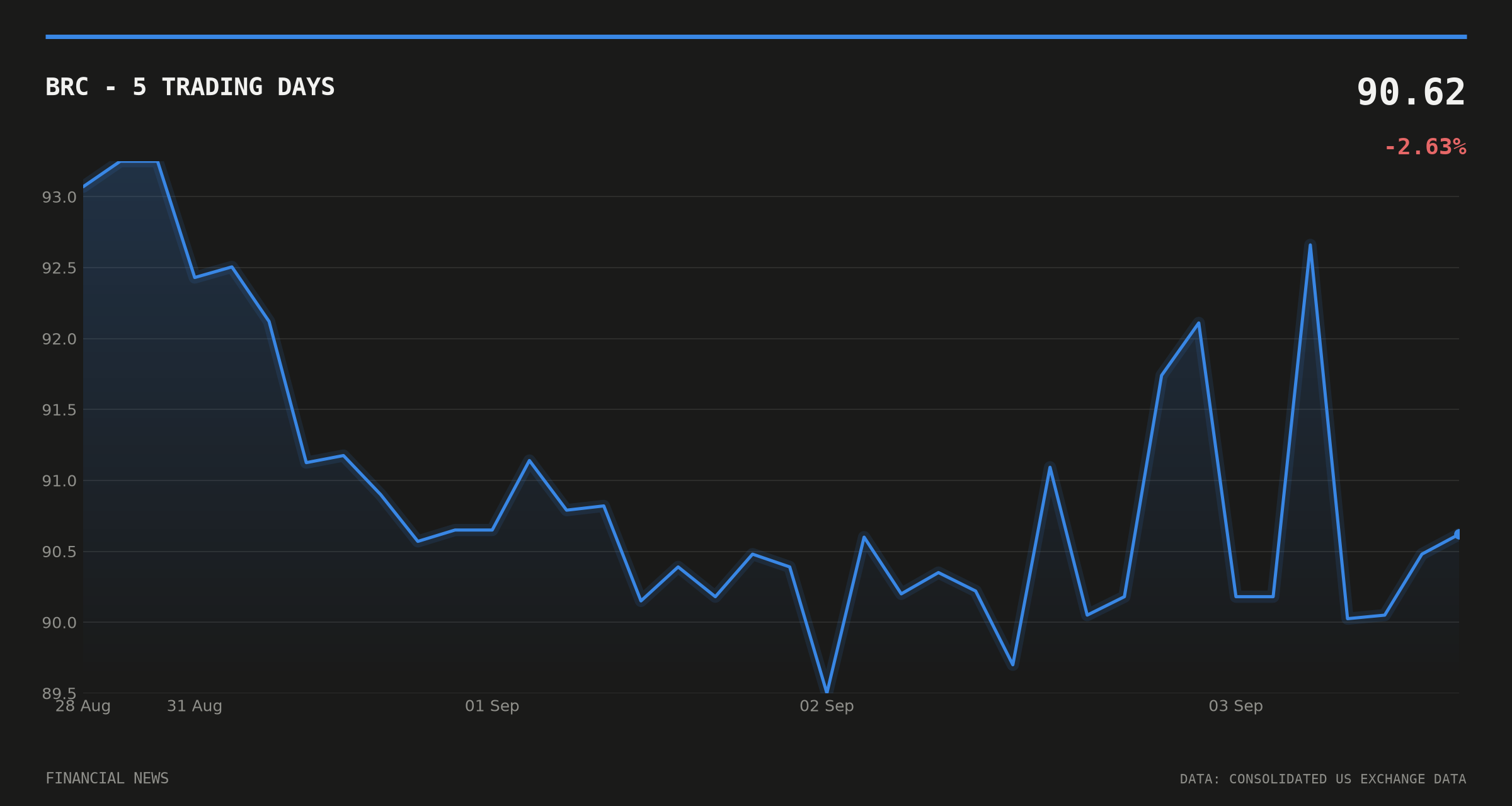
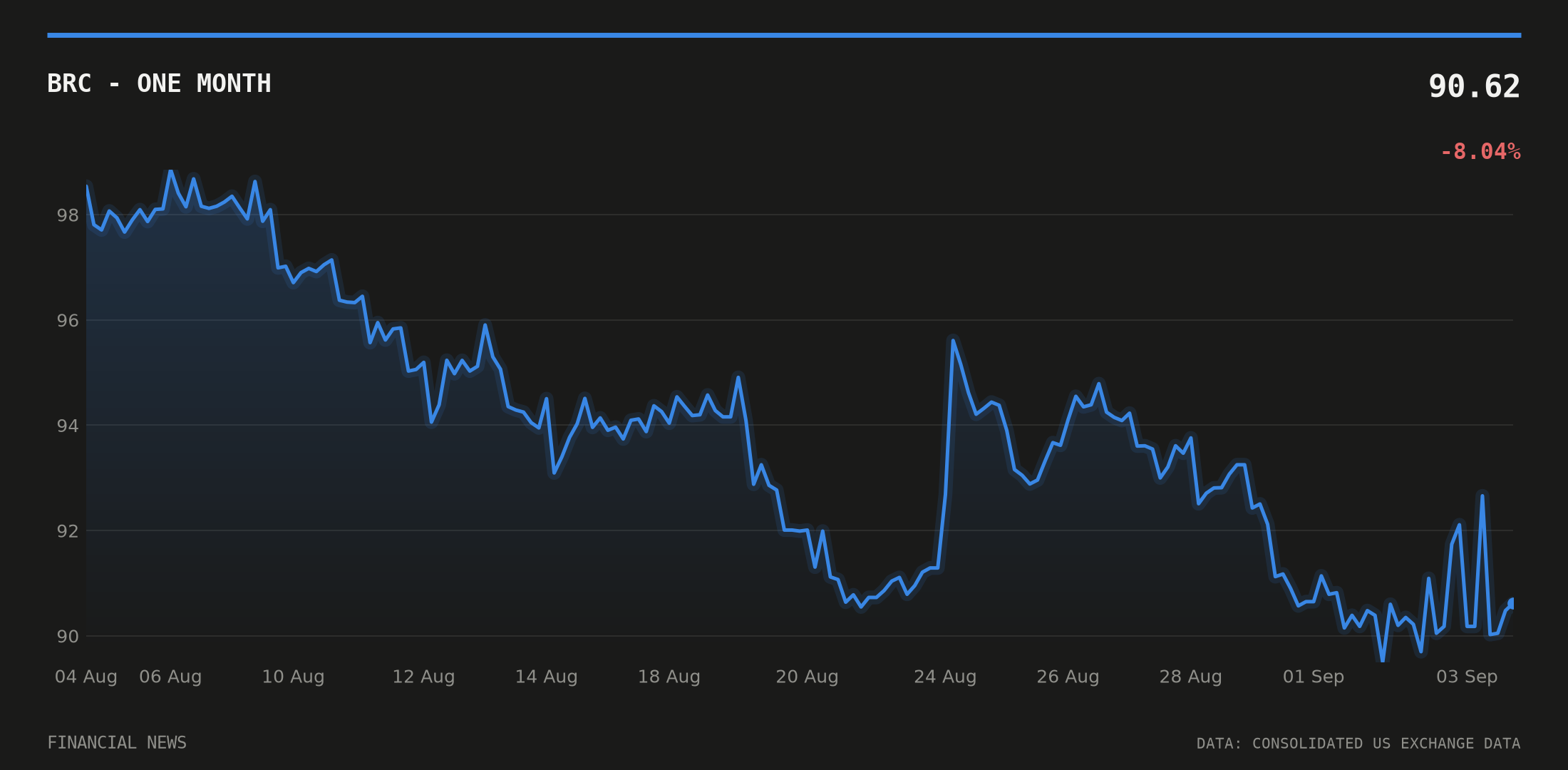
Investors did not reward the numbers. Brady shares dropped as much as 2.32% in premarket trading to $88.09 from a prior close of $90.18, as first reported by Investing.com. The stock closed the session at $90.82, down 1.4% on the day and off 3.64% over the past 20 trading sessions, according to consolidated exchange data.
The muted reaction points to lingering caution over Honeywell integration risk and the back-half-weighted accretion assumed in the FY2027 guide, even as the headline figures cleared estimates comfortably.
Four Brady executives and directors — Ann Thornton, Olivier Bojarski, Thomas F. DeBruine and Andrew Gorman — filed Form 4 disclosures with the SEC on 2 September, the day before the earnings call, though the filings do not detail share counts or transaction values.
A rising-rate backdrop for a newly indebted balance sheet
The results land against a market backdrop of elevated borrowing costs. The 10-year Treasury yield stood at 4.79% and the 2-year at 4.39% as of 1 September, with the yield curve holding a modestly positive spread of 0.40 points, according to Federal Reserve data. That environment adds pressure on valuations for an industrial company that has just taken on acquisition-related debt to fund the Honeywell purchase.
Brady’s next scheduled disclosure will be its first-quarter fiscal 2027 results, when investors get an initial read on how the IPS segment is tracking against the $1.15bn revenue target management laid out this week.
This article is for information only and is not investment advice or a recommendation to buy or sell any asset. Markets move quickly; figures are correct as sourced at the time of writing. Always do your own research before making financial decisions.
