

Rivian Automotive (NASDAQ: RIVN) said its Rivian CFO steps down effective 30 October, with Claire McDonough leaving after nearly six years to become chief financial officer of GE Vernova (NYSE: GEV), the Boston-based energy group.
The move ends a tenure in which McDonough led Rivian’s $13.7bn initial public offering in November 2021, months after joining the company at the start of that year.
What Rivian disclosed
Rivian filed an 8-K outlining a “CFO Transition Plan,” naming vice president of finance Derek Mulvey as interim chief financial officer while it searches for a permanent successor, according to the filing’s exhibit. Rivian said the departure is “not the result of any disagreement,” as reported by TechCrunch.
Chief executive RJ Scaringe said McDonough “joined Rivian almost six years ago” and had “a meaningful impact” on the business, according to Investing.com.
Rivian’s own framing of the exit, circulated in initial coverage, cited McDonough pursuing “a new opportunity” and relocating “to the East Coast to be closer to her family.” That account left out the specific destination. CNBC and Reuters, via MarketScreener, both reported that GE Vernova has simultaneously named her its new CFO, tying the family relocation to a specific job change rather than an unspecified move.
Shares slip after hours
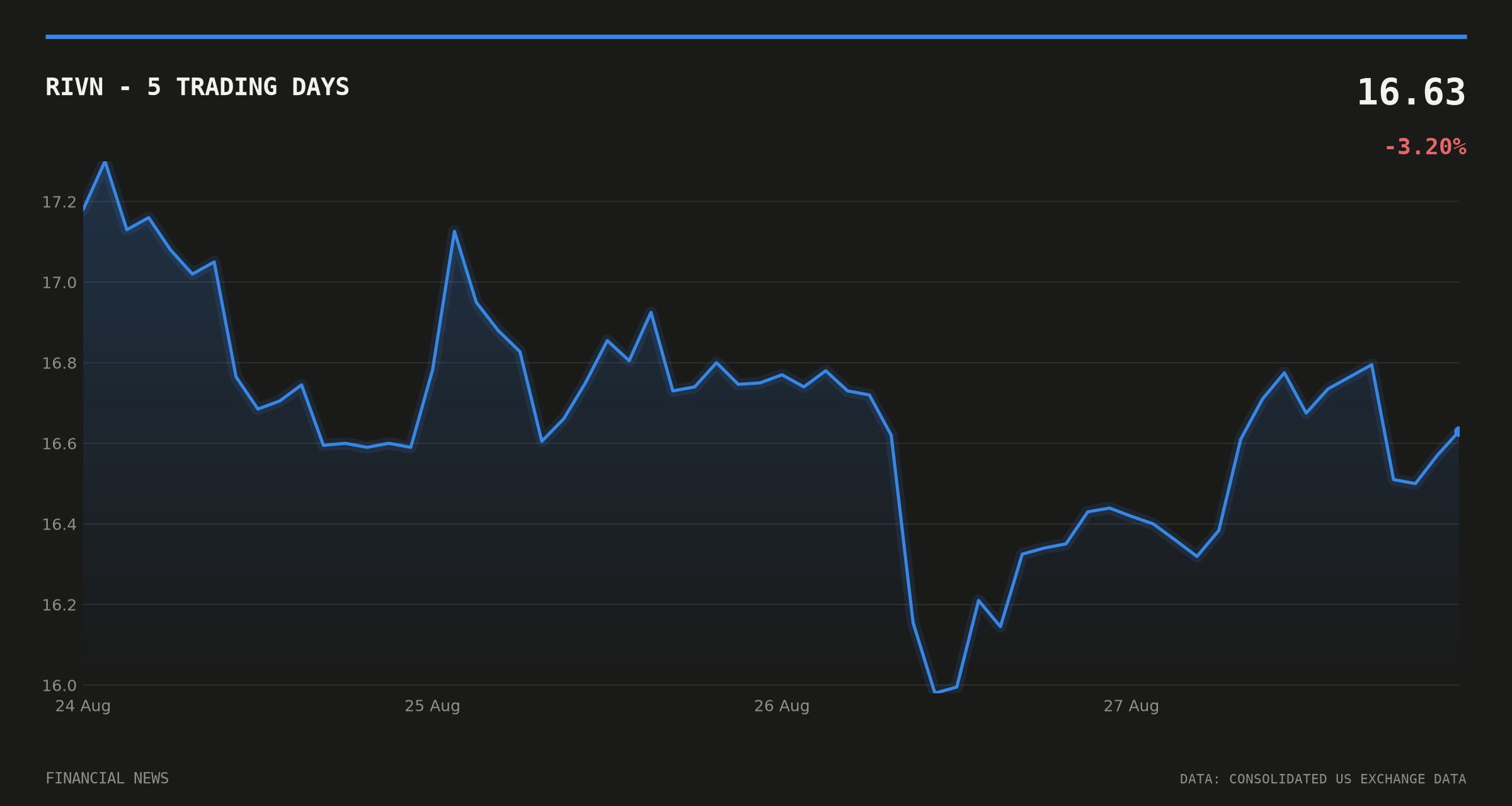
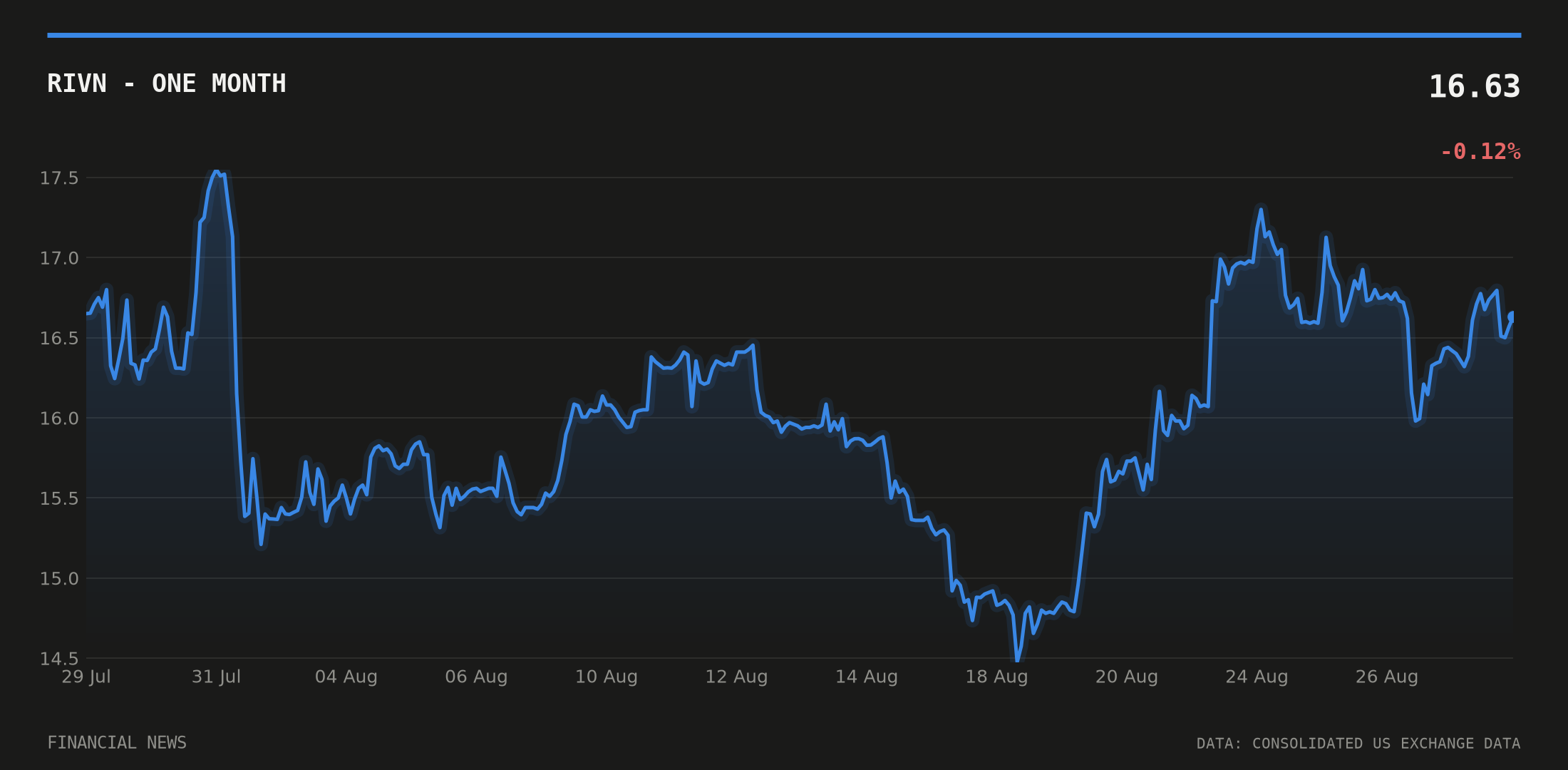
Rivian shares slipped roughly 2% in after-hours trading following the announcement, according to Yahoo Finance. The stock had traded up around 7.6% over the prior 20 sessions before the news broke, based on consolidated exchange data, leaving it well within its recent range.
Losses narrowing as R2 ramp approaches
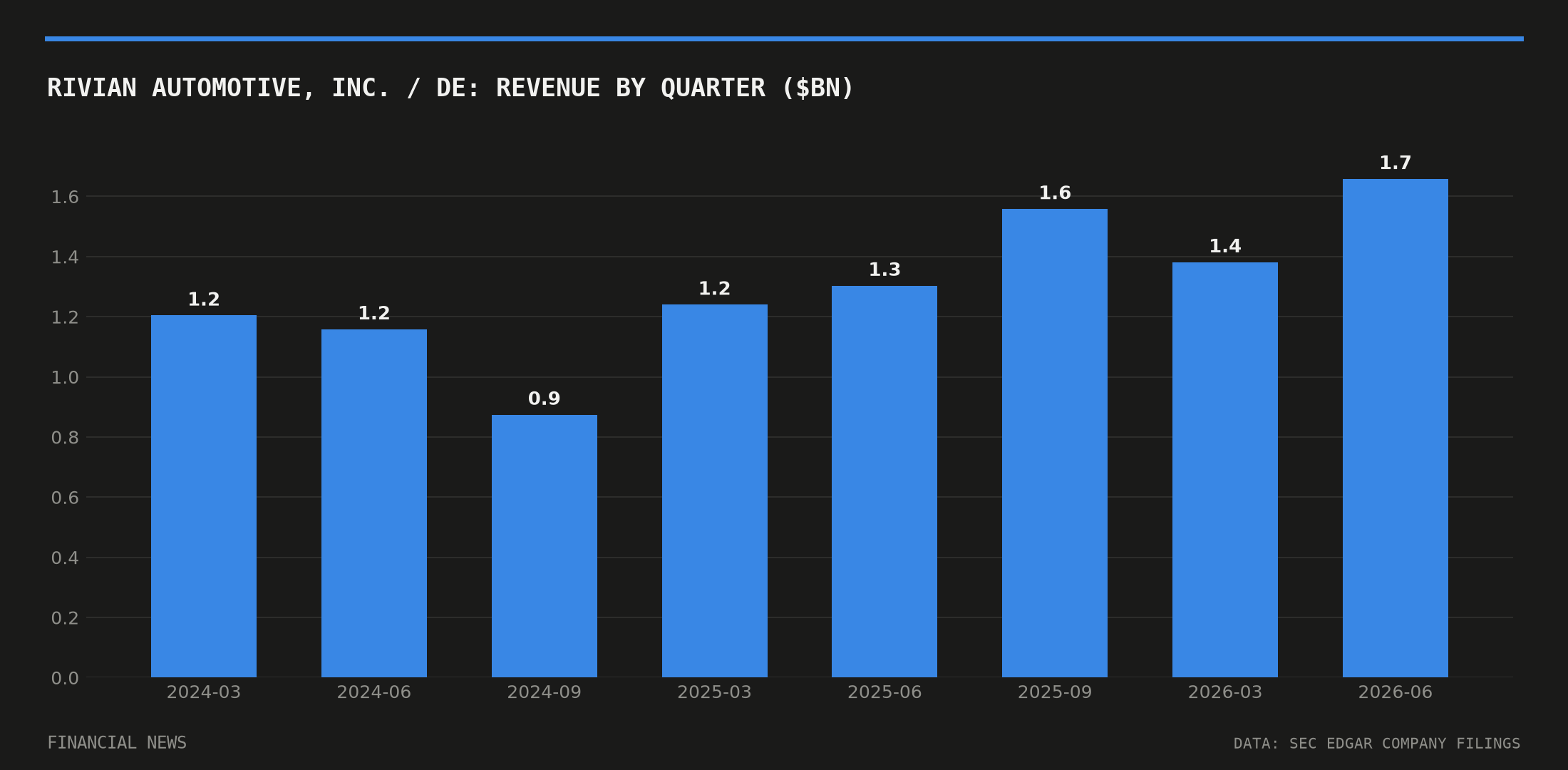
McDonough departs at a point where Rivian’s quarterly losses have been shrinking even as revenue grows. Net loss stood at $1,446m in the first quarter of 2024, according to Rivian’s 10-Q filing for that period, and had narrowed to $833m by the second quarter of 2026, per the company’s most recent quarterly filing.
Revenue over the same stretch rose from $1,204m in the first quarter of 2024 to $1,658m in the second quarter of 2026, filings show. The path was not straight: revenue dipped to $874m in the third quarter of 2024 before recovering through 2025, according to Rivian’s sequence of 10-Qs. Diluted losses per share followed a similar arc, falling from $1.48 in the first quarter of 2024 to $0.33 in the first quarter of 2026, before widening slightly to $0.63 in the second quarter as the company absorbed costs tied to its next model cycle.
That improvement has come as Rivian prepares to ramp its lower-cost R2 model, a launch investors have watched closely given the company’s cash burn history. The finance function now passes to an interim chief during that transition, with Mulvey holding the post until Rivian names a permanent replacement, the 8-K filing said.
Positioning and macro backdrop
There was no unusual build-up in bearish positioning ahead of the announcement. FINRA’s daily short-sale ratio for Rivian ranged between roughly 0.39 and 0.52 over the fortnight to 27 August, data from the regulator show, consistent with recent trading rather than a spike in short interest.
The wider rate backdrop was little changed on the day. The 10-year US Treasury yield stood at 4.66% on 26 August, up marginally from 4.64% the prior session, according to Federal Reserve data, keeping financing costs for capital-intensive EV manufacturers broadly steady.
Attention now turns to Rivian’s search for a permanent finance chief and to how Mulvey manages reporting through the R2 launch window, with the next scheduled update due when Rivian files its third-quarter results.
This article is for information only and is not investment advice or a recommendation to buy or sell any asset. Markets move quickly; figures are correct as sourced at the time of writing. Always do your own research before making financial decisions.
