

I remember the late‑summer afternoon I sat with a veteran trader in a steel‑and‑glass café near the River Thames — he gazed out at a calm market ticker, shrugged, and said, “Risk isn’t loud until it screams.” That struck me then, and it returns now as I think about how so many people misunderstand risk until something breaks.
Financial risk, at its most elemental, is the chance that things won’t go the way you planned — that money you expected to gain turns into money you lose. In the UK context, that might be a pension fund watching gilt prices wobble, a small business struggling to pay staff after interest rates swing, or a household feeling designed‑for‑growth credit turn into a burden. Across all these, the core idea remains: uncertainty around future financial outcomes.
To an economist or a risk professional, that’s simplicity itself: “risk is the potential for the actual return to be lower than the expected return.” But to anyone who has signed a mortgage agreement, watched savings shrink, or taken a first tentative step into investing, it is personal before it is technical.
“Risk management basics” — that phrase feels almost too academic for what firms and individuals wrestle with daily. At its heart, risk management asks four questions: What might go wrong? How bad would it be if it did? How likely is it? What can we do about it? Those aren’t abstract judgments but the same questions a start‑up founder might ask before taking a loan, or a young couple might consider before buying a home.
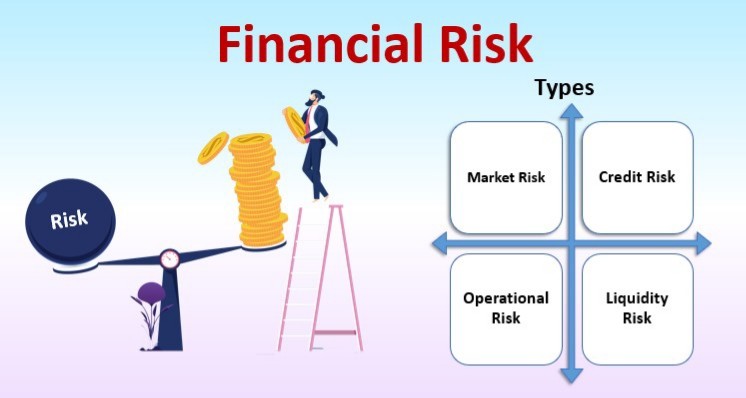
The categories we use to think about financial risk — market, credit, liquidity, operational, and even currency risk — are attempts to put order around chaos. They help regulators and business leaders map exposures and decide where to put safeguards. Market risk, for example, is the threat that prices — of stocks, bonds, commodities, currencies — swing in unfavourable directions. Credit risk is simply the danger a borrower won’t pay back what they owe. Liquidity risk speaks to the worry that you might not be able to convert assets into cash fast enough to meet obligations.
And yet, once you’ve said those words out loud, you realise they’re no more precise than saying “rain might fall.” That’s why risk management basics also includes how organisations judge these threats — through probabilistic models, stress tests, scenario analysis, and sometimes intuition honed over years on trading floors and in boardrooms.
In the UK, regulators don’t pretend risk can be eliminated. Instead, institutions like the Bank of England and the Financial Conduct Authority push for buffers, capital reserves, and contingency planning so that individual firms’ troubles don’t mutate into system‑wide panic. Recent reports signal concern about new vectors of financial risk — such as inflated technology valuations and complex lending structures — even as headline banking figures suggest resilience.
Consider the uneasy moment last year when a parliamentary committee warned that widespread use of artificial intelligence by financial firms — for everything from risk scoring to customer assessment — could create new, opaque avenues of vulnerability. In that dispute, regulators were criticised for “wait‑and‑see” postures while MPs fretted about synchronous AI‑driven decisions triggering crises.
Risk is a shape‑shifter. What looked like a safe bet six months ago can become a glaring problem today. I’ve seen seasoned risk managers flinch at data points that most of us would never notice — and I’ve heard others lean back and say, almost proudly, that models failed them when the unexpected arrived. Thinking like that, wrestling with uncertainty, is part of the craft.
Good risk management, in practice, is both proactive and humble. Proactive because it tries to anticipate downside before it happens; humble because it accepts that the future doesn’t come with a manual. It’s why firms buy insurance against fraud or cyber‑attack, why hedging instruments are used to offset currency exposures, and why stress tests put balance sheets through hypothetical storms. Yes, even storms that might never arrive.
For ordinary people, financial risk often feels like a silent companion. You don’t notice it until you do: an unexpected interest rate rise inflates mortgage costs, a sharp market correction erodes your portfolio, or a business defaults on a loan you were counting on. That tension — between everyday life and complex financial architecture — makes the subject matter alive, and uneasy.
So when we talk about risk management basics, what we’re really talking about is preparedness: the willingness to look squarely at uncertainty rather than dismiss it, and the discipline to put sensible measures in place so that when pipes leak or markets lurch, the water doesn’t flood the whole basement.
It’s a lesson policymakers, firms, and individuals in the UK keep returning to — often with historical scars as reminders — because risk isn’t an intellectual exercise. It’s something that unfolds in real time, with real consequences, for real people.
