
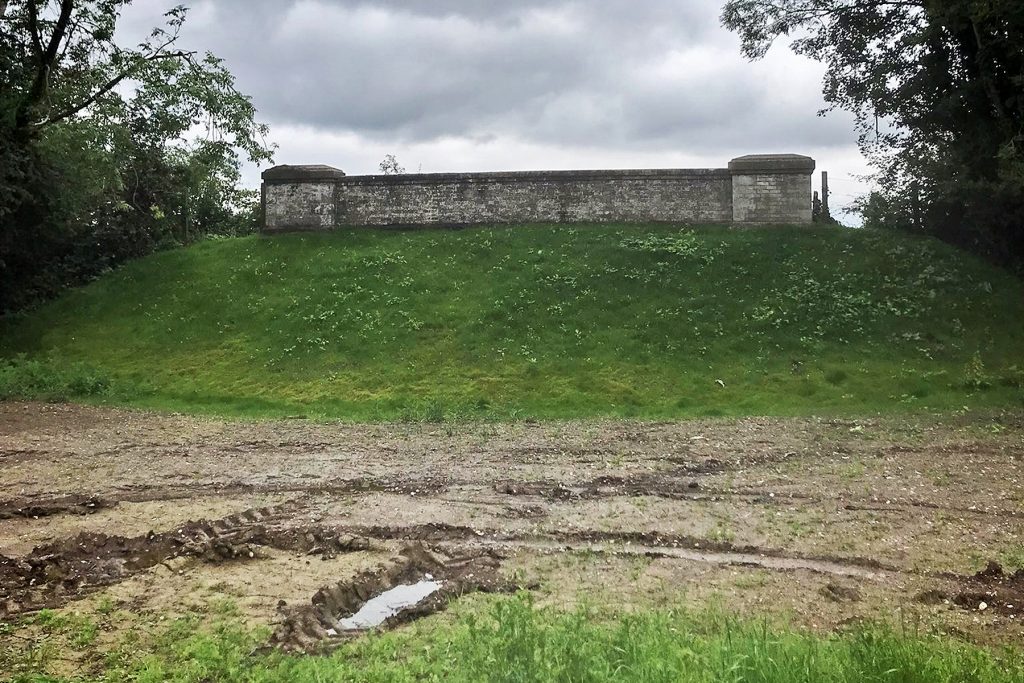

A historic bridge in Norfolk had its infill removal order overturned by the Planning Inspectorate.
- The St Andrew’s Lane Bridge was infilled with 1,000t of concrete for safety reasons in 2021.
- Local council opposed this move, citing the bridge’s heritage significance and future potential.
- The Planning Inspectorate ruled in favour of keeping the infill, citing safety and structural benefits.
- This decision has sparked disappointment among heritage preservation groups and local council.
The Planning Inspectorate has reversed a local council’s order for National Highways to remove a concrete infill from beneath St Andrew’s Lane Bridge in Congham. Initially filled with 1,000 tonnes of concrete in 2021 for safety purposes, the decision to leave the infill has been contentious due to the bridge’s historical value.
National Highways carried out the infill to prevent structural issues, referencing a 2019 assessment that indicated significant restrictions on the bridge’s load capacity. This assessment highlighted physical deterioration, including cracks and structural movement. The infill was considered the most cost-effective method to preserve the bridge and its capacity to carry all forms of traffic, notably agricultural vehicles critical to the area.
The local council, however, objected to this decision. They highlighted the bridge as a heritage asset, essential for future active travel uses as part of the area’s Neighbourhood Plan, which envisaged converting the former railway beneath the bridge into a greenway. They argued that the infill compromised the potential for future cultural and transport projects.
Inspector Laura Renaudon acknowledged the heritage loss but sided with National Highways, citing significant benefits. She noted the increased load capacity, improved public safety, and resolution of anti-social behaviour issues beneath the bridge as decisive factors. Her ruling highlighted that these benefits outweighed the heritage and landscape loss, thus aligning with the local development plan.
Reaction to the decision has been mixed. National Highways welcomed the decision, emphasising the importance of the Inspectorate’s role in validating safety measures and structural decisions. Conversely, the HRE Group and local council have expressed disappointment, concerned over the prioritisation of infrastructure cost and efficiency over heritage preservation. They argued that such decisions undermine trust in preservation commitments and overlook the potential of historical structures in sustainable transport networks.
The Planning Inspectorate’s decision underscores the ongoing tension between structural safety and heritage preservation.
