

Trace your finger from the Persian Gulf to the open ocean while standing at the edge of a map. You’ll come across a slender blue strip that is hardly larger than a mid-sized American city. That is the Strait of Hormuz, which is 21 miles across at its narrowest point. For many years, it served as a calm conduit for about 25% of the world’s oil and liquefied natural gas. Now, things are different. From the outside, it appears that the world is getting closer to a real energy reckoning than most Washingtonians are willing to publicly acknowledge.
Tehran swiftly asserted control over the strait when the US-Israel military campaign against Iran started in late February. Ships were halted. There were reportedly tolls. Only ships that were willing to pay or from nations Tehran deemed friendly were allowed to pass. Oil and gas prices skyrocketed as a result of the disruption, and American consumers felt the effects almost immediately—at gas stations, in utility bills, and in the silent anxiety that spread throughout corporate supply chains. After that, there was a ceasefire mediated by Pakistan that lasted for about two weeks and momentarily reduced tension. Then the negotiations broke down. Trump then made a blockade threat.
| Category | Details |
|---|---|
| Strategic Location | Strait of Hormuz — narrow waterway between the Persian Gulf and the Gulf of Oman |
| Width at Narrowest Point | Approximately 21 miles (33 km) |
| Pre-War Oil & LNG Flow | Roughly 20% of global oil and LNG supplies passed through the strait before the conflict |
| Current Status | US Navy blockade in effect as of April 14, 2026 — applied to vessels entering or departing Iranian ports |
| Iranian Oil Exports to China | ~98% of Iranian crude exports destined for China; approximately 157.7 million barrels at sea as of mid-April 2026 |
| US Blockade Authority | US CENTCOM enforcing blockade in Gulf of Oman and Arabian Sea east of the strait |
| India’s Vulnerability | Oil supply covers fewer than 60 days; LPG stockpiles cover only 2–3 weeks of demand |
| China’s Buffer | Strategic and commercial oil stocks cover 120+ days of net imports |
| Key US-China Tension | Trump threatened 50% tariffs on China if Beijing supplies weapons to Iran |
| Upcoming Diplomatic Event | Trump–Xi summit tentatively scheduled for mid-May 2026 |
| Legal Assessment | Blockade considered legal under law of naval warfare since US, Israel, and Iran are active belligerents |
| Key Analyst | Wendy Cutler, Vice President, Asia Society Policy Institute: conflict “may upend” US-China diplomatic effort |
The US Navy officially announced it on April 14. President Trump declared that ships associated with Iranian oil exports would be the target of American forces’ blockade of ships attempting to enter or exit the Strait of Hormuz. The scope of the blockade was made clear by US Central Command: it would cover maritime traffic near Iranian ports as well as coastal regions in the Arabian Sea and Gulf of Oman. CENTCOM made it clear that any ship entering or leaving the blockaded area without permission “is subject to interception, diversion and capture.” Perhaps this was never so much about stopping international energy flows as it was about using leverage in negotiations. However, the effects on the economy don’t wait for diplomatic intentions to become clear.
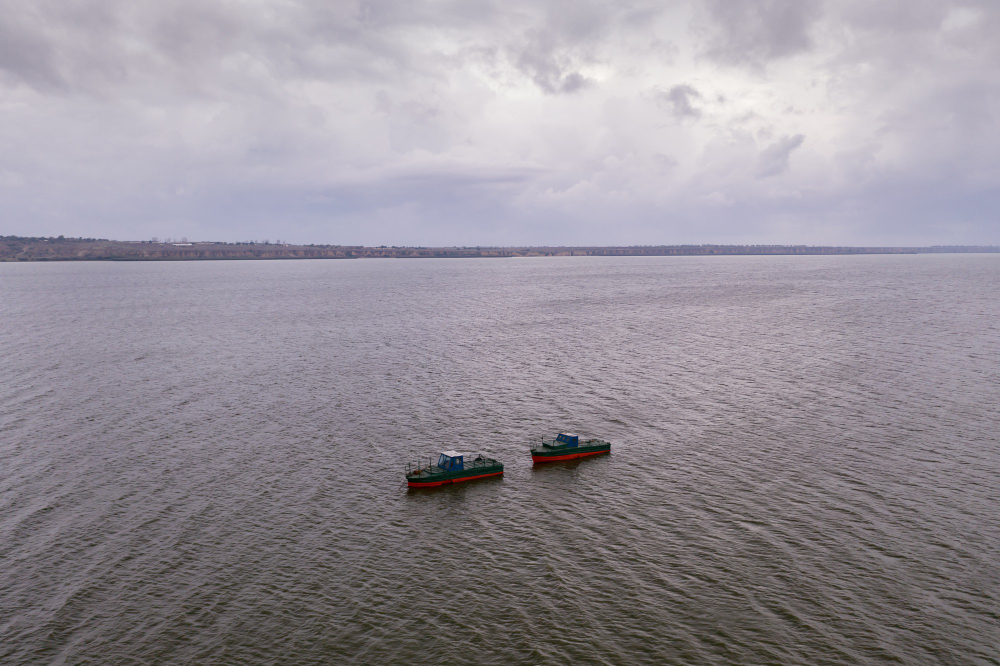
The timing is truly unsettling for the US economy, which is already burdened by sticky inflation, high borrowing costs, and a manufacturing base that has never fully recovered. Energy costs have an impact on everything, not just the gas pump. The cost of trucking is rising. Prices for food follow. Airlines change their prices. Manufacturers adjust their profit margins. The Federal Reserve must now account for an external energy shock that no one in the FOMC had factored into their base case six months ago. The Fed is already balancing rate cuts and inflation control. A geopolitical blockade has no clear-cut policy solution.
The more nuanced tale concerns how this affects America’s ties with the two nations that are currently most important to the world economy. Roughly 98% of Iran’s crude exports go to China, and as of mid-April, intelligence services estimated that 157.7 million barrels of Iranian oil were at sea, almost entirely destined for Chinese ports. Beijing is not merely a bystander in this situation; because of its structural reliance on Iranian oil, Chinese officials view Trump’s blockade as an economic assault.
Guo Jiakun, a spokesman for the Foreign Ministry, described the action as “dangerous and irresponsible,” and after Trump threatened to impose a 50% tariff on China if Beijing was discovered to be supplying weapons to Tehran, the language became even more harsh. China vigorously retaliated. Weeks before a planned Trump-Xi summit in mid-May, that exchange—which includes tariffs, weapons, oil, and rhetoric—occurs, and it is difficult to see how it doesn’t cloud those discussions.
The situation in India is quite different. After a seven-year hiatus, New Delhi recently started buying Iranian gas and oil again after obtaining a temporary US waiver and safe passage from Tehran. That delicate diplomatic balancing act now appears to be in jeopardy. Less than sixty days’ worth of oil can be consumed from India’s reserves. If Middle Eastern imports stall, its LPG stockpiles—a fuel used for cooking in millions of Indian households—could only meet demand for two to three weeks. During their nearly 40-minute conversation, Prime Minister Modi used tactful diplomatic language regarding “de-escalation,” but when your energy exposure is this severe, words can only do so much.
China, on the other hand, is more secure. Together with barrels in transit, its commercial and strategic oil reserves cover more than 120 days’ worth of net imports. Beijing was allegedly accused by US Treasury Secretary Scott Bessent of hoarding oil supplies and behaving as a “unreliable global partner” by refusing to release reserves to alleviate the global crisis. It’s a direct charge, and it might be true. However, it also highlights an unsettling aspect of the American stance: Washington orchestrated this pressure campaign, and it is now irritated that other nations are handling the fallout in ways that further their own agendas rather than America’s desired result.
At the very least, the blockade’s legal framework is fairly obvious. The US has the authority to impose a naval blockade as a belligerent under the law of naval warfare; Iran used this same authority when it controlled the strait during hostilities. This is in line with centuries of maritime law, according to academics at places like the Australian National University. The most recent similar precedent was the US blockade of Venezuelan oil tankers in late 2025. Where this ends, how Iran reacts, and whether a single miscalculation at sea by a naval vessel on either side could tip a precarious ceasefire back into open warfare are all less clear.
With comparatively few buffers remaining in the toolkit, it is difficult to ignore the fact that the US economy is being asked to absorb shocks from multiple directions at once. Analysts have been warning about the Strait of Hormuz vulnerability for years, creating scenario charts and performing simulations. However, a blockade and a simulation are not the same thing. To put it simply, the most important energy chokepoint in the world is now a contested military zone. How long this lasts, how far it escalates, and whether the diplomacy that broke down in Pakistan can somehow be restored before the harm worsens will determine how much that costs the American economy.
