

What China’s central bank just did seems almost counterintuitive. While most policymakers around the world are frantically trying to control inflation brought on by instruments—raising interest rates, tightening belts, and preparing for hardship—the People’s Bank of China quietly took action that it hadn’t taken in a full year. The economy lost money as a result. Not a small sum of money. Much of it.
Through short-term open market operations, the PBoC removed 890 billion yuan, or about $129 billion, from the financial system in March 2026. It then used longer-term instruments, such as medium-term lending facilities and outright reverse repurchase agreements, to absorb an additional 250 billion yuan. When combined, commercial banks most likely reported their first net PBoC loan repayment since May of last year. That’s not a small change. It’s a pivot.
| Category | Details |
|---|---|
| Institution | People’s Bank of China (PBoC) |
| Action Taken | Withdrawal of liquidity from financial system — first time in one year |
| Amount Drained (Short-Term) | 890 billion yuan (~$129 billion USD) via open market operations in March 2026 |
| Amount Drained (Long-Term) | 250 billion yuan via outright reverse repurchase agreements and medium-term lending facility |
| Total Estimated Impact | First net repayment of PBoC loans by commercial banks since May 2025 |
| Trigger / Context | Rising global oil prices driven by the Iran war; China approaching exit from record deflation |
| Current Monetary Policy Stance | “Moderately loose” — PBoC still officially accommodative, leaning on fiscal tools |
| Overnight Interbank Rate | Steady at ~1.3% despite thinner liquidity |
| Key Analyst Quote | Lynn Song, Chief Economist for Greater China, ING Bank: PBoC wants to “save bullets for the future” |
| Global Comparison | G20 average inflation forecast revised upward to 4% by OECD (from 2.8% in December 2025) |
| Next Data Release | PBoC balance sheet data due mid-April 2026 |
| Headquarters | Beijing, China |
The second-largest economy in the world has experienced its steepest slowdown since the post-Covid reopening chaos of late 2022 as a result of Beijing’s months-long unrestricted use of liquidity. While consumers remained wary and the real estate market dragged on, officials pumped money in, kept interest rates low, and attempted to keep the lights on. The strategy was defensive, essential, and, for the most part, successful; growth began to rebound in 2026. However, the PBoC appears to be aware that the situation has changed.
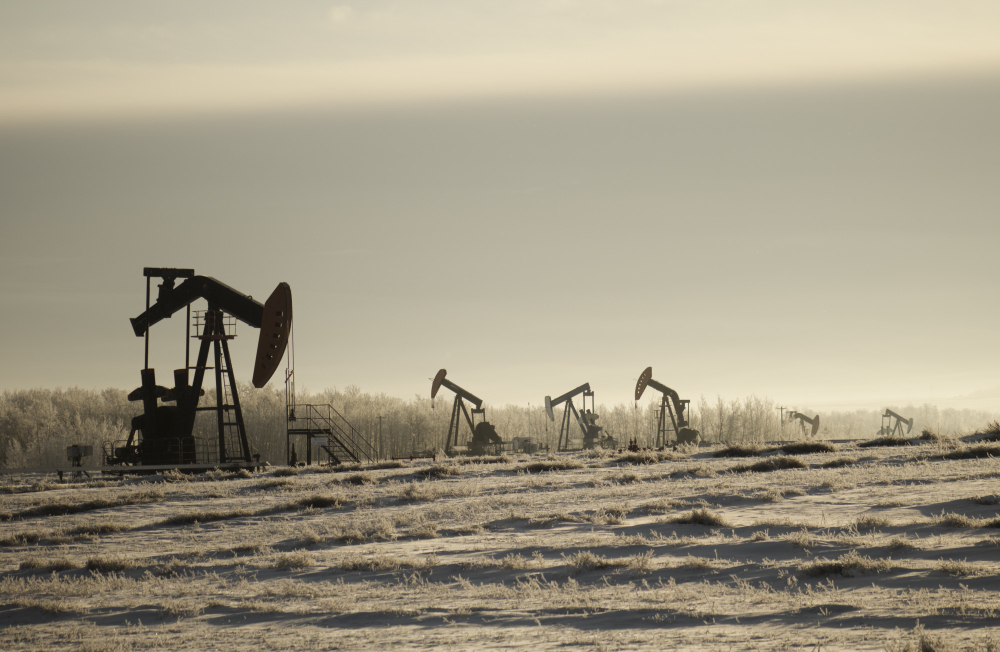
Global energy markets have been shaken by the surge in oil prices caused by the conflict in Iran. That is more than just an economic annoyance for China, the biggest oil importer in the world, as it could lead to inflation in a nation that has spent years battling deflation. In Beijing’s financial circles, there is a feeling that the protracted period of deflation may finally be coming to an end, which completely alters the calculations. The reasoning behind flooding the interbank market with inexpensive cash begins to fall apart when prices begin to rise.
The PBoC, according to Lynn Song, chief economist for Greater China at ING Bank, wants to “save bullets for the future when more injections are needed.” It’s a memorable phrase. The purpose of the imagery is to avoid firing everything at once while the outcome of the conflict is still unknown. Make sure the powder is dry. When growth is still fragile and the pressure to stimulate never completely goes away, that kind of discipline is more difficult than it seems.
As this develops, it’s difficult to ignore the fact that China seems to have been covertly getting ready for precisely this kind of shock. Prior to the PBoC’s action, Reuters revealed that Chinese investors were benefiting from the spike in oil prices; bonds and the yuan were holding steady, while Chinese stocks were declining by about half as much as their regional counterparts. That is not fortuitous. Positioning is that.
Despite the reduced liquidity, overnight interbank borrowing costs have remained at 1.3%, which indicates that neither the PBoC nor the markets are significantly tightening. Keeping options open, keeping an eye on how oil prices affect the actual economy, and keeping an eye out for inflation signals before they become issues are all part of this more strategic pause. Officially speaking, the central bank’s position is still “moderately loose,” and officials are still depending more on fiscal policy to boost growth.
Even so, there is a noticeable change in posture. An increasing number of analysts have been delaying their predictions regarding China’s next interest rate reduction or decrease in the mandatory reserve ratios for banks. In late March, the OECD made a significant upward revision to its inflation outlook for major economies. It now projects the G20 average inflation rate for the year at 4%, up from 2.8% just three months prior. Other central banks around the world, on the other hand, are either raising rates or have already done so. Although it hasn’t arrived yet, China is obviously keeping an eye on the same figures.
It won’t be possible to see the complete picture of the liquidity withdrawal until the PBoC releases its balance sheet data in the middle of April. Prior to this action, the central bank’s claims on other depository corporations, which are essentially a measure of the amount it has lent to commercial banks, had increased for nine straight months up until February. Even a small reversal of that trend is significant. It’s also important to remember that the PBoC started buying government bonds again in October, which helps to partially offset the loss. These instruments are a part of a more complex monetary management strategy that China has been meticulously developing.
What this moment may indicate outside of China is what makes it truly intriguing. Demand for commodities, currency flows, and investor sentiment in emerging markets are all impacted by China’s liquidity conditions. At a time when energy markets are already unstable, a tighter PBoC stance—even a cautiously tighter one—could reduce demand for raw materials. Whether this is the start of a longer-term change or just a short tactical pause before more easing resumes is still up in the air. But for the time being, Beijing has opted for restraint over reflex, and it is important to keep a close eye on that restraint in a world where many central banks are reaching for emergency levers.
