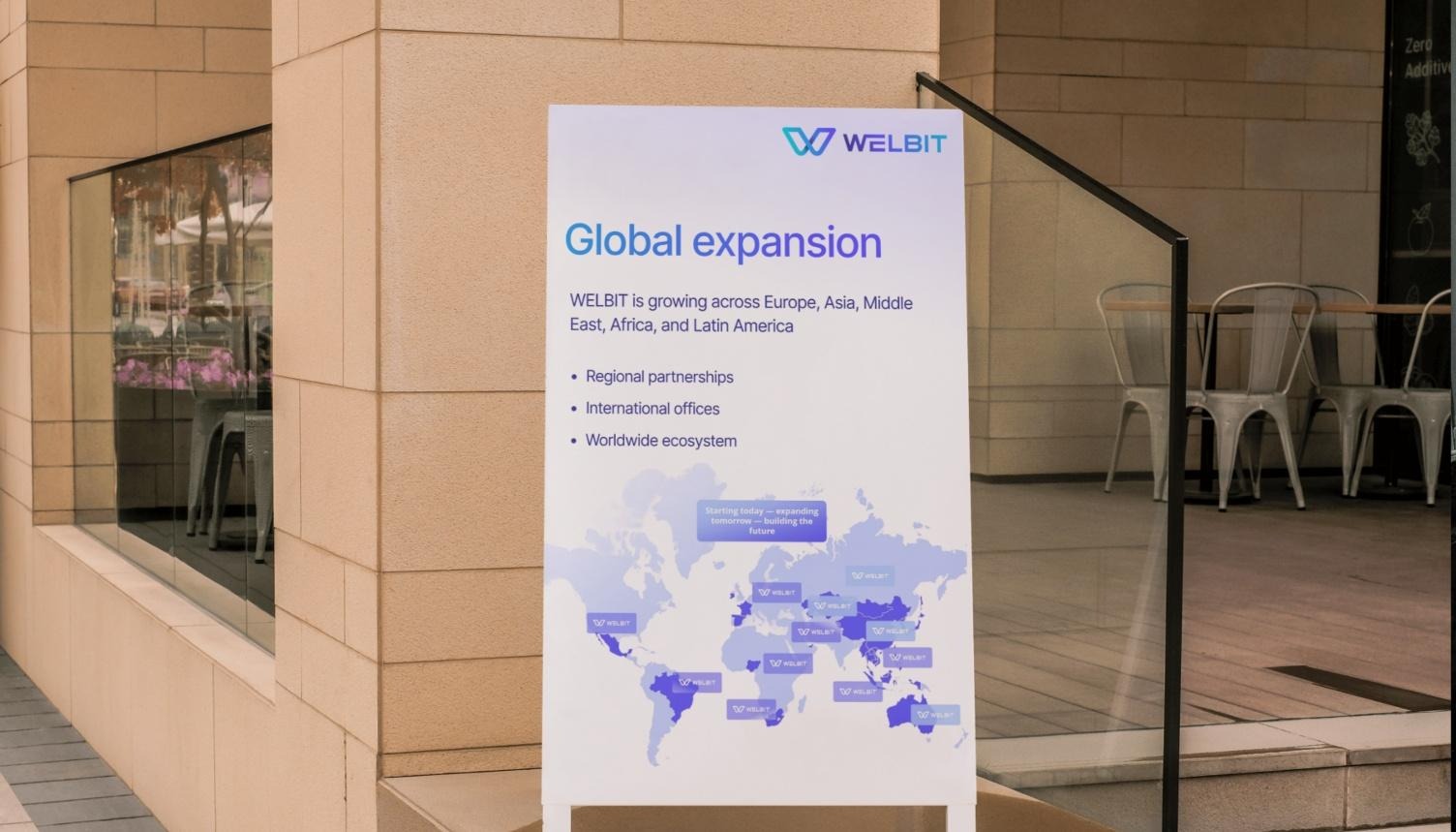
Oliver Hogan, chief executive of Toronto-registered fintech WELBIT, says his company’s 2025 groundwork for international expansion is now producing results — with partners and business communities across South Korea, China, Japan and Vietnam among those expressing interest in the first half of 2026.
Four markets. One year of preparation.
WELBIT launched its international development strategy in 2025, building what the company describes as the foundation for cross-border partnerships and global growth. By early 2026, that groundwork had attracted attention from across Asia — four distinct markets, each with a significant and sophisticated financial services sector of its own. The company attributes the interest to a combination of factors: Canada’s regulatory stability, WELBIT’s technology-driven model, and what it describes as a focus on long-term rather than transactional financial relationships.
What WELBIT has not yet specified publicly is what, precisely, it does.
The press release does not describe a product, a transaction type, a payment mechanism or a lending model. It identifies the company as a fintech operating within the Canadian regulatory framework — registered in Toronto and subject to oversight by Canadian financial authorities — but the specific financial services WELBIT provides to partners remain undisclosed. That gap is worth naming plainly, because anyone in South Korea, China, Japan or Vietnam evaluating a Canadian fintech partner will want to understand the offering before the relationship develops.
Hogan addressed the year ahead in direct terms. “2026 is a year of opportunity – an opportunity for growth, partnership, and long-term development,” he said. “We believe that this year our partners will truly experience the strength of WELBIT, and together we will build sustainable financial success.”
The Canadian registration is, at minimum, a verifiable anchor. Canada’s financial regulatory environment — administered through bodies including FINTRAC for financial intelligence and provincial securities regulators for investment activity — carries international credibility, particularly in markets where offshore financial operators have caused significant losses in recent years. For partners in Vietnam and South Korea especially, where regulatory scrutiny of foreign fintech partnerships has tightened, a Canadian-registered firm with demonstrable compliance obligations offers a different risk profile than an unregistered offshore entity.
The four named markets are not arbitrary choices. South Korea has one of the world’s most active retail fintech sectors, built around platforms like Kakao Pay and Toss. Japan’s financial services market is large and historically cautious about foreign entrants but increasingly open to regulated overseas partners. China presents obvious complexity for a Canadian company, given ongoing trade and regulatory tensions. Vietnam is among Southeast Asia’s fastest-growing digital finance markets, with a young population and rapidly expanding mobile payment infrastructure.
Breaking into any one of those markets meaningfully requires more than expressed interest — it requires local licensing, regulatory approval, distribution partnerships and product localisation. WELBIT has not indicated how far along any of those processes it is.
Still, the 2025-to-2026 timeline Hogan describes is consistent with how early-stage international fintech expansion tends to work: lay regulatory groundwork, establish visibility in target markets, generate inbound interest, then convert that interest into formal agreements. WELBIT appears to be somewhere between the second and third stages.
WELBIT’s services are available through the company’s official channels.
The question Hogan’s New Year message raises but does not answer is what partners in Asia will actually be signing up for. Strength, in fintech, is demonstrated through product performance, regulatory approvals and transaction volume — not through outlook statements alone. The markets WELBIT has identified are competitive enough that the entry barriers are real, and the partners paying attention in early 2026 will be asking for specifics before the year is out.