Long after the headlines have passed, a particular statement made by Warren Buffett is repeated in quiet areas of the financial industry. Ten words from a July CNBC interview are currently making the rounds: “It’s tough to find values when everybody is preferring gambling.” If you’ve been watching your portfolio grow over the last three years, it’s straightforward, uncaring, and simple to ignore. Knowing what lies beneath the surface makes it more difficult to ignore.
Buffett, who is 96 years old, resigned as CEO of Berkshire Hathaway earlier this year. However, he continues to serve as chairman and maintains his voice in the markets, which has recently taken on a more circumspect tone. In May, he likened the current markets to “a church with a casino attached” during Berkshire’s annual meeting. Although he was specifically referring to the increase in speculative positioning and short-term options trading, the statement seemed to go beyond that. It seemed like a man who had previously noticed this pattern pointing out something that people are at ease ignoring.
It is worthwhile to take the data supporting the concern seriously. The ratio of the total value of the U.S. stock market to GDP, known as the “Buffett Indicator,” is currently close to 238%, the highest value ever noted. When that figure got close to 200%, Buffett himself cautioned investors in 2001 that they were playing with fire. That caution was issued close to the top of the dot-com bubble.
In the years that followed, the S&P 500 dropped by about 50%. Currently, the Shiller CAPE ratio—which smoothes out cyclical noise by adjusting earnings over a full decade—is higher than 41. Only in the vicinity of the tech bubble’s peak did it momentarily approach that level. Many strategists will tell you that high valuations can last for years and do not necessarily indicate a crash. However, for anyone purchasing at these prices, they do compress the expected returns.
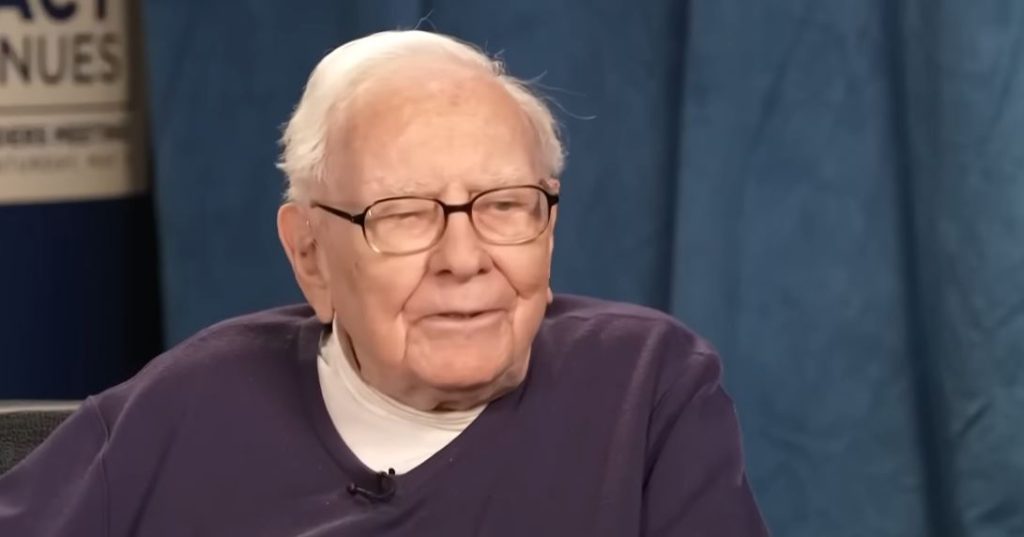
It’s important to consider Buffett’s actions as well as his words. As of early May, Berkshire’s cash and Treasury bills totaled about $373 billion. While the market celebrated AI earnings and record highs, the company was a net seller of stocks for fourteen consecutive quarters, discreetly reducing positions.
When Berkshire changed its direction and turned into a net buyer in the second quarter of 2026, that run came to an end. That does not indicate that the market is inexpensive. It’s not the same as endorsing the market as a whole; rather, it’s more likely a sign that Buffett discovered something valuable to own at a price that made sense to him.
Right now, it seems like a lot of regular investors are confusing the true economic productivity of AI with the cost of owning a stake in it. Over the previous three years, the S&P 500 has increased by roughly 78%. This momentum has continued into 2026, with the index rising by about 13% this year. That is a significant amount of future earnings that have already been factored in. Geopolitical challenges, such as the United States’ military action against Iran, an increase in oil prices, and rising Treasury yields, have caused additional volatility spikes that momentarily shake the index before it steadies and rises once more. The resilience of markets can be a source of risk in and of itself.
It’s instructive to read Buffett’s 2008 New York Times op-ed and understand why people keep sharing it. At that time, he made the case that bad news is an investor’s best friend because it enables you to purchase a portion of the nation’s future at a reduced price.
He was correct. Since its low in March 2009, the S&P 500 has increased by more than 1,000%. However, the context is important: at the time he wrote that article, panic was actually in the air and the index had already dropped more than a third from its peak. He doesn’t have a slight wobble as his threshold for action. It occurs when “the markets are collapsing, so nobody will answer their phones.”That time has not yet come. And until it does, Berkshire’s massive cash hoard speaks louder than any interview statement.
None of this indicates that a decline in the market is imminent. Whether today’s valuations represent a truly precarious overhang or a new structural ceiling is still up for debate. However, it is not easy to ignore Buffett sitting on the sidelines with almost $400 billion in dry powder. Buffett has successfully navigated six decades of market cycles without losing his fundamental footing. It’s the kind of information that’s worth preserving.