
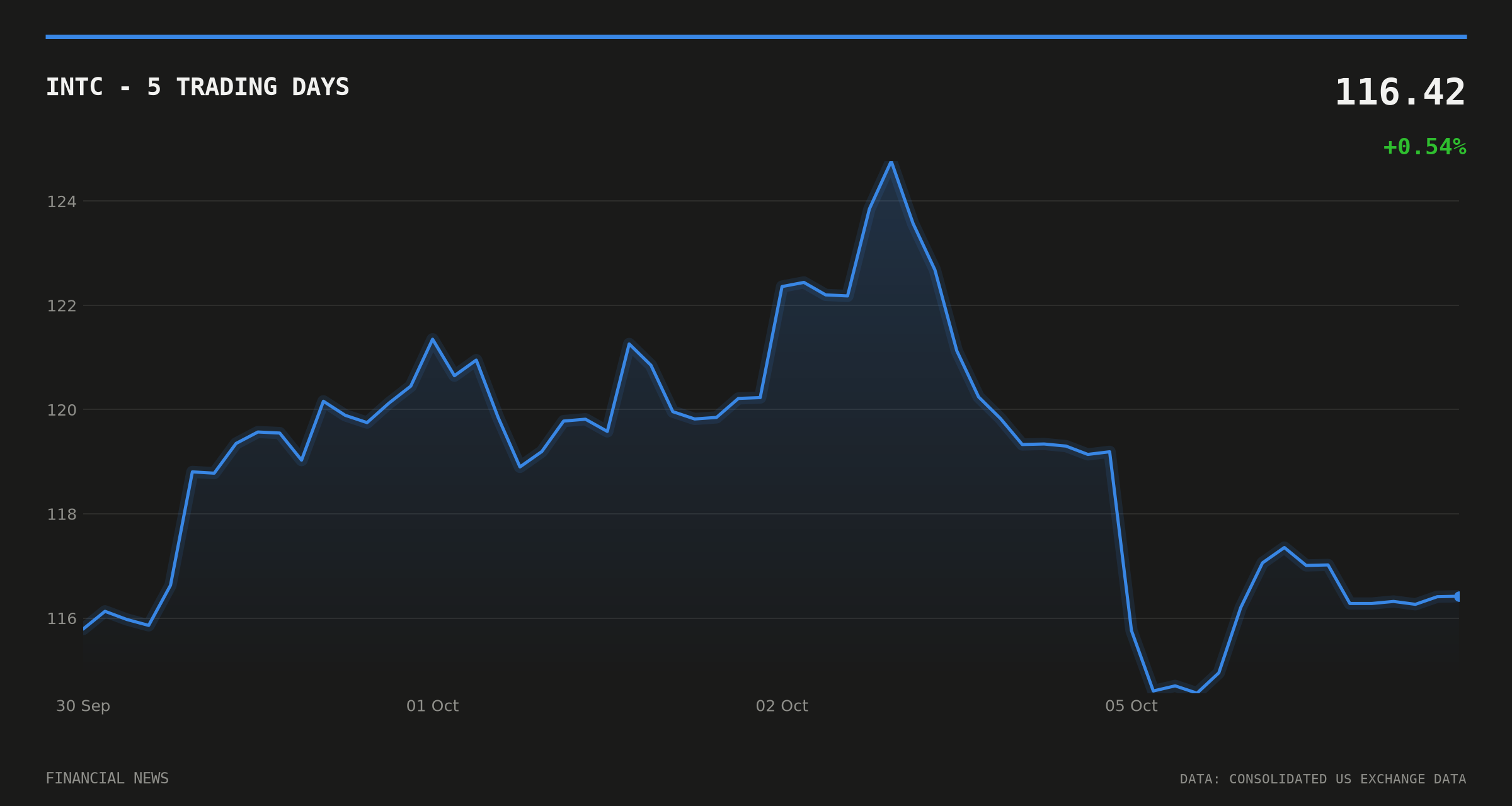

Elon Musk confirmed on 3 October 2026 that TSMC is holding talks over a possible role in his Terafab chip project in Texas. The disclosure knocked Intel (NASDAQ: INTC) shares down as much as 4.1% in premarket trading on Monday, according to The Crypto Basic.
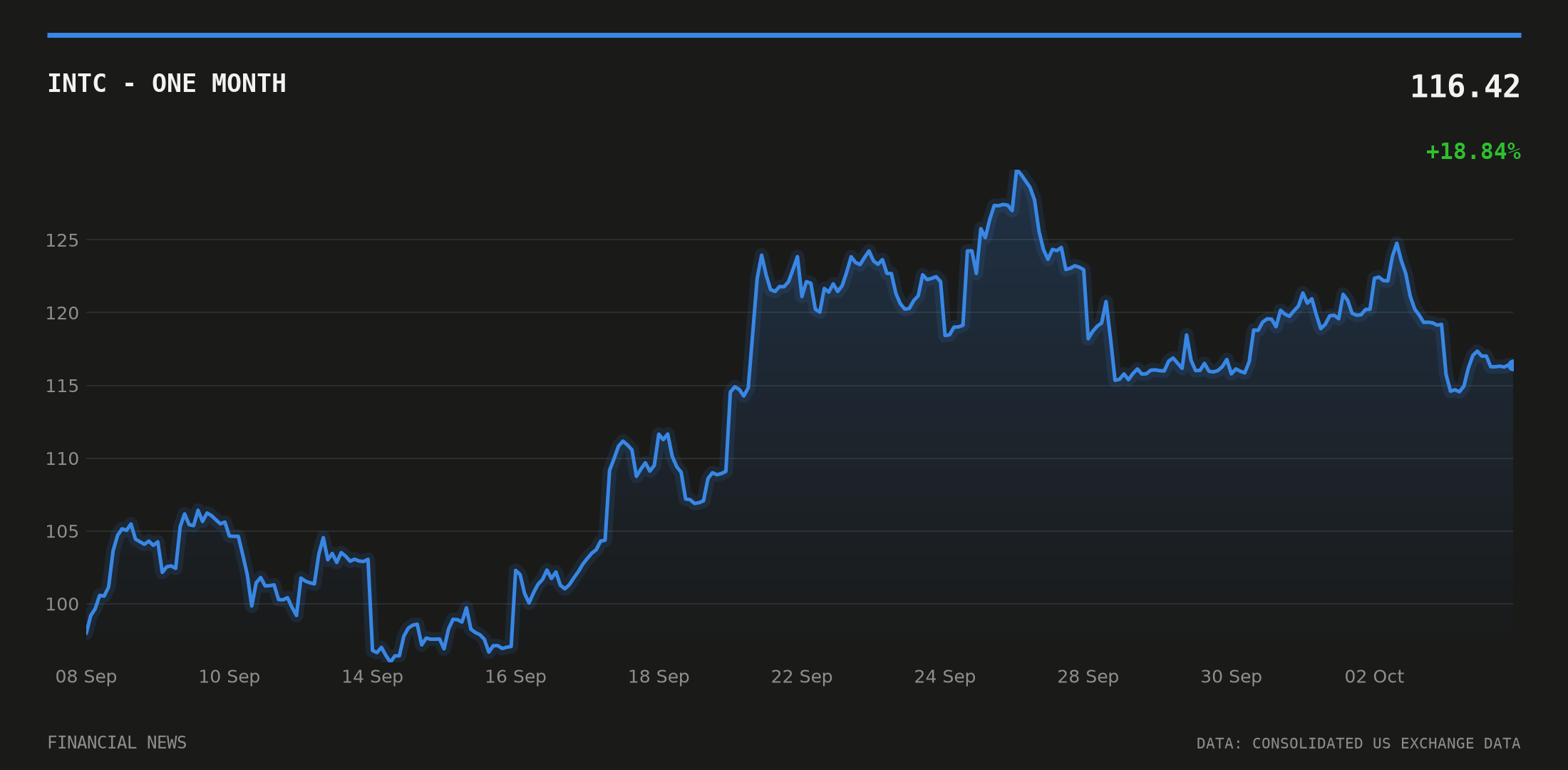
By the close, the damage had largely faded. Intel finished the session at $116.42, down just 0.5% on the day, consolidated exchange data show. The stock remains up more than 20% over the prior month.
Musk’s confirmation, and its limits
Musk’s own wording undercut some of the alarm his confirmation triggered. Replying on X, he described the talks as ‘just discussions, but something may come of it’ – language that stopped well short of announcing a deal.
The stakes for Intel are real nonetheless. Intel became Terafab’s publicly named foundry partner in April 2026, with Musk saying Tesla planned to use Intel’s 14A process for Terafab chips once that node scales, as Forbes reported at the time. Until this week, Intel had been the only chipmaker or process-technology partner tied publicly to the project.
Nobody is actually locked in
What the latest disclosures also show is that neither Intel nor Tesla has a binding commitment to Terafab at all. SpaceX’s correspondence with the US Securities and Exchange Commission makes clear that definitive agreements may never be reached, and that neither company is obligated to remain part of the project, according to The Crypto Basic. That cuts both ways: TSMC’s entry does not displace a signed contract, because there isn’t one to displace.
TSMC’s own chairman and chief executive, CC Wei, has offered a reminder of how far any new arrangement sits from production. A new wafer fab takes roughly two to three years to build, Wei said, with another one to two years needed to scale capacity, according to ANI News. Two structures are reportedly under discussion: one in which TSMC owns and operates the Texas plant while SpaceX invests and buys chips, another in which SpaceX holds a majority stake and TSMC supplies process technology.
Why the foundry business matters so much to Intel
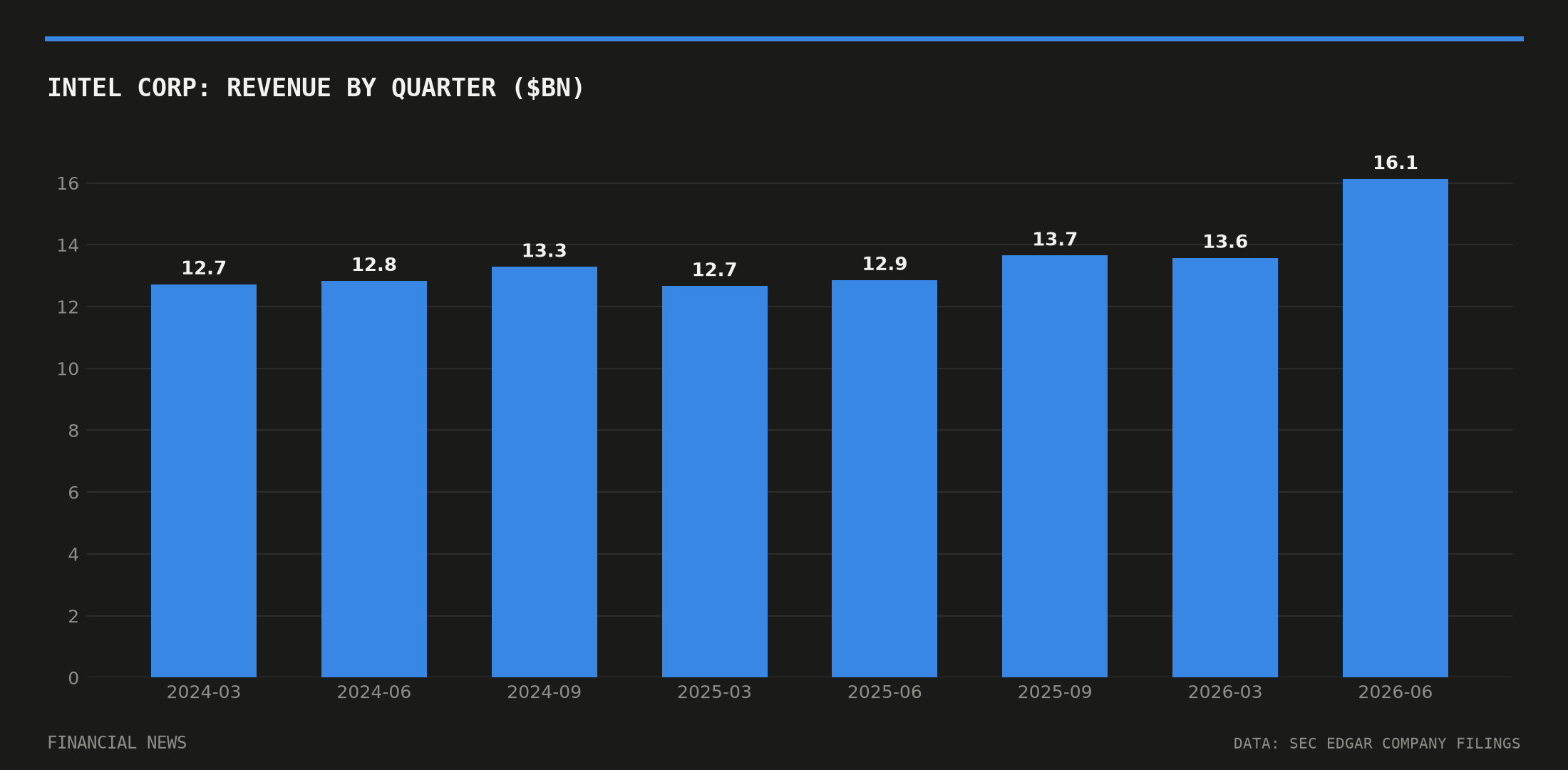
Intel’s financial swings explain why a marquee external customer carries so much weight for the turnaround story. The company posted a net loss of $16.639bn in the third quarter of 2024, then returned to a $4.063bn profit a year later, before swinging back to an $11.033bn loss in the second quarter of 2026 on revenue of $16.128bn, according to filings with the US Securities and Exchange Commission. Winning and keeping foundry customers for its 14A process is central to smoothing out that volatility.
The report that triggered Monday’s move originated with Bloomberg columnist Tim Culpan on 2 October, a day before Musk’s own confirmation, according to Tesla North. It also lands just ahead of TSMC’s own earnings call on 15 October, adding a further storyline for investors already parsing the foundry giant’s pricing and capacity plans, TrendForce noted.
No sign of a short-seller pile-on
Options traders and short sellers do not appear to be treating the news as decisive. Intel’s daily short-sale ratio held in a narrow 0.386-to-0.598 range through the ten trading sessions to 5 October, data from FINRA show – consistent with ordinary trading activity rather than a concentrated bet against the stock.
Until TSMC, SpaceX or Intel confirm anything beyond preliminary talks, the Terafab roster remains provisional. Musk’s own disclosures say as much: no chipmaker, including Intel, has a contract that obliges it to build in Texas.
This article is for information only and is not investment advice or a recommendation to buy or sell any asset. Markets move quickly; figures are correct as sourced at the time of writing. Always do your own research before making financial decisions.
