

Canadian Prime Minister Mark Carney made the call just after 10:30 on a Friday evening. For weeks, negotiators had been sequestered in rooms across the street from the White House, exchanging drafts, modifying language, and slowly moving closer to what appeared to be a deal, at least from a distance. Then everything fell apart in the last few hours. Carney picked up the phone, ordered his team to return home, and led both nations into a trade war that neither side really wanted.
It took time for the collapse to occur. It was the outcome of political calculations on both sides of the border, last-minute demands, and misplaced expectations. According to American officials, Canada was given the best trade access of any nation on the planet. Officials in Canada had a different opinion. It was described by one negotiator as “shadow figures suddenly in the room,” bringing up issues that were purportedly already settled by both parties. A deal doesn’t come together that way. One breaks down like that.
There were a number of really challenging issues at the core of it all. The majority of Canadian provinces had outlawed the sale of American alcohol, but the Trump administration wanted that to change. It sought control over Canada’s third-country steel tariff policy. It desired language that touched on online French-language content regulations. In addition to lowering tariff rates on its cars and aluminum goods, Canada quietly withdrew from an earlier offer to work together on the Keystone XL pipeline, which likely surprised Washington. That one probably hurt.
It’s easy to undervalue the part played by Ontario Premier Doug Ford. Don’t take the deal, he told Carney plainly. Ford had concluded that the tariffs on Canadian steel and cars were still too high to provide the industries with a solid long-term foundation. Since then, Ford has stated that the situation became “a little heated,” an understatement that only makes sense after the fact.
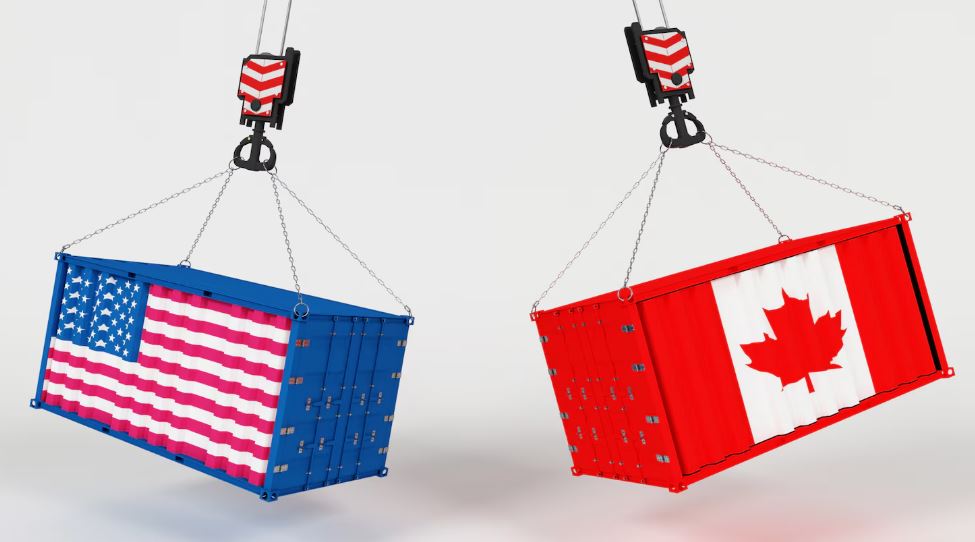
After the breakdown, things happened quickly and loudly. Trump declared that starting on January 1, all Canadian automobiles, auto parts, and steel would be subject to a 50% tariff. He referred to Canadian officials as “clowns” and proposed renaming Lake Ontario. Not to be outdone, Canada announced counter-tariffs of up to 50% on nearly C$28 billion worth of American goods, including apparel, steel, furniture, honey, and home appliances. According to François-Philippe Champagne, Finance Minister, it is “proportionate and strategic.” It is possible for both to be true.
The auto industry is particularly concerned about all of this. Tariffs on cars made in Canada would have been reduced from 25% to 15% under a failed agreement. These tariffs are currently approaching 50. Together, Toyota and Honda produced over 75% of Canada’s approximately 1.2 million automobiles in 2025. A sizable portion of General Motors’ popular Silverado pickup truck is produced in Canada.
It is the only location where Stellantis produces its Chrysler Pacifica, one of its best-selling vehicles in the United States. Super Duty trucks from Oakville will soon be imported by Ford. A genuine and unsettling question is emerging among auto executives: how can a supply chain be planned around a tariff rate that could double in a single week?
The US-Canada supply chains were not designed for this. They were constructed over many years under the presumption of comparatively smooth cross-border trade, which was first established in the 1988 Canada-US Free Trade Agreement and subsequently solidified in NAFTA and the USMCA. That presumption is no longer valid. The pain caused by these tariffs doesn’t stay neatly on one side because of the integrated nature of North American manufacturing, where a single vehicle may cross the border several times before it reaches a dealership. It spreads.
Observing all of this gives the impression that both governments entered this situation partially on purpose and partially by coincidence. According to polling, the majority of Canadians support their government’s opposition, so Carney needed to remain firm politically. For his part, Trump has long held the opinion that the US has been at a disadvantage in its trade relations with Canada; this opinion is evidently supported by his advisors. That belief’s veracity is a different matter. It results in a negotiation atmosphere where neither party sees much benefit from appearing to blink.
Whether a new agreement is reached before the vehicle tariffs go into effect in January is still up in the air. According to some industry insiders, the January deadline alone indicates that the door hasn’t completely closed. It is feasible. However, one thing has become fairly evident over the past few weeks: neither side was willing to acknowledge when they sat down to negotiate that the road back to a functional trade relationship between these two nations is longer and more difficult.
