

According to two employees of Tier-1 suppliers’ licensing departments, the calls began to increase at some point in early 2025. Silently. Silently at all times. The following week, the same individuals would be entering a conference room in Yokohama, Wolfsburg, or Seoul after a solid-state company in Massachusetts received a request for a private briefing. When they left the building, nobody wanted to be photographed. In this area of the automotive industry, there’s a perception that the person who establishes the best chemistry first gets to set the rules for everyone else, and nobody wants to be the second at the table.
It’s a group of technologies that are emerging at roughly the same uncomfortable time rather than a single innovation that has every executive on edge. The ones that make headlines are solid-state batteries, which substitute a stable solid electrolyte for the combustible liquid electrolyte inside a lithium-ion cell. They guarantee greater range, quicker charging, and a lower chance of the kind of fire that makes the evening news. For ten years, QuantumScape, a Silicon Valley startup supported by Bill Gates and Volkswagen, has been on the verge of a functional prototype. Factorial is conducting practical testing with Mercedes and Stellantis in Massachusetts. The problem is that “close” in battery science can refer to two or twelve years.
| Quick Reference: The Battery Licensing Race | |
|---|---|
| Industry | Electric Vehicle Battery Technology |
| Key Chemistries in Play | Solid-state, Lithium-Sulfur, Sodium-ion, LMR, LNMO |
| China’s Share of Global Cell Production | ~85% |
| China’s Share of Raw Material Processing | ~90% |
| Notable U.S. Players | QuantumScape, Factorial, Lyten, GM, Ford |
| Notable Chinese Players | CATL, BYD, Gotion |
| Fastest Demonstrated Charge Time | ~5 minutes (BYD flash charge, 1 MW) |
| Solid-State Commercial Target | Around 2027–2028 |
| Federal Research Hub | Argonne National Laboratory |
| Major European Bet | Renault’s LNMO platform, slated for 2028 |
| Capital Flowing into Battery R&D | Tens of billions annually, globally |
The geography is what distinguishes this race from previous ones. Currently, China produces about 85% of the world’s battery cells and processes about 90% of the raw materials used to make them. That’s a big lead. The engineer who showcased BYD’s flash-charging at the Shanghai Auto Show last year said, almost casually, that charging a phone was slower than flash-charging at one megawatt, which is fast enough to add two kilometers of range every second. It’s difficult not to wonder how many American executives watched the video from that booth and felt sick to their stomachs.
Developed at the Wallace Battery Cell Innovation Center outside of Detroit, GM has been promoting its lithium-manganese-rich chemistry. The logic is simple: if you can’t outperform CATL in terms of cost, you alter the recipe to make the cost calculation irrelevant. Similar claims are being made by Lyten in San Jose regarding lithium-sulfur, a chemistry that completely eliminates nickel, cobalt, and manganese. Last year, the company purchased the majority of the bankrupt Northvolt’s assets in Sweden. This is the kind of action you take when you truly think you have something the established players will eventually need.
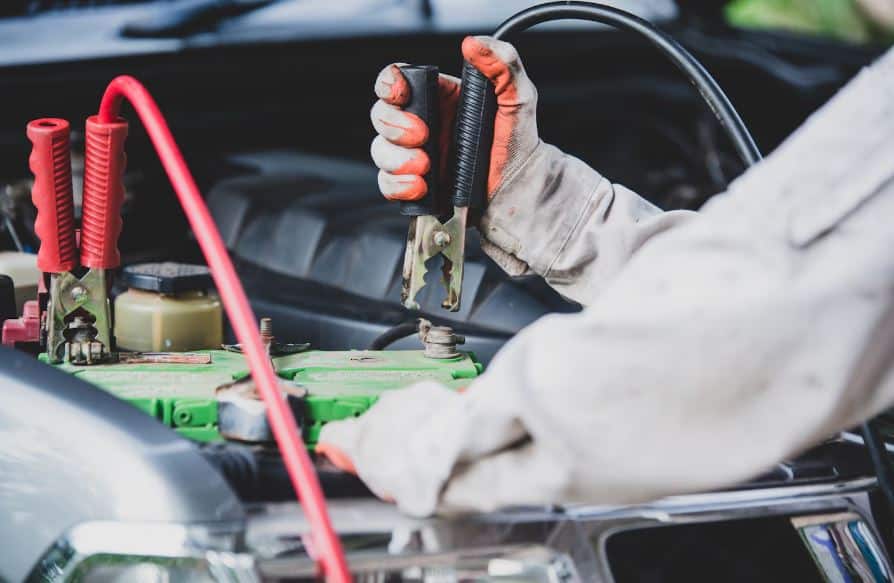
This is not just competitive, but also anxious due to the licensing question. Battery science is not something that automakers are naturally interested in owning. They wish to purchase, install, and transport automobiles. However, a specific kind of scar has been left by the legacy of LFP, where Western brands were forced to pay CATL for the right to use a chemistry developed in China. Toyota has reportedly started talks with at least three outside developers after years of promising a solid-state breakthrough that kept falling short. Hyundai is hedging but has its own program. Regarding its long-term roadmap, even Tesla, which typically prefers to handle everything internally, has been more reticent than usual.
Speaking with people in this field, there’s a sense that who licenses what and at what cost will be determined over the next two years. Businesses that take action early gain a position that can be defended. Those who wait might have to pay royalties on each vehicle they sell. It’s possible that nothing will function as promised, that flash charging won’t withstand contact with the realities of the American grid, and that solid-state will continue to malfunction. However, no one on the licensing side appears to be prepared to wager against it. By all accounts, the phones are still ringing.
