


A 27-inch pattern repeat sounds like a small technical detail. In an upholstery shop, it can nearly double the fabric needed for a single piece. No spreadsheet alive accounts for it automatically. That gap sits at the heart of why James Caldwell built StitchDesk in Los Angeles. He spoke to more than a hundred upholstery shops before writing a single line of code.
The $6 billion US upholstery industry runs on sticky notes, text messages and gut instinct. Customer status updates sit buried in old text threads or live entirely in someone’s memory. Fabric estimates rely on experience alone. So shops over-order and waste money, or under-order and wait weeks for a fabric shipment. Quotes end up scribbled on fabric swatches. Invoices go out only when someone remembers to send them. Yet the work itself demands real precision. That means reupholstering worn furniture, building custom pieces and restoring marine interiors battered by sun and salt.
Caldwell saw the gap clearly. Before StitchDesk existed, he sat with upholsterers across the country and asked what they actually needed. The answer was never another generic app. “We talked to over a hundred upholstery shops before we wrote a single line of code,” he said. “They didn’t need another app. They didn’t need something that kind of works for their business. They needed someone to finally build the thing they’d been sketching on napkins and describing on phone calls for years. That’s what StitchDesk is.”
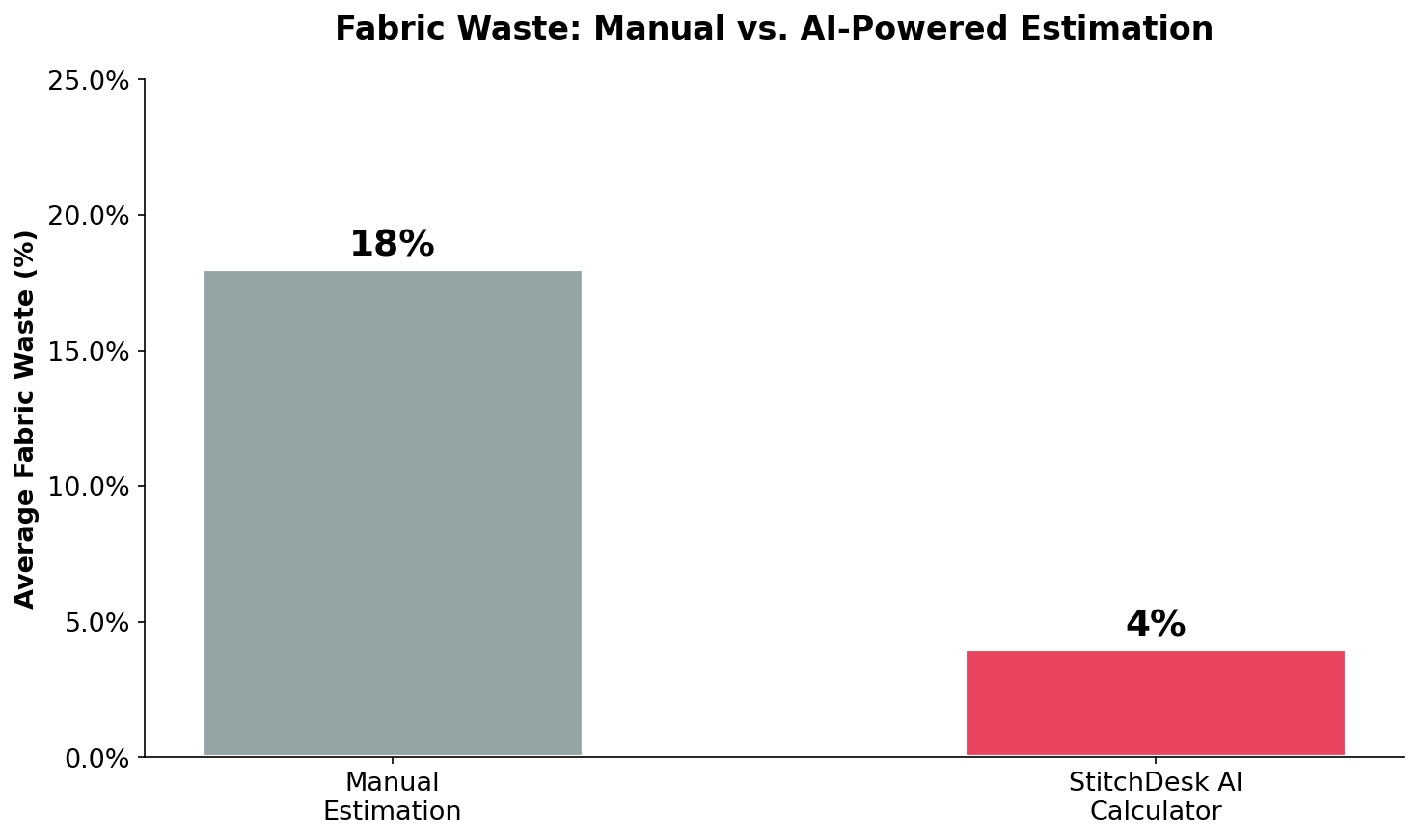
At the core of the platform sits an AI fabric yardage calculator — built around the single biggest cost in upholstery work. Estimating yardage has always been part skill, part guesswork. A solid fabric runs straightforward. Patterned fabric with a 27-inch repeat changes the calculation entirely. Cushion count, arm style, skirt length and welt cord all shift the total in ways that experience alone catches inconsistently. StitchDesk’s calculator takes in pattern direction, repeat size, furniture dimensions, arm style, cushion setup and skirt details. In turn, it produces a consistent estimate every time. The company says it often does better than veterans estimating by eye. That claim has not yet faced independent testing, but early adopters have so far backed it up.
Alongside that, a visualisation tool shows customers how their chosen fabric looks on their actual furniture before any cutting starts. A customer considering a bold geometric pattern can see how it looks on their full sectional before committing. If they want something different, they choose an alternative on the spot. As a result, change orders drop. So do the difficult conversations that follow when someone changes their mind after cutting.
Early adopters report significantly fewer over-orders, near-zero mid-project fabric shortfalls and stronger customer trust in upfront quotes. All three come from operator self-reporting rather than independent review. Yet the logic holds. When the estimate is accurate and the customer has already seen the result, fewer things go wrong later.
Beyond fabric estimation, the platform handles the full shop workflow. Digital intake forms replace paper tickets and capture job details in a structure anyone on the team can follow. Real-time project tracking gives a live view of every job, stage and deadline without anyone picking up the phone. Automated updates go out to customers at each milestone, cutting the “is it ready?” calls that eat into working time. Invoicing covers per-piece and per-cushion breakdowns with separate lines for fabric, labour and trim. In other words, it prices work the way upholsterers actually do — not the way accounting software assumes.
StitchDesk serves one-person operations handling around 15 jobs a month and production shops running 80 or more. By contrast, the tools most shops currently use — QuickBooks, Trello, Google Sheets — know nothing about pattern repeats or yardage. They require constant workarounds and still fall short. StitchDesk replaces all three with a single platform that speaks the language of the trade from the start.
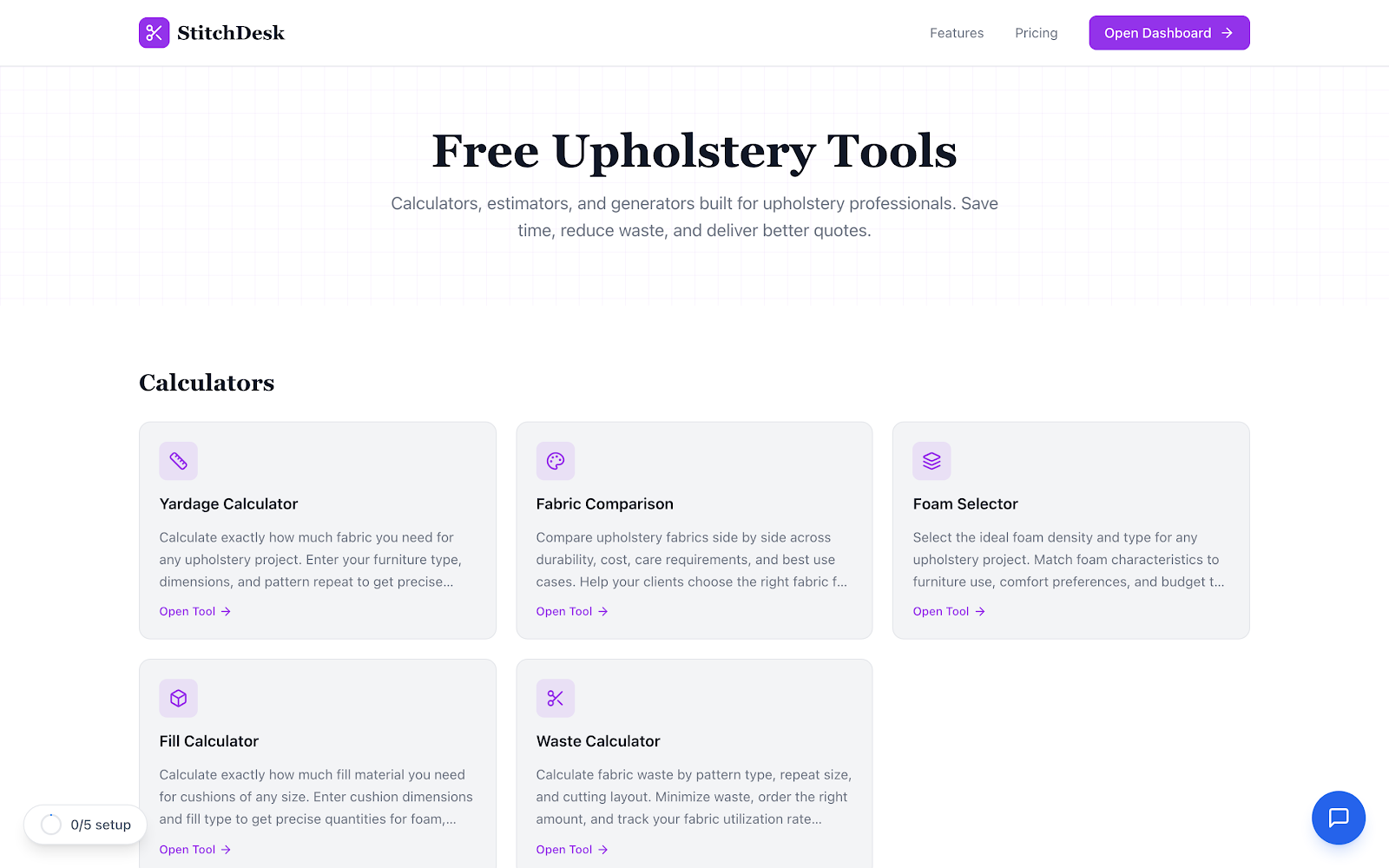
Free tools sit alongside the platform without needing an account. They include yardage estimators, cost calculators and pattern layout planners. On top of that, a resources section covers fabric selection, workshop setup, marine techniques and business planning. Guides run from beginner to production scale. A fabric directory details hundreds of upholstery-grade textiles to help shops and customers make informed choices.
The napkin sketches Caldwell heard about in those hundred conversations now have a finished version. It runs shops across North America. And it knows what welt cord is.
