

Viasat (NASDAQ: VSAT) said on 17 August 2026 it has selected Rocket Lab (NASDAQ: RKLB) to build the satellite bus for a geostationary spacecraft under the US Space Force’s Protected Tactical SATCOM-Global programme.
The subcontract sits under Viasat’s prime award from Space Systems Command for the programme’s first “Swarm 1” satellite, part of a combined package of PTS-G Swarm 1 delivery orders worth roughly $437.7m across the awarded contractors, according to SpaceNews. Financial terms of the Rocket Lab bus deal itself were not disclosed, the companies said in a joint release.
Rocket Lab’s Space Force contract widens beyond one prime
The Viasat order is Rocket Lab’s second identifiable Space Force GEO satellite role disclosed this year. In May 2026 the company won a separate $90m Space Force contract to build two GEO satellites carrying a space domain awareness payload, a deal reported by Insider Monkey. Taken together, the two awards point to Rocket Lab building out a spacecraft-platform business that supplies primes rather than always bidding as one itself.
A Space Systems Command spokesperson independently confirmed Rocket Lab’s role as bus supplier for Viasat’s PTS-G satellite, SpaceNews reported, corroborating the companies’ own announcement. Viasat’s Swarm 1 delivery order, issued on 11 June 2026, builds on a design-maturation phase the company entered as one of five initial awardees under the PTS-G contract vehicle in October 2025, Viasat’s newsroom said.
Benzinga’s write-up of Thursday’s announcement matched the core detail: Rocket Lab has been “selected by Viasat to build a satellite bus for the U.S. Space Force’s Space Systems Command”, with terms not disclosed, according to Benzinga.
Record revenue, still-widening losses
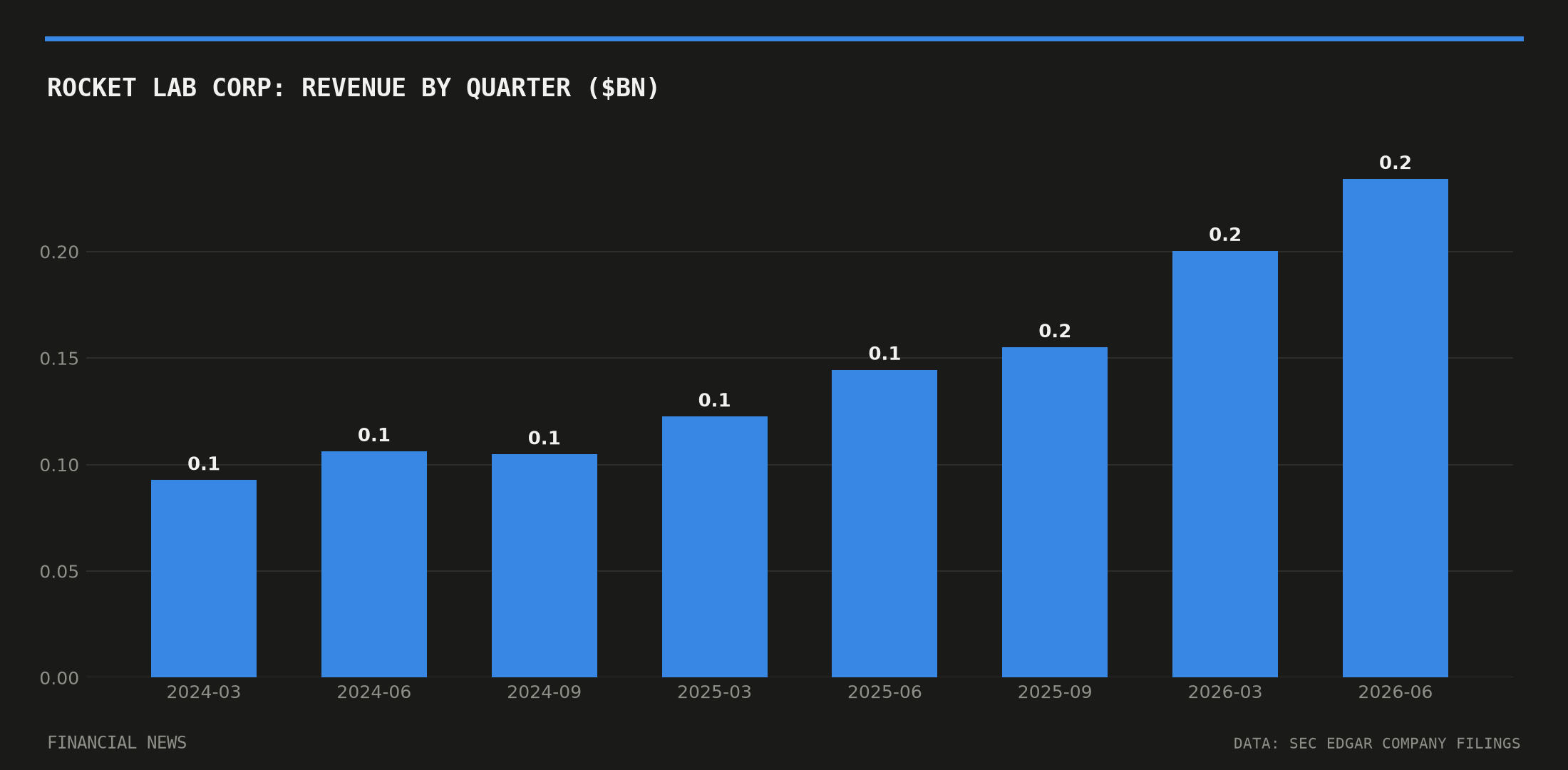
The contract news lands days after Rocket Lab reported record quarterly revenue. Second-quarter 2026 revenue reached $234.07m, up from $200.35m in the first quarter, according to figures filed with the SEC. Quarterly revenue has grown in seven of the past eight quarters, climbing from $92.77m in the first quarter of 2024 to the latest figure, EDGAR filings show.
Profitability has not followed the same trajectory. Rocket Lab posted a net loss of $49.26m for the second quarter of 2026, versus a $45.02m loss in the first quarter, per the same 10-Q filing. Diluted loss per share was 8 cents, little changed from a year earlier.
Shares extend a month-long run
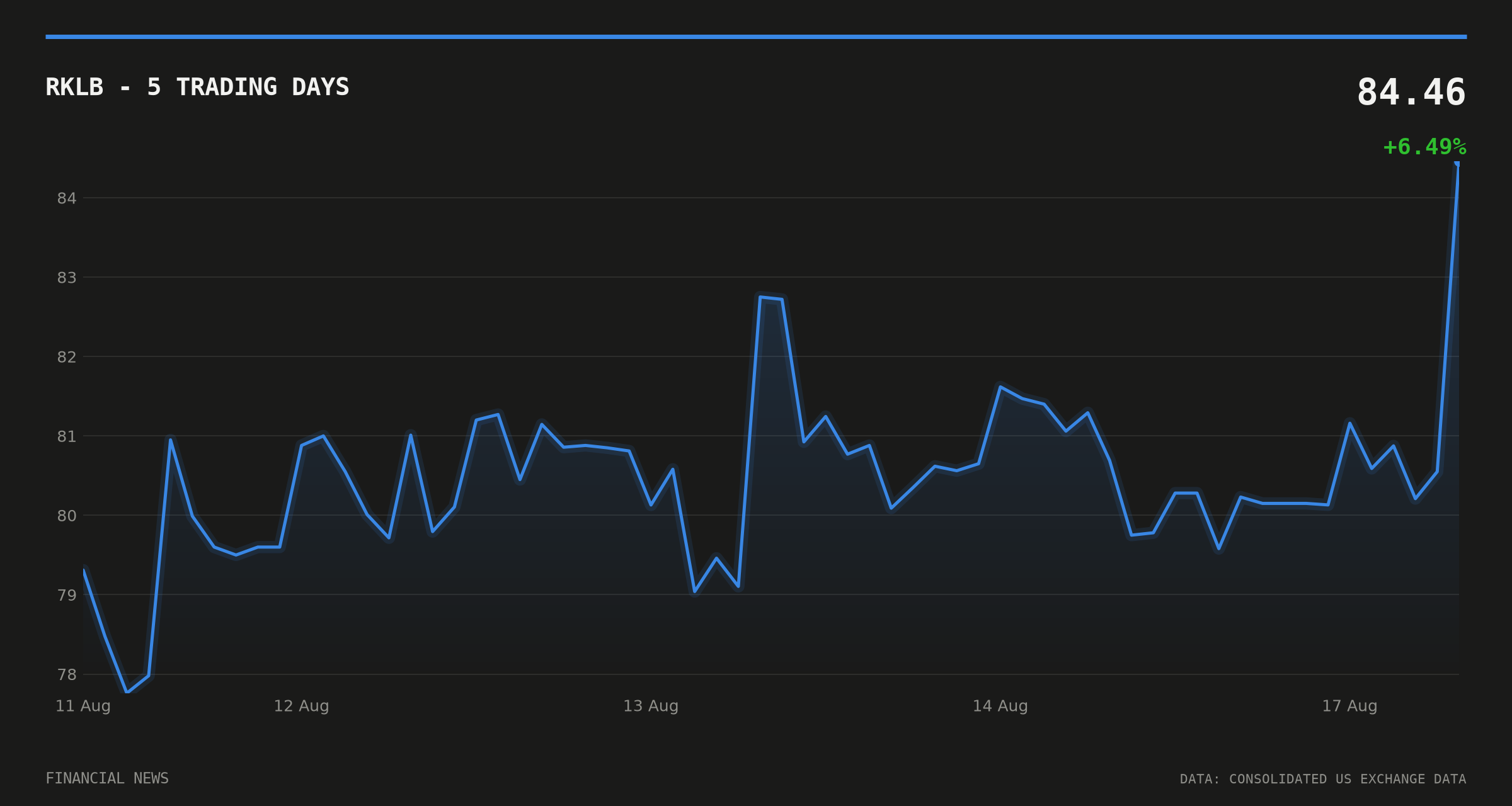
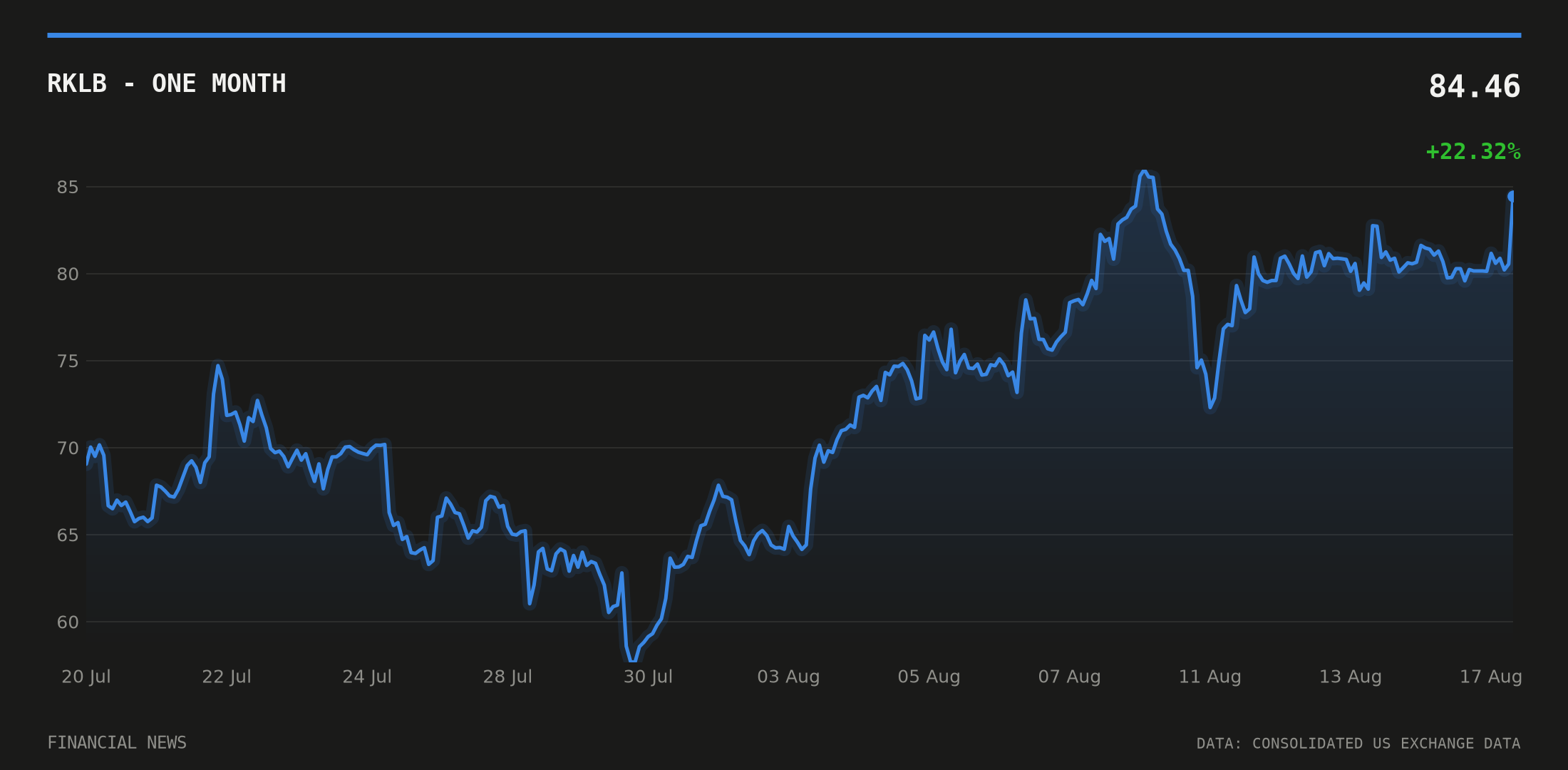
Rocket Lab shares last traded at $83.215, up 3.82% by 1pm UTC on 17 August, according to consolidated exchange data. The stock has gained 26.98% over the preceding 20 trading days, having ranged between $57.67 and $85.98 in that window.
Positioning data shows short interest has stayed contained through the rally. FINRA’s daily short-sale volume figures for Rocket Lab put the short ratio at 0.43 on 14 August, having ranged between roughly 0.43 and 0.55 across the first half of the month – levels that show no build-up of bearish bets even as the shares climbed.
The PTS-G programme itself remains at an early stage. Satellites under the broader Swarm 1 order are expected to reach launch around 2028, according to Air & Space Forces Magazine, meaning revenue recognition on the Viasat bus work is likely to run over several years rather than arrive in a single reporting period. For now, investors have the announcement and Rocket Lab’s own growing order book of national-security GEO work to weigh against a widening cash burn – a balance the company’s next quarterly filing, due in the autumn, should help clarify.
This article is for information only and is not investment advice or a recommendation to buy or sell any asset. Markets move quickly; figures are correct as sourced at the time of writing. Always do your own research before making financial decisions.
