

RTX’s Raytheon business has secured a US Navy contract worth up to $24.4bn for Standard Missile-6 interceptors, the company said on 1 October 2026.
The deal runs for a five-year base period with two additional option years, and comes as the Navy works through what Reuters described as stockpile concerns over interceptor supply.
A second multi-billion award in a week
The SM-6 contract follows a separate $20.7bn deal for AMRAAM missiles that the Pentagon awarded Raytheon just days earlier, according to a report from U.S. News & World Report. Between the two awards, RTX has now picked up roughly $45bn in munitions-replenishment contracts inside a single week.
Both deals carry the same framing: ageing stockpiles and the need to rebuild interceptor inventories. Neither is a guaranteed lump sum. The SM-6 figure is a ceiling value spread across a base period plus options, not revenue RTX books immediately.
Shares barely move
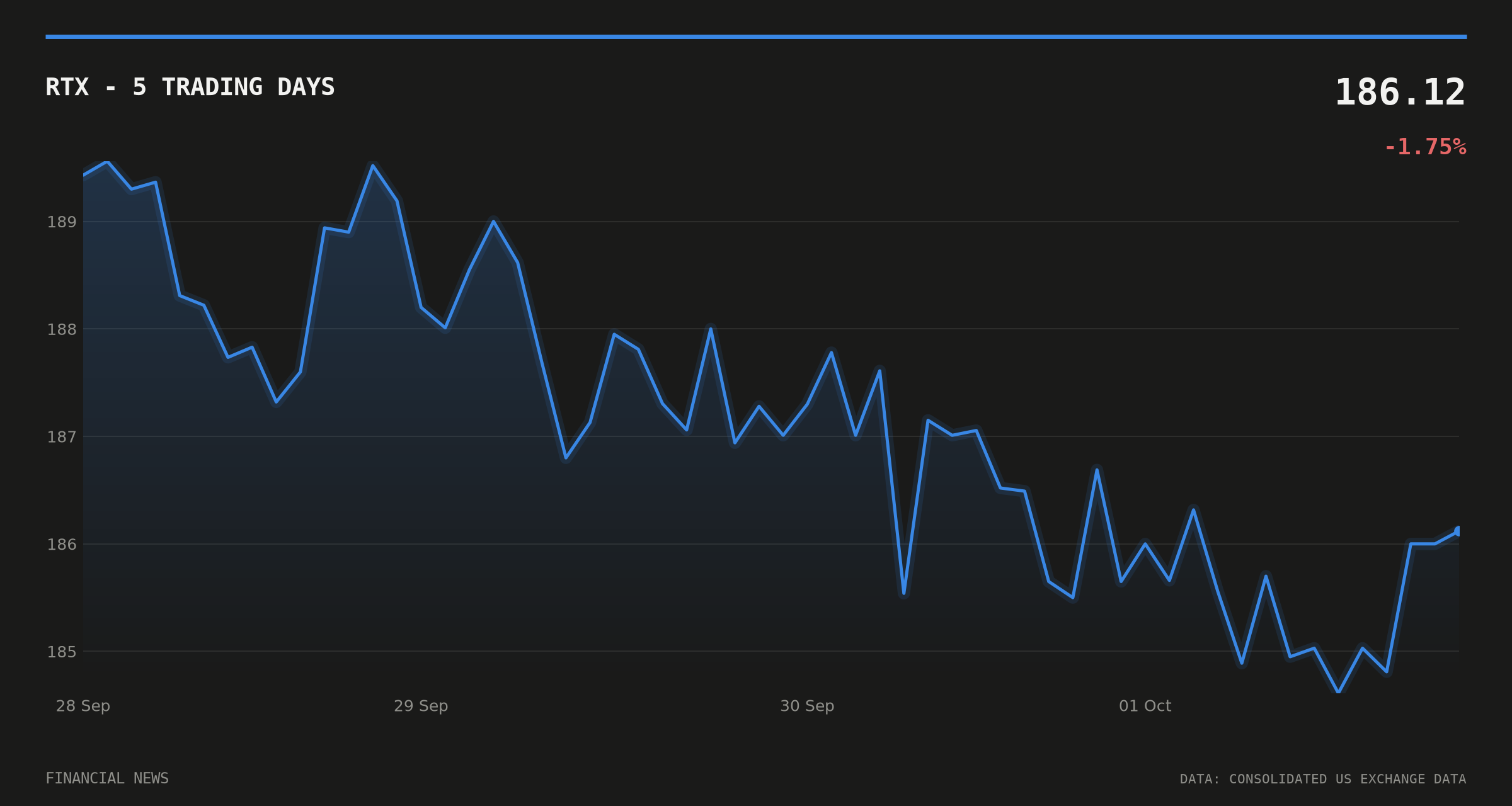
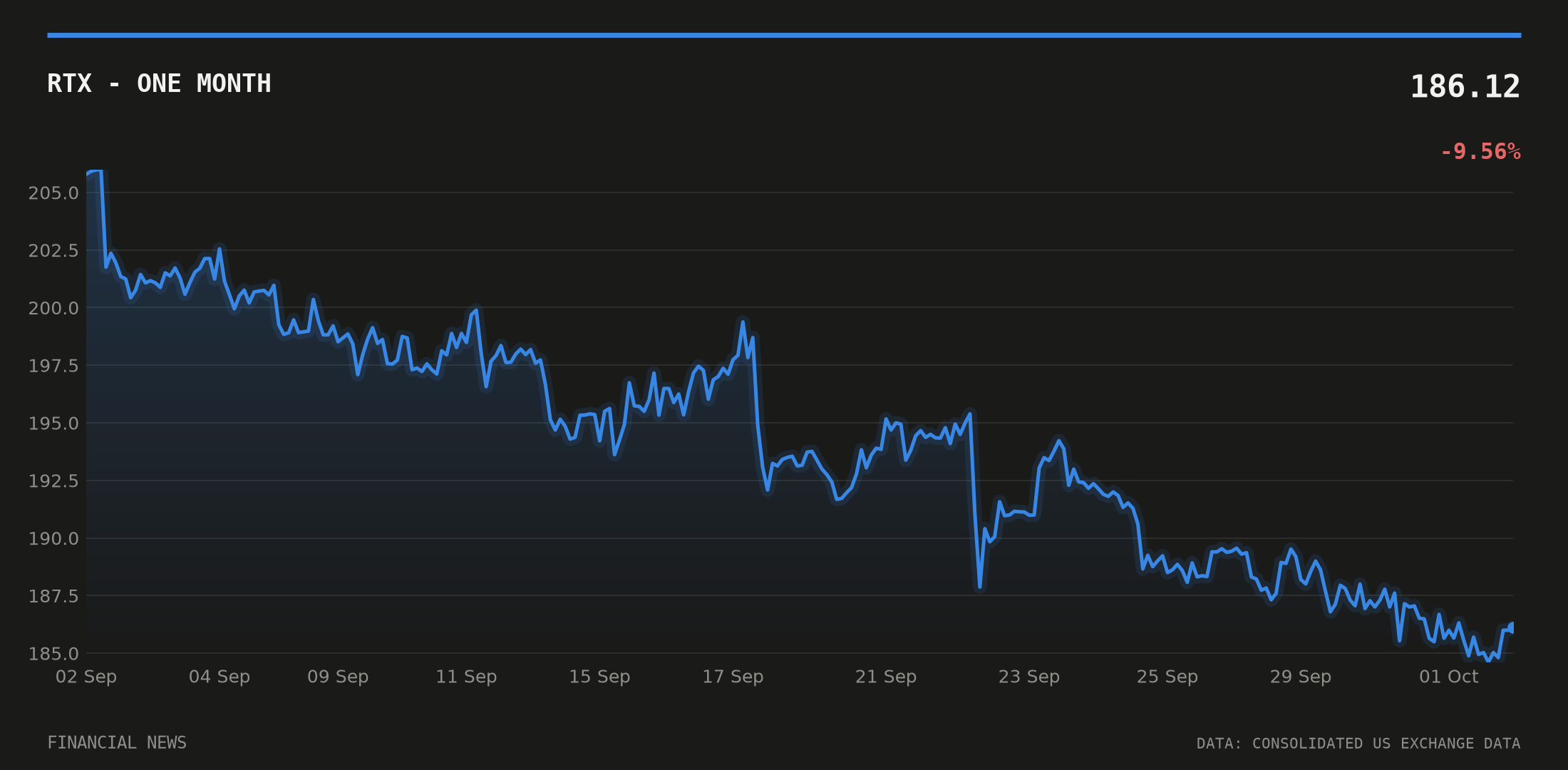
RTX stock closed at $186.12 on 1 October, up 0.63% on the day, according to consolidated US exchange data cited in the pack. Over the prior 20 trading days the stock remained down 6.23%, having traded as high as $199.89 and as low as $184.61 in that window.
Trading volume was roughly in line with its 20-day average, at 1.06 times the norm. Short-sale activity showed nothing unusual either: FINRA’s daily short-sale volume ratio for RTX ranged between 0.306 and 0.394 across the ten sessions bracketing the announcement, well within its recent band.
Taken together, the muted share reaction suggests investors had already priced in a sustained cycle of Pentagon restocking orders, rather than treating the SM-6 award as a standalone surprise.
Scale against RTX’s books
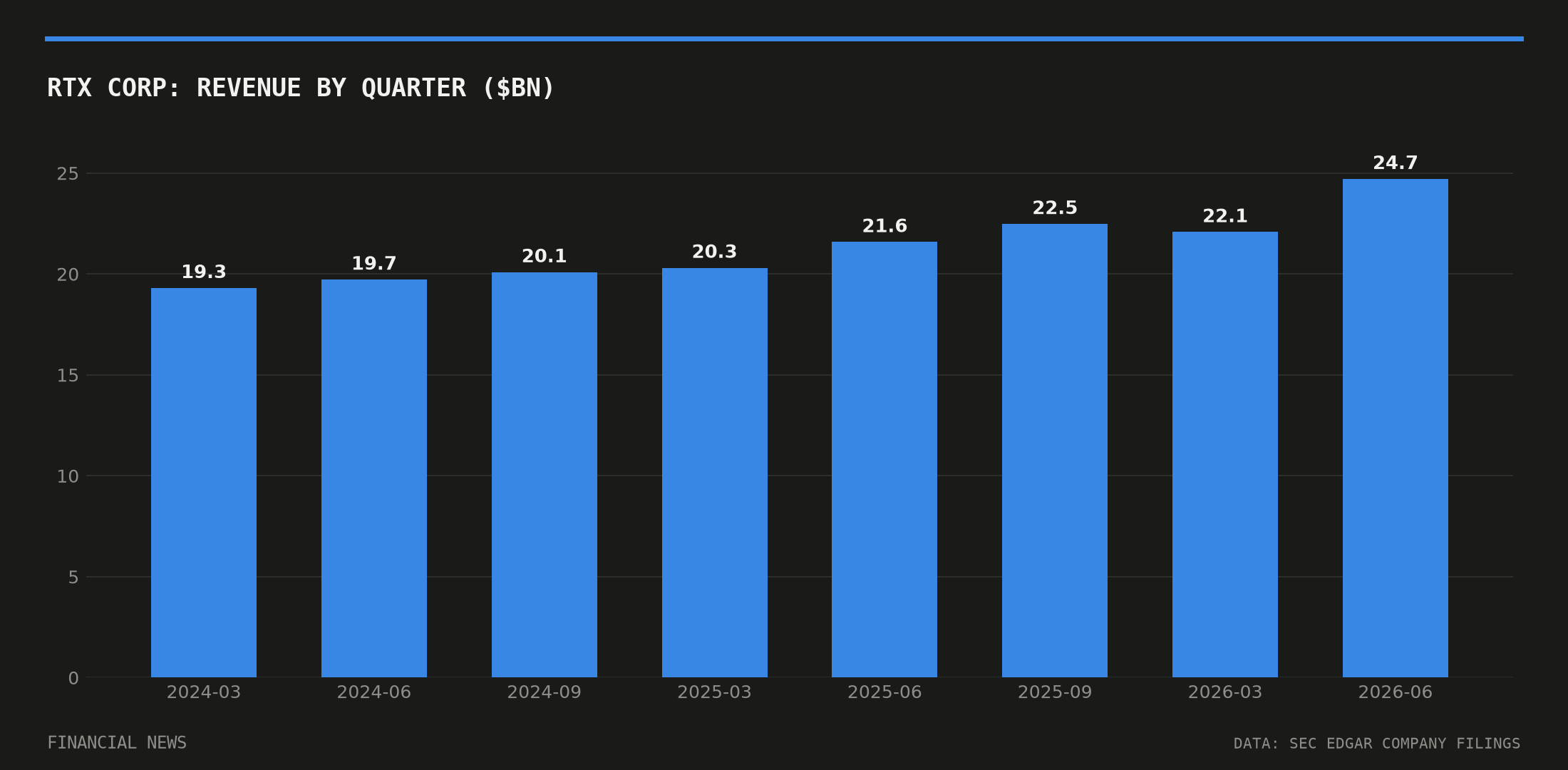
RTX’s most recent quarterly filing showed revenue of $24.708bn and net income of $2.139bn for the three months to 30 June 2026, according to the company’s 10-Q filed with the SEC. That means the $24.4bn SM-6 ceiling value is roughly equivalent to one quarter’s worth of total group revenue, even though the contract itself will be recognised over five to seven years rather than in one reporting period.
The comparison underlines how RTX’s top line has climbed steadily. Quarterly revenue rose from $19.305bn in the first quarter of 2024 to $20.089bn by the third quarter that year, then to $20.306bn, $21.581bn and $22.478bn across 2025, before reaching $22.076bn and $24.708bn in the first two quarters of 2026, filings show. Net income over the same run moved from $1.709bn in the first quarter of 2024 to $2.139bn in the second quarter of 2026, with diluted earnings per share rising from $1.28 to $1.57 across those two periods, according to the company’s SEC disclosures.
No SEC filing in the public record yet discloses the SM-6 award specifically; RTX’s most recent 10-Q, covering the second quarter of 2026, predates the contract announcement by more than two months. The company has not said when it expects to update guidance to reflect the deal.
Macro backdrop
The award lands against an elevated-rate environment for long-dated contracts. The 10-year US Treasury yield stood at 5.29% as of 30 September 2026, up slightly from 5.26% the previous session, according to Federal Reserve data. The 2-year yield was little changed at 4.88%, while the 10-year/2-year spread widened modestly to 0.46 percentage points from 0.41. Higher long-term yields generally mean markets apply a steeper discount to the present value of multi-year contract ceilings such as RTX’s SM-6 award, even when the headline figure is large.
US inflation data from the same period showed the consumer price index at 334.131 in August 2026, up from 332.813 the prior month, with unemployment holding steady at 4.1%, Federal Reserve figures show. Neither reading points to an unusual macro shock around the announcement, leaving the contract itself as the operative news for RTX investors this week.
Whether the Navy follows the SM-6 and AMRAAM awards with further restocking contracts before year-end is likely to be the next marker investors in RTX and its defence peers watch.
This article is for information only and is not investment advice or a recommendation to buy or sell any asset. Markets move quickly; figures are correct as sourced at the time of writing. Always do your own research before making financial decisions.
