
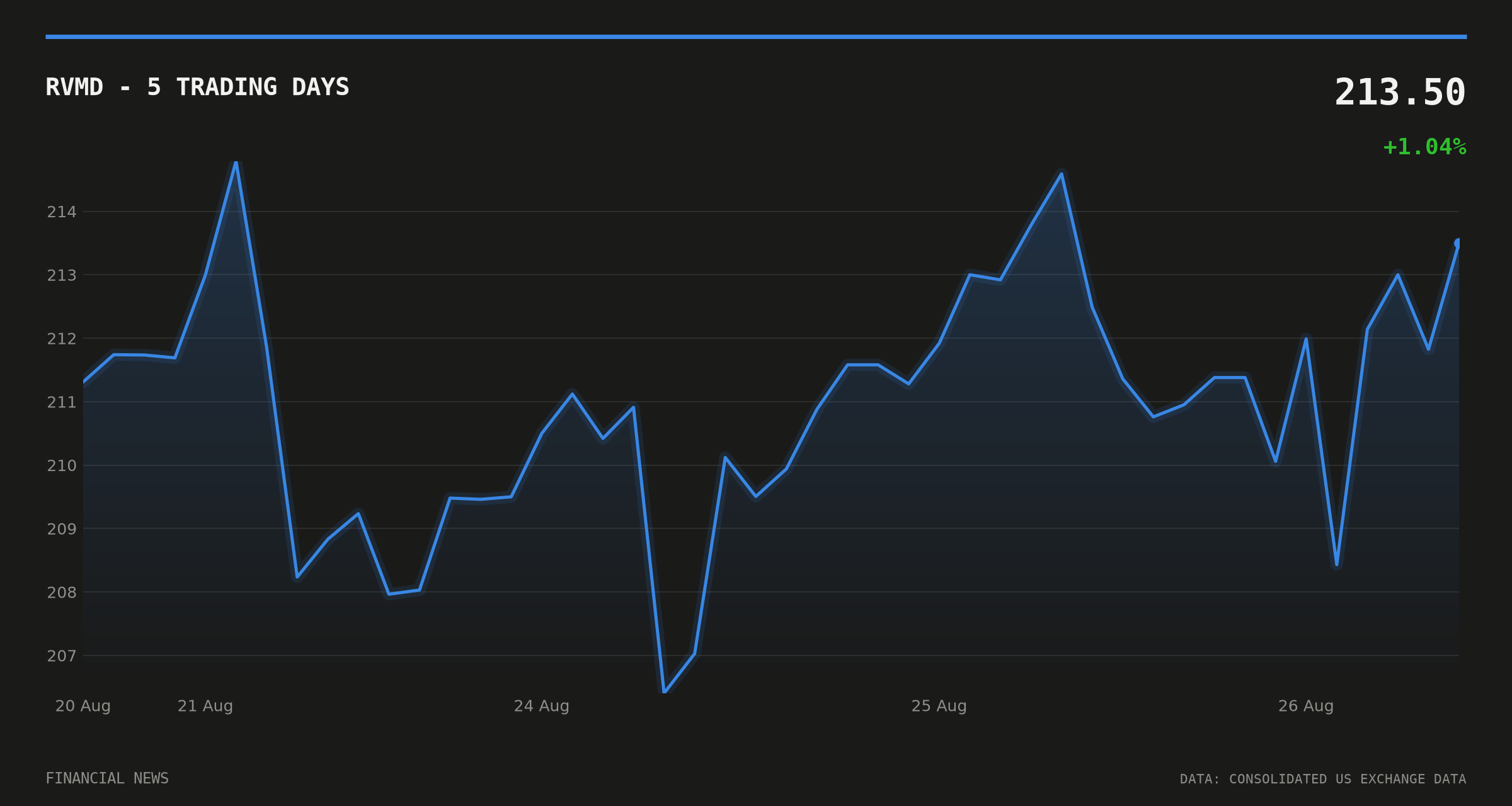

The US Food and Drug Administration approved Revolution Medicines’ (NASDAQ: RVMD) daraxonrasib for metastatic pancreatic cancer on 26 August 2026, according to the FDA. The clearance comes 6.5 months ahead of its regulatory deadline, Reuters reported.
Branded Rasonque, the drug is the first broad RAS-targeted medicine cleared for metastatic pancreatic cancer, the FDA said. RVMD shares closed the session at $212.81, up 0.68% on the day.
What the pancreatic cancer drug approval covers
The FDA’s decision covers adults with metastatic pancreatic cancer who have received prior treatment or cannot tolerate combination chemotherapy, according to reporting cited in the company’s own announcement of the Rasonque clearance. Pancreatic cancer remains one of the deadliest solid tumours, and RAS-pathway mutations drive most cases, which is why a targeted therapy against the pathway has been a long-sought goal in oncology.
The approval rests on the Phase 3 RASolute 302 trial, which found daraxonrasib produced a median overall survival of 13.2 months against 6.7 months for standard chemotherapy in the broader study population, a hazard ratio of 0.40. Results have also appeared in the New England Journal of Medicine, giving the regulatory decision a published clinical backbone rather than resting solely on trial-sponsor data.
Muted stock reaction points to pricing-in
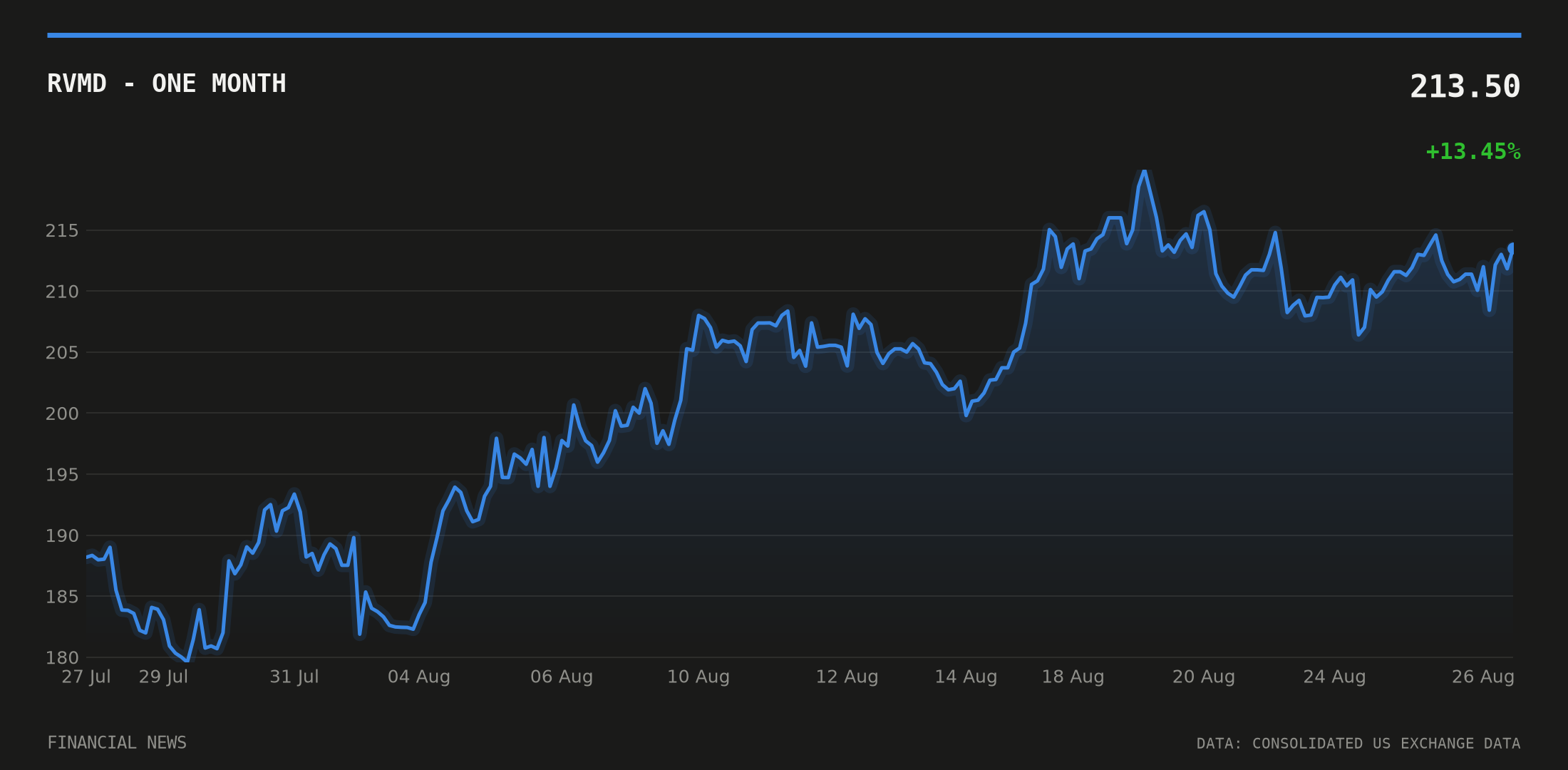
Despite the scale of the clinical result, RVMD’s share reaction was modest. The stock traded within a 20-day range of $194.00 to $219.96 and sits up 8.68% over that period, meaning Wall Street had already been bidding the name higher well before Tuesday’s decision, as Barron’s noted in assessing what the approval means for the stock. Volume ran roughly 1.5 times the 20-day average, consistent with investors reacting to confirmation of an expected event rather than a surprise.
The muted move also came against a calm backdrop in rates markets. The 10-year Treasury yield stood at 4.70% on 24 August, barely changed from 4.74% the prior session, with the 10-year/2-year spread at 0.47 percentage points, according to Federal Reserve data. Nothing in the macro tape explains the stock’s flat response; the approval news simply landed on a name that had already priced in a favourable outcome.
Filings show routine insider selling, deepening losses
Two Form 4 filings landed with the SEC on 25 August, the day before the approval: one from the issuer and one from Jeff Cislini, the company’s general counsel, both filed through EDGAR. Cislini has sold shares under a Rule 10b5-1 trading plan before, including a disposal worth $939,008 in November 2025, filings compiled by MarketScreener show. Pre-scheduled 10b5-1 sales are routine housekeeping for executives at companies nearing binary regulatory events and are not evidence of any view on the outcome.
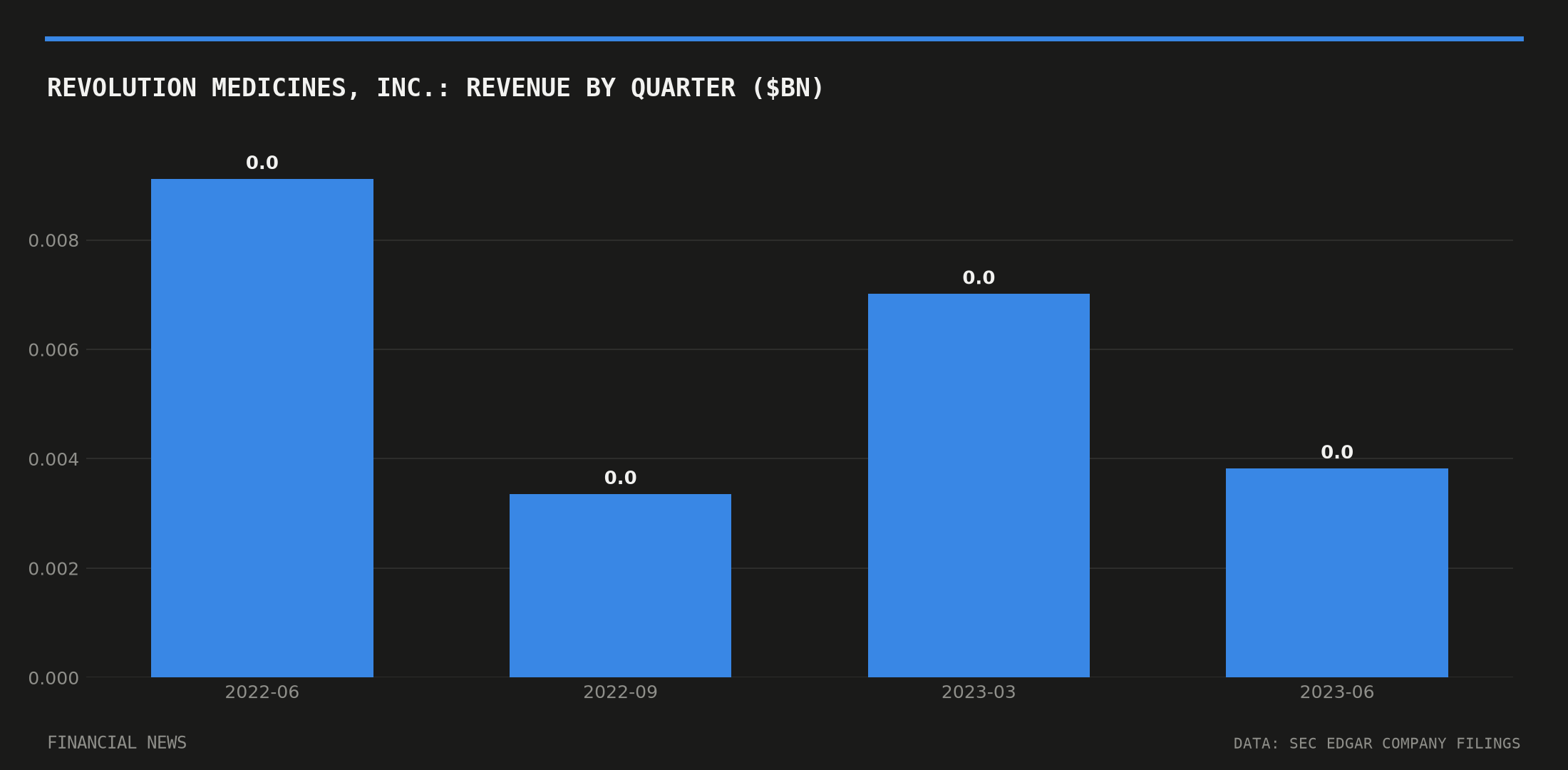
The approval also arrives against a backdrop of widening losses typical of a clinical-stage biotech transitioning toward commercial revenue. Revolution Medicines reported a net loss of $644.4m for the second quarter of 2026, up from a loss of $453.8m in the first quarter and a loss of $305.2m a year earlier in the third quarter of 2025, according to SEC filings. Diluted losses per share reached $3.06 in the June quarter, versus $0.70 in the first quarter of 2024, reflecting heavy investment in the RASolute programme ahead of this week’s clearance.
What happens next
Attention now turns to how quickly Revolution Medicines can convert the approval into sales, and whether payers move fast to cover a first-in-class therapy for a cancer with historically poor outcomes. Analyst price targets tracked by TipRanks put the average near $222.89 with a Strong Buy consensus heading into the decision, suggesting the market’s next test for the stock is commercial uptake data rather than the regulatory hurdle just cleared. The company’s next scheduled quarterly filing will be the first opportunity to show whether Rasonque revenue starts to offset the losses that have built up over the drug’s development.
This article is for information only and is not investment advice or a recommendation to buy or sell any asset. Markets move quickly; figures are correct as sourced at the time of writing. Always do your own research before making financial decisions.
