
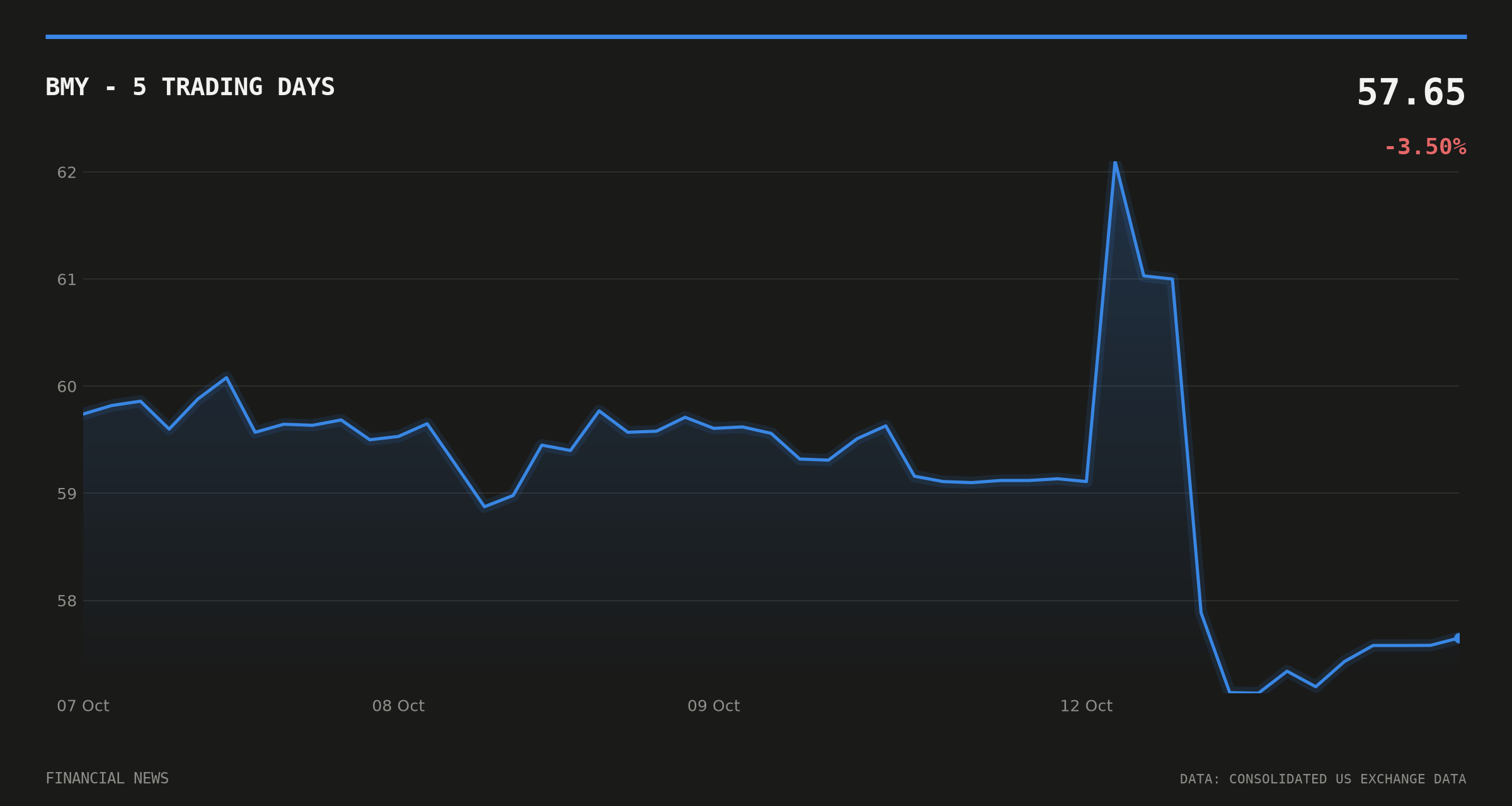

Bristol Myers Squibb (NYSE: BMY) said on 12 October 2026 that its Phase 3 ALOFT-IPF trial of admilparant met its primary endpoint in adults with idiopathic pulmonary fibrosis, according to a company statement.
Only the 60mg dose cleared the bar. Patients on that dose showed a statistically significant improvement in forced vital capacity at week 52, while the higher 120mg dose slowed decline but missed statistical significance, according to RTTNews.
Dose split complicates the admilparant trial result
Trade press has not treated the readout as a clean win. Clinical Trials Arena, reporting on the roughly 1,255-patient study, confirmed the same dose-dependent split: the lower dose beat placebo, the higher one did not, as Clinical Trials Arena reported.
BioSpace went further, describing the outcome as a win ‘clouded by high-dose miss’, as first reported by BioSpace. The framing matters: regulators and prescribers typically favour the highest dose that is both safe and effective, so a miss at 120mg could narrow how the drug is eventually positioned if approved.
Shares whipsawed rather than rallied
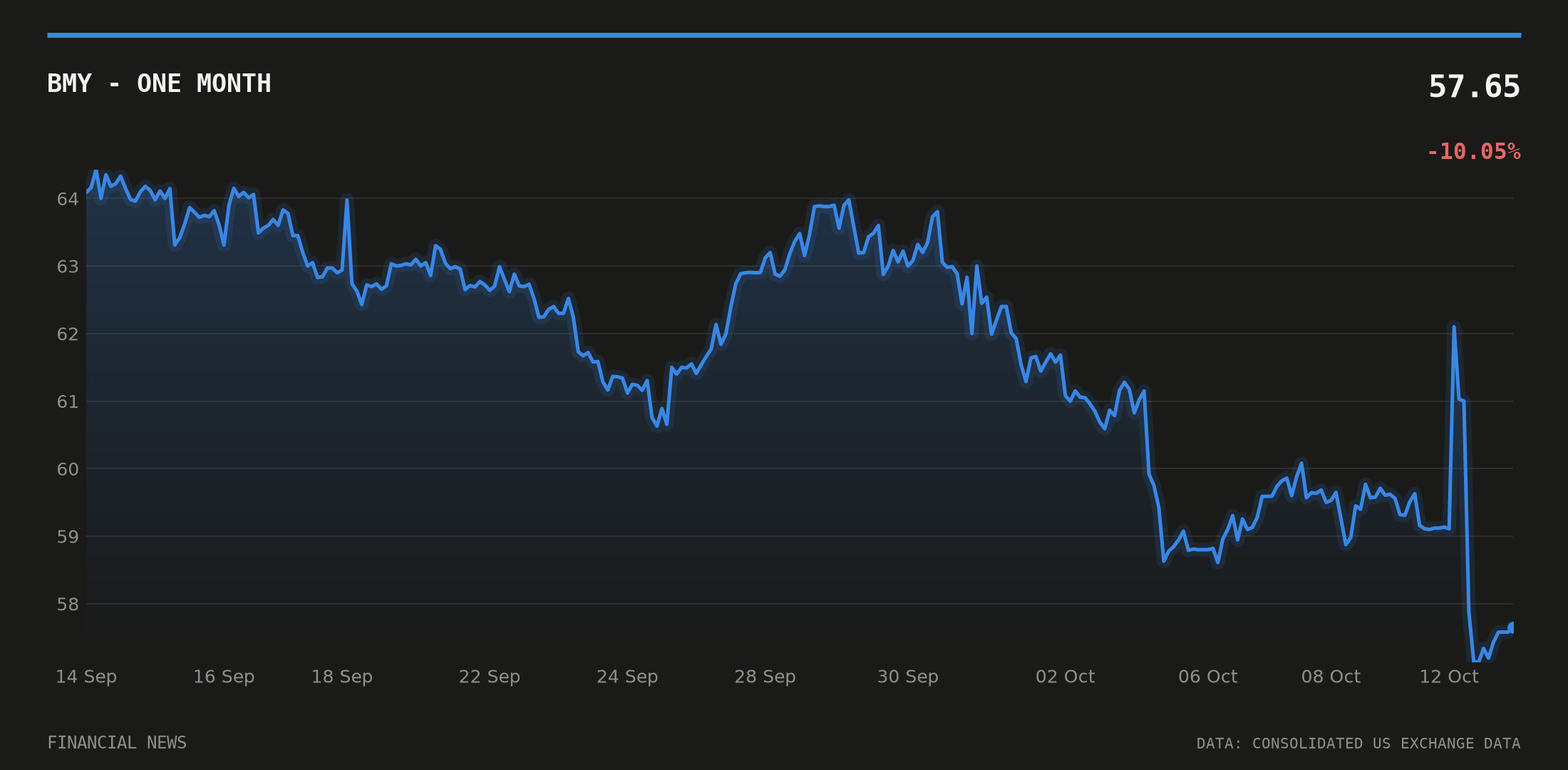
The stock’s reaction reflected that ambiguity. BMY closed at $57.65, up 0.9% on the day, but that modest gain followed a reported intraday drop of roughly 3% to $57.29, according to TradersUnion. Shares traded at 2.01 times their 20-day average volume and remain 7.97% below their 20-day high of $63.98, according to consolidated US exchange data.
Analysts attributed some of the weakness to investors weighing whether dual Phase 3 readouts — admilparant in IPF and RYZ101 in rare neuroendocrine tumours, both announced the same day — were enough to offset broader pipeline questions, as QuiverQuant reported. The RYZ101 data means Tuesday’s share moves cannot be attributed to admilparant alone.
The admilparant readout also arrived days after a separate hit to sentiment: BMY shares fell roughly 4% on 5 October 2026 following an analyst downgrade, according to QuiverQuant, leaving the stock already under pressure heading into this week’s trial news.
A crowded field for a decade-old drought
Admilparant is entering a market that only recently saw its first new approval in years. Boehringer Ingelheim’s nerandomilast, sold as Jascayd, broke a decade-long approval drought in IPF, raising the bar for any newcomer to differentiate on efficacy and dosing, according to DelveInsight. A dose that works only at the lower strength gives BMY a narrower story to tell regulators and prescribers than a clean sweep would have.
The next catalyst is already enrolled. Admilparant is also being tested in the fully enrolled Phase 3 ALOFT-PPF trial in progressive pulmonary fibrosis, with topline results expected in early 2027, according to RTTNews. That readout, rather than Tuesday’s mixed dose data, may do more to settle how the market prices the drug’s commercial prospects.
Financial backdrop remains solid
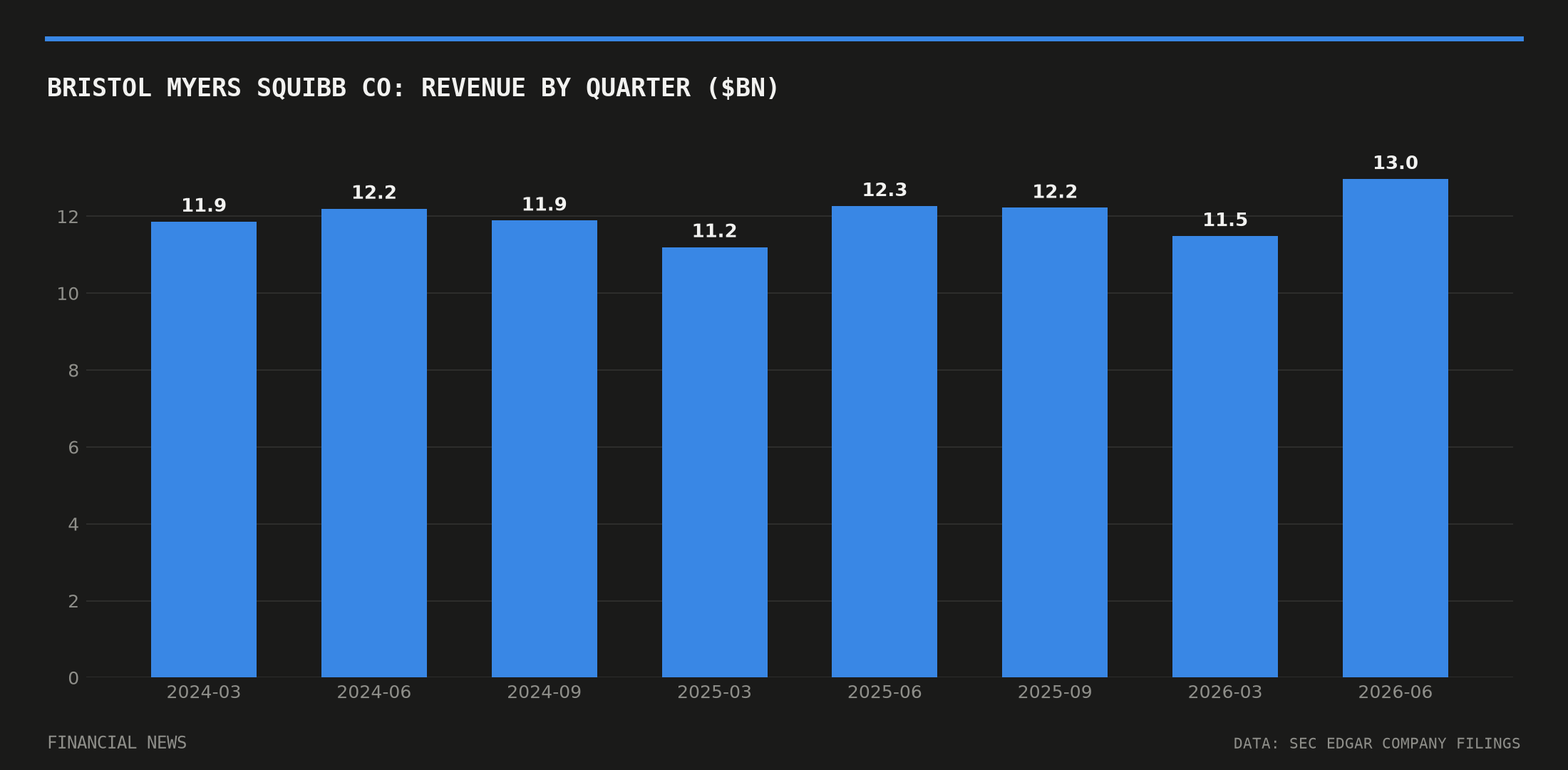
The trial news lands against a steady earnings run. BMY reported net income of $3,317m and diluted earnings per share of $1.62 for the quarter ended 30 June 2026, up from $2,677m and $1.31 a share in the first quarter, according to the company’s 10-Q filing. Revenue for the second quarter came to $12,973m, the highest of the eight quarters disclosed since early 2024, when the company booked a $11,911m net loss in the first quarter of that year tied to one-off charges, filings show.
By comparison, BMY’s revenue has held in a narrow band of roughly $11.2bn to $13bn each quarter since 2024, with net income swinging from that 2024 loss to more than $2bn in each of the last four quarters, according to filings with the SEC.
FINRA daily short-sale data show the stock’s short ratio rising to 0.521 on the day of the announcement, up from 0.294 two trading sessions earlier, consistent with increased short-side activity around the event, according to FINRA. The broader macro backdrop was steady: the 10-year Treasury yield stood at 5.22% on 8 October 2026, little changed from 5.28% the week before, according to FRED data, suggesting the share moves were driven by the drug data rather than rates.
Investors now turn to the ALOFT-PPF data due in early 2027 for a clearer read on whether the 60mg dose result is commercially sufficient on its own.
This article is for information only and is not investment advice or a recommendation to buy or sell any asset. Markets move quickly; figures are correct as sourced at the time of writing. Always do your own research before making financial decisions.
