
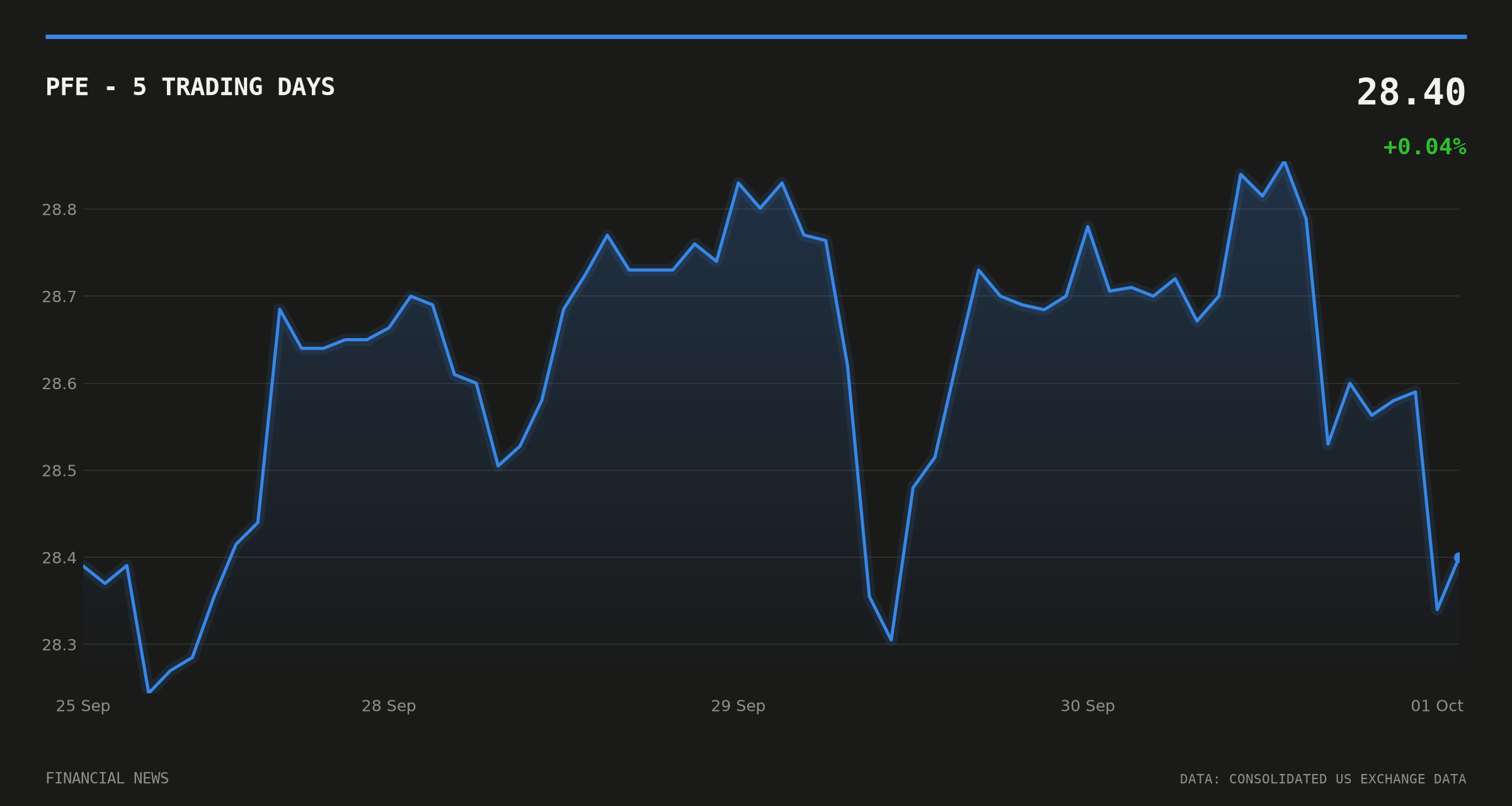

Pfizer (NYSE: PFE) said on 1 October 2026 that its experimental drug tilrekimig met the primary endpoint of a Phase 2 trial in moderate-to-severe atopic dermatitis, clearing the way for Phase 3 testing in two separate indications.
In the trial’s monthly-dosing stage, between 47.8% and 61.0% of patients across three tilrekimig doses achieved EASI-75 – at least a 75% reduction in eczema severity – at Week 16, versus 9.1% on placebo, according to Mugglehead, which cited a reported p-value below 0.003.
Tilrekimig Phase 2 atopic dermatitis results detailed
Pfizer presented the data at the 35th European Academy of Dermatology and Venereology Congress in Vienna, as first reported by Investing.com. The study’s first stage, testing a single 450mg dose every two weeks, showed 62.5% of patients reaching EASI-75 against 19.9% on placebo.
Tilrekimig, known in Pfizer’s pipeline as PF-07275315, is a trispecific antibody designed to block three inflammatory targets – IL-4, IL-13 and TSLP – at once. Investing.com reported the drug carries an extended half-life of roughly 37 days, intended to support once-monthly dosing rather than the biweekly injections common to existing eczema biologics.
Pfizer’s own release, cited by Business Wire, confirmed the study met its primary endpoint with statistically significant EASI-75 gains versus placebo across all evaluated doses. Benzinga reported the company is now advancing tilrekimig into Phase 3 trials in both atopic dermatitis and asthma, alongside a Phase 2b/3 study already under way in COPD, according to Investing.com’s Canadian edition.
Safety picture more mixed than headline suggests
Pfizer describes tilrekimig as well tolerated with a favourable safety profile, and Clinical Trials Arena reported three serious adverse events during the study, all judged unrelated to treatment. But the tolerability data are not uniform across the trial’s two stages.
In the first stage, 46.7% of patients on the 450mg dose reported treatment-emergent adverse events, against 28.9% on placebo – a gap wider than the drug’s backers have emphasised. The second stage, which tested three monthly doses, showed adverse-event rates of 42.2% to 47.8% that did not rise with dose and sat closer to placebo levels, per Investing.com’s reporting.
A registered Phase 3 study of tilrekimig in severe asthma, listed on ClinicalTrials.gov under the identifier NCT07772921, is marked “not yet recruiting.” The underlying Phase 2 dermatitis trial is registered separately as NCT05995964, a randomised, blinded, multi-stage study.
Market reaction and insider filings
UBS analysts said the new Phase 3 programme in atopic dermatitis and asthma could be an upside driver for Pfizer shares if later results hold up, according to MarketScreener. Pfizer’s chief inflammation and immunology officer, Mike Vincent, said the company plans to advance a broad clinical development programme for the drug, per the company’s release.
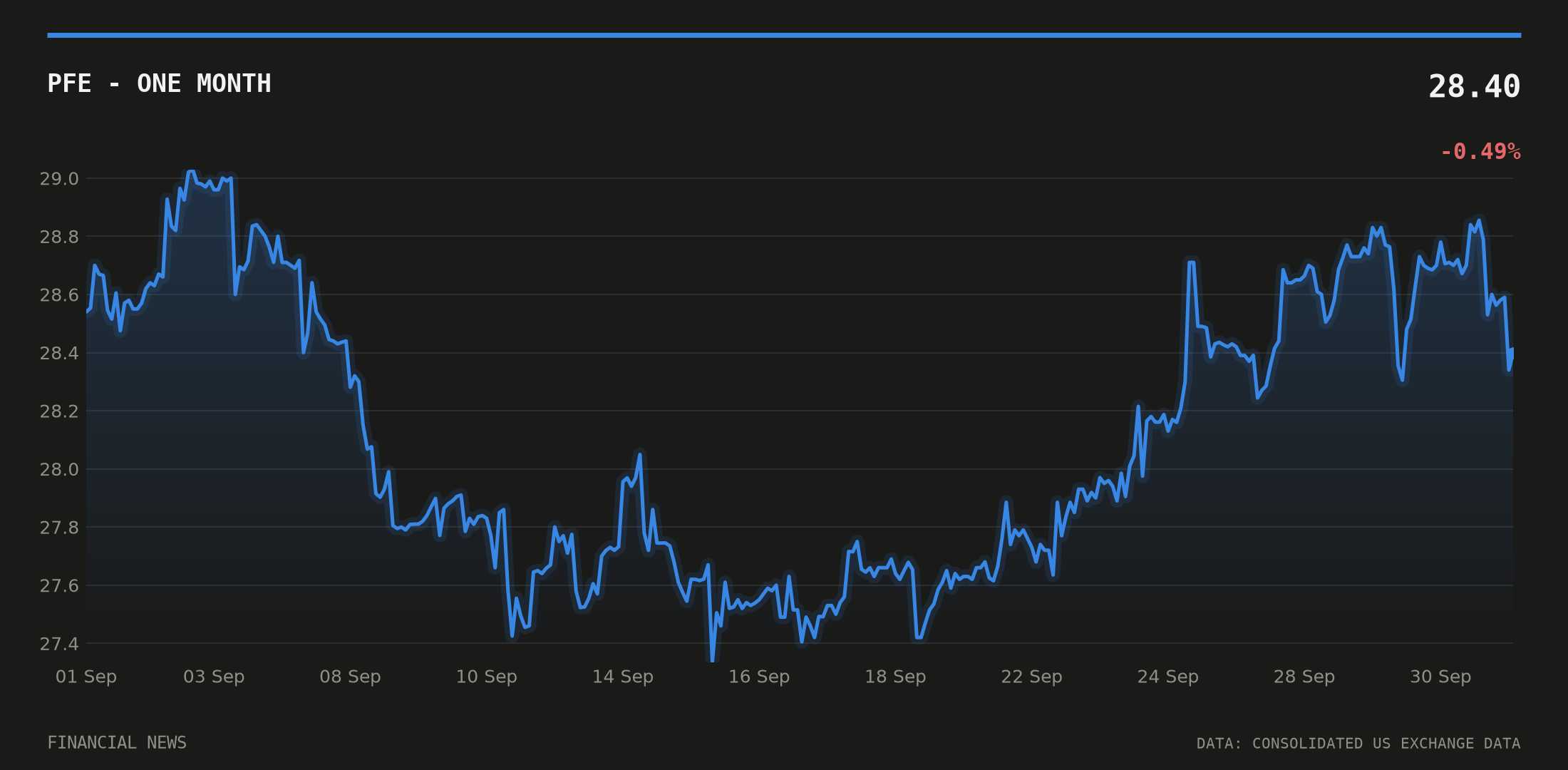
PFE shares last traded at $28.39 as of 1 October 2026, down 1.38% on the day but up 2.64% over the preceding 20 days, with volume running 1.09 times the 20-day average.
Six Pfizer directors and executives – Mortimer Buckley, Joseph Echevarria, Shantanu Narayen, James Quincey, Cyrus Taraporevala and James C. Smith – each filed Form 4s with the SEC on 29 September 2026, the day before the detailed Phase 2 data were presented in Vienna. The filings do not disclose share totals or values in the index records, and nothing ties their timing directly to the trial disclosure.
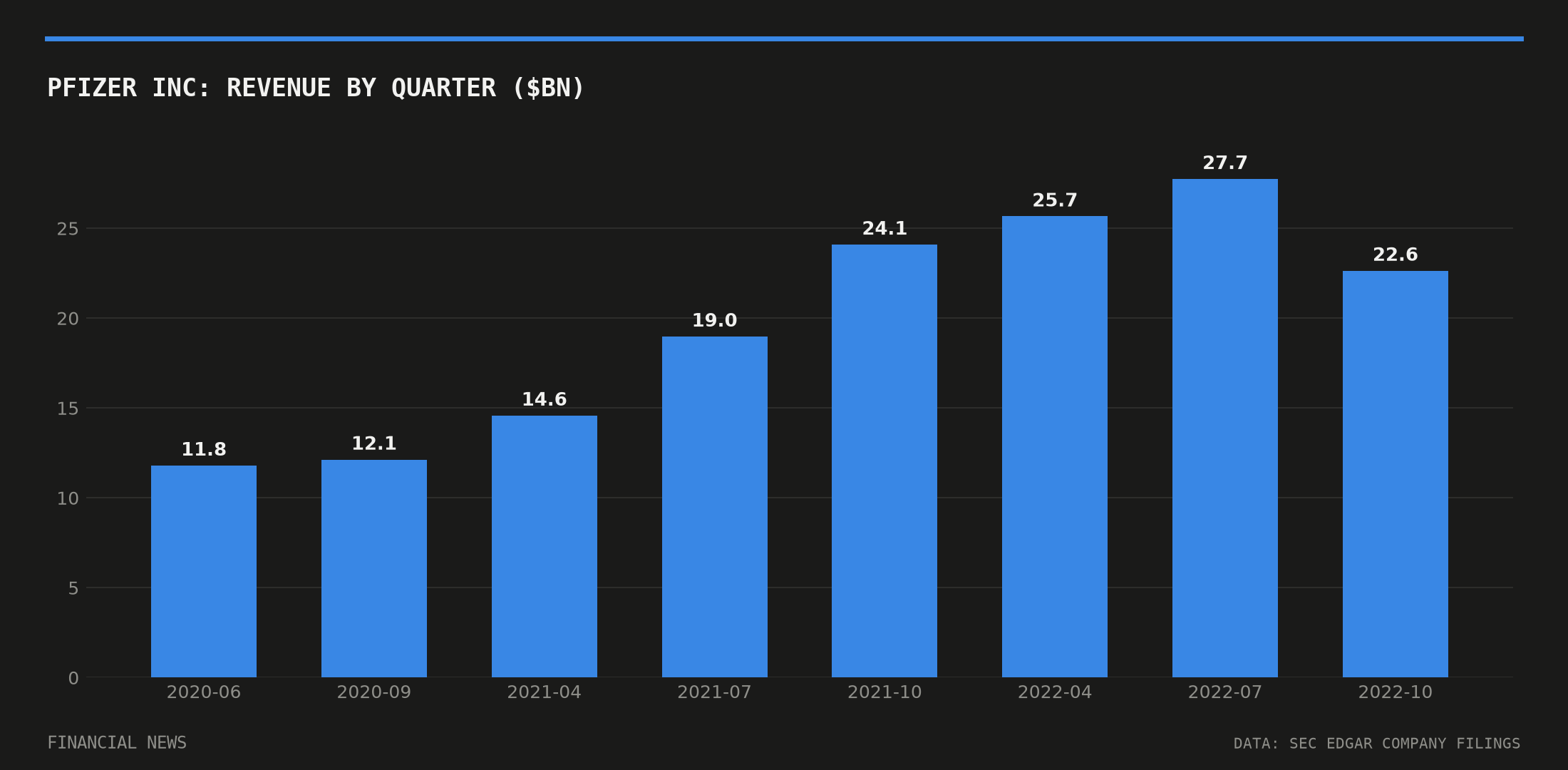
The clinical update also lands against a choppier earnings backdrop for Pfizer than the share-price drift suggests. The company swung to a net loss of $248m, or 4 cents a share, in the second quarter of 2026, according to its 10-Q filing, after posting diluted earnings per share of 47 cents in the first quarter of the year.
What investors will watch next
Pfizer has not given a timeline for Phase 3 data readouts in dermatitis or asthma. The asthma study’s “not yet recruiting” status on the trial registry suggests patient enrolment has yet to begin, meaning headline results are unlikely before 2027 at the earliest based on typical trial durations for respiratory indications.
For a pipeline asset Pfizer is betting on to diversify revenue beyond its COVID-era products, the next markers will be enrolment progress in the Phase 3 programmes and any update on the parallel COPD study, which remains in a combined Phase 2b/3 design.
This article is for information only and is not investment advice or a recommendation to buy or sell any asset. Markets move quickly; figures are correct as sourced at the time of writing. Always do your own research before making financial decisions.
