
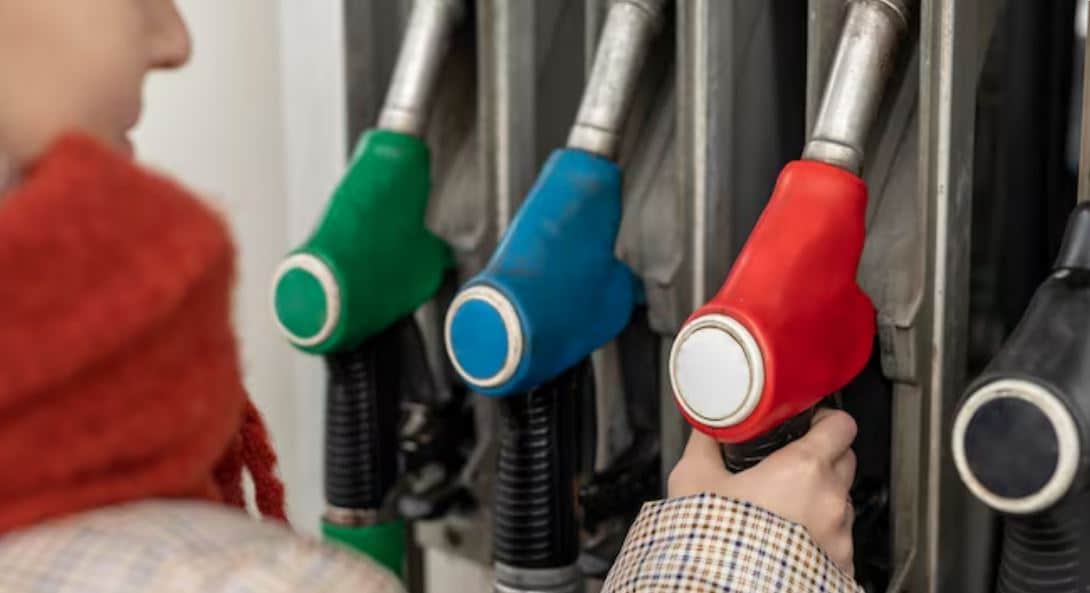

The digital sign at a Shell station off the West Loop glows a bit too brightly in the late afternoon. Every few days, the numbers fluctuate by one or two cents, but drivers still pull in because they have nothing else to do. Regular was at $4.98 on a Tuesday in the middle of May. It was more like $3.40 a year ago. At the pump, no one appeared shocked. They simply filled up, swiped, and drove away.
By most accounts, Illinois is among the most expensive states in the union for car ownership. Additionally, the price is going to increase slightly on July 1st, once more. The 2019 “Rebuild Illinois” infrastructure law automatically raises the state’s motor fuel tax from 48.3 to 49.6 cents per gallon. By itself, the increase isn’t particularly noticeable. Seldom is it. In a way, that’s the point.
On paper, the agreement was fairly straightforward when Gov. J.B. Pritzker signed Rebuild Illinois six years ago. Increase the gas tax by twofold, from 19 to 38 cents, tie future increases to the Consumer Price Index, and use the proceeds to repair deteriorating roads and bridges. Legislators wanted funding for infrastructure without having to make an annual politically costly vote. Thus, they only held one vote and let inflation take care of the rest. Depending on how you feel about that kind of thing, it was a clever piece of legislative engineering.
Drivers feel that the math has gotten worse. Illinois drivers now pay about $150 more in state gas taxes annually than they did prior to 2019, and that’s not even accounting for Cook County, DuPage, Lake, or the various municipal add-ons that subtly raise the price of gasoline. When federal, state, and local taxes are combined, many drivers in the Chicago region pay more than 85 cents per gallon in taxes alone. Michigan and California are the only states that truly keep up.
To put it mildly, this year’s timing is awkward. The war between Iran and the United States has caused gas prices to spike nationwide, and the summer-blend switchover is doing what it always does—raising pump prices right before Memorial Day travel starts. To give drivers a break, the governors of Kentucky and Indiana have suspended their state gas taxes. Although it would require Congress, President Trump has proposed suspending the 18.4-cent federal tax. Pritzker hasn’t said much thus far. Republicans have not stopped reminding people that he halted an increase in 2022 and then reinstated it after winning reelection.
Speaking with people outside the State Capitol gives the impression that the political reasoning behind the initial 2019 agreement is beginning to falter. The idea was that inflation would be a silent metronome. Rather, it became a national story, and now drivers in Illinois are stuck with a formula that doesn’t really care if the price of gas is $3 or $5. The tax increases. Each year. without casting a ballot.
It’s difficult to ignore who is most affected by this. The people driving older cars, the ones with longer commutes from the south and west suburbs, the workers whose schedules don’t bend around gas prices. He is willing to combine errands and timing trips around a warm engine, according to a reader who wrote to Axios. Another claimed to have just purchased an electric vehicle. Not everyone is able to choose that.
According to Pritzker’s office, the funds are being used for projects that would not otherwise be completed, such as resurfacing bridges and widening roads. That’s most likely accurate. The orange barrels are proof that the state did invest more than $25 billion in infrastructure over a six-year period. However, the fact that the discussion is never truly reopened is becoming increasingly frustrating. The mechanism simply operates.
It’s unclear what will happen next. The governor’s top priority is the budget, the legislative session is coming to an end, and a tax pause doesn’t seem to be an option. The number on the Shell sign in the West Loop will start to tick up once more on July 1. Drivers will fill up, swipe, and leave. Just like before. Every time, a bit more.
