

Hilton Worldwide Holdings (NYSE: HLT) said on 20 October 2026 it plans to move its stock listing from the New York Stock Exchange to Nasdaq. The transfer takes effect at market open on 5 November 2026, with the shares continuing to trade under the ticker HLT.
Hilton shares will keep trading on the NYSE until the close of business on 4 November, the company said in an 8-K filing with the Securities and Exchange Commission. No shareholder action is required, and the company’s capital structure is unaffected.
Why the Nasdaq listing transfer matters
The Hilton Nasdaq listing transfer puts the hotel group alongside Marriott International, which made the identical switch in October 2013, and Host Hotels & Resorts, which moved from the NYSE in November 2020, according to SEC filings from that period. Both moves were voluntary and unrelated to financial distress.
Hilton first listed on the NYSE in 1946, becoming the first hotel company to trade on the exchange, and returned to public markets in 2013 after Blackstone took it private, as Investing.com reported. The shift to Nasdaq ends that 13-year run on the Big Board.
Financials show no sign of strain
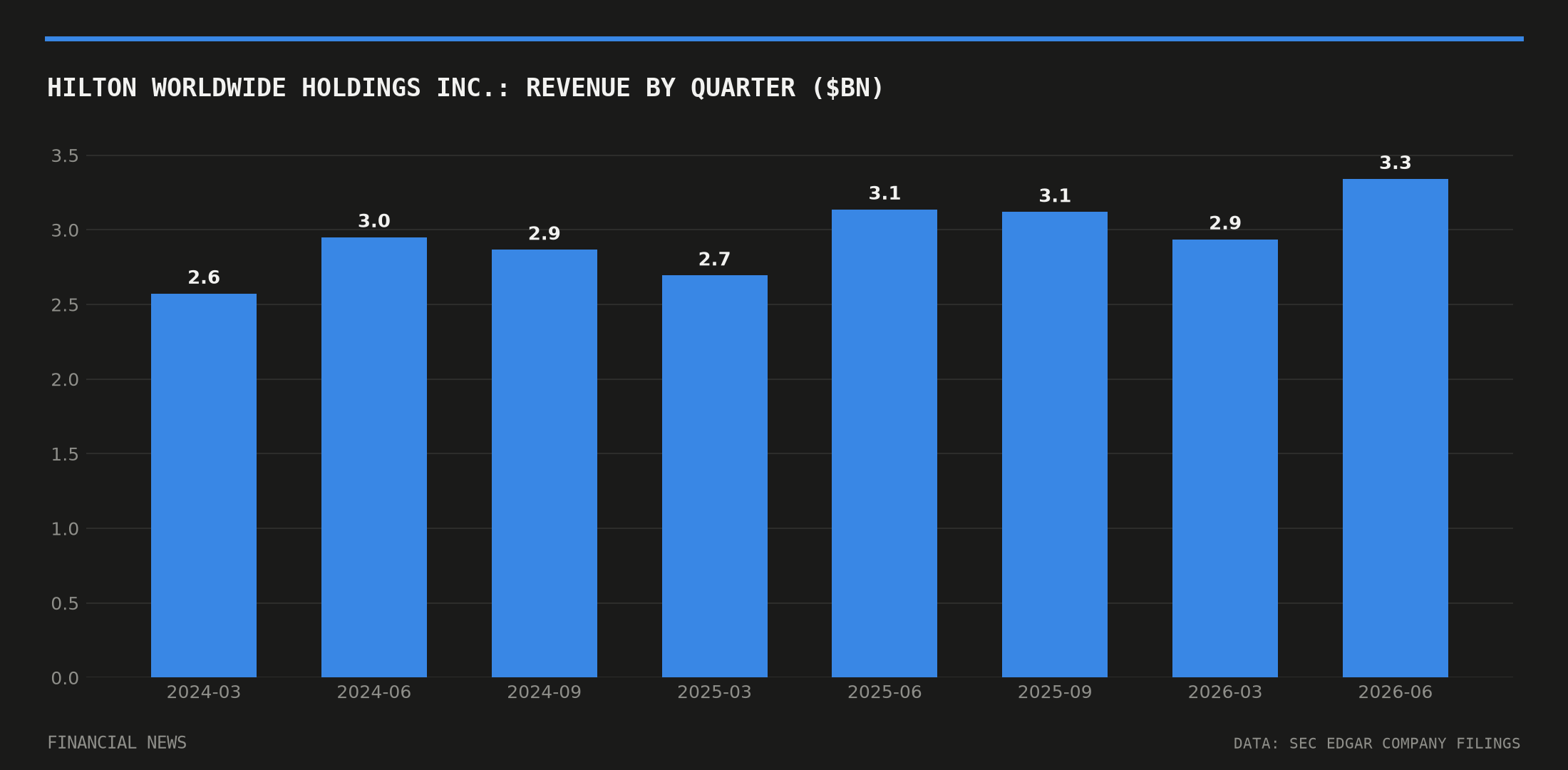
The listing change arrives as Hilton’s quarterly results have been climbing. Net income rose to $482m in the second quarter of 2026, up from $385m in the first quarter, with diluted earnings per share of $2.10 against $1.66 a quarter earlier. Revenue for the second quarter reached $3.34bn, compared with $2.94bn in the first three months of the year, filings show.
That trajectory extends back through 2025, when quarterly net income ran between $300m and $440m, and through 2024, when it ranged from $265m to $421m, according to Hilton’s 10-Q filings. The pattern of steadily rising profit and revenue across seven consecutive quarters suggests the move to Nasdaq is a positioning decision rather than one driven by balance-sheet pressure.
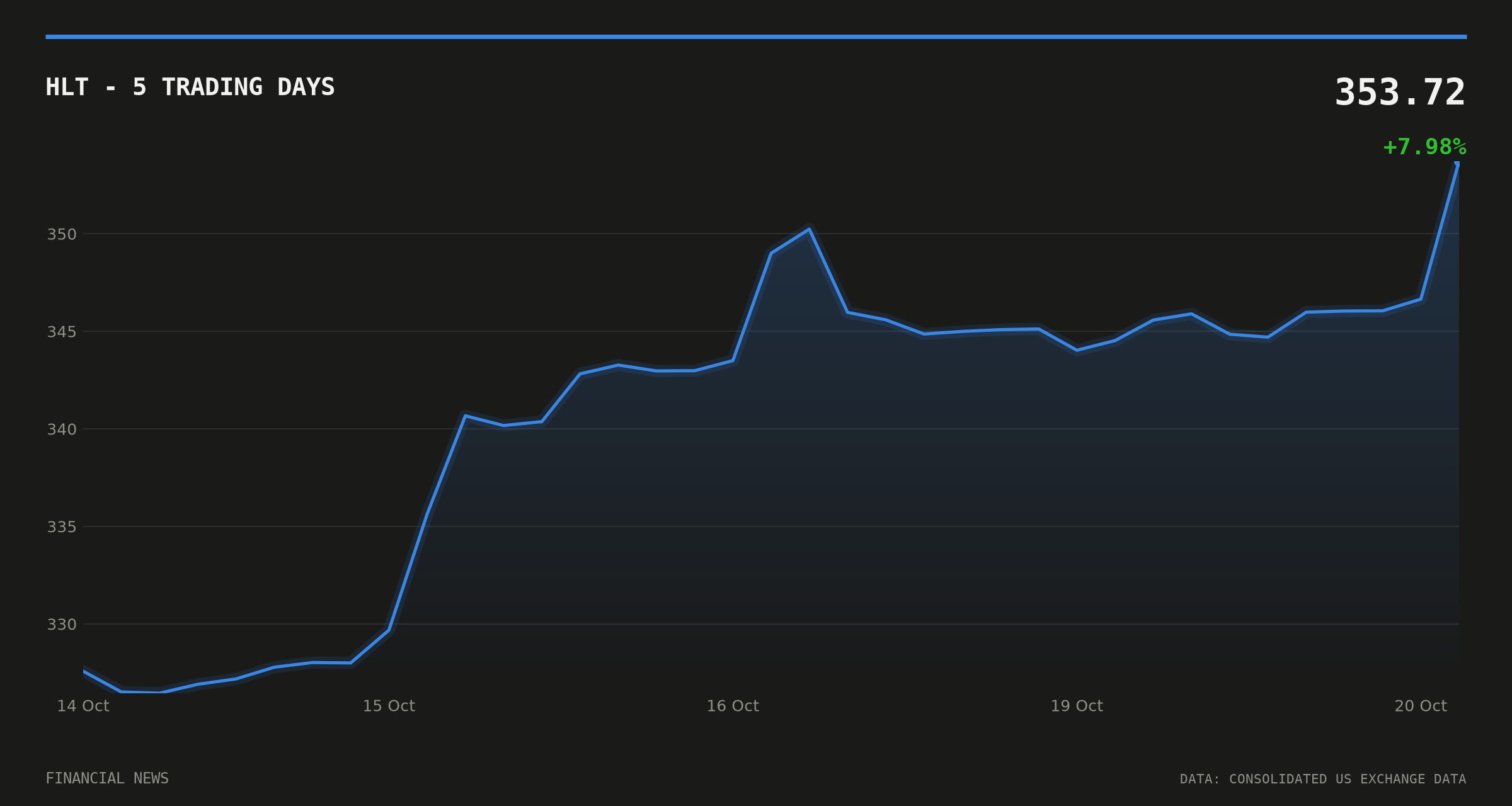
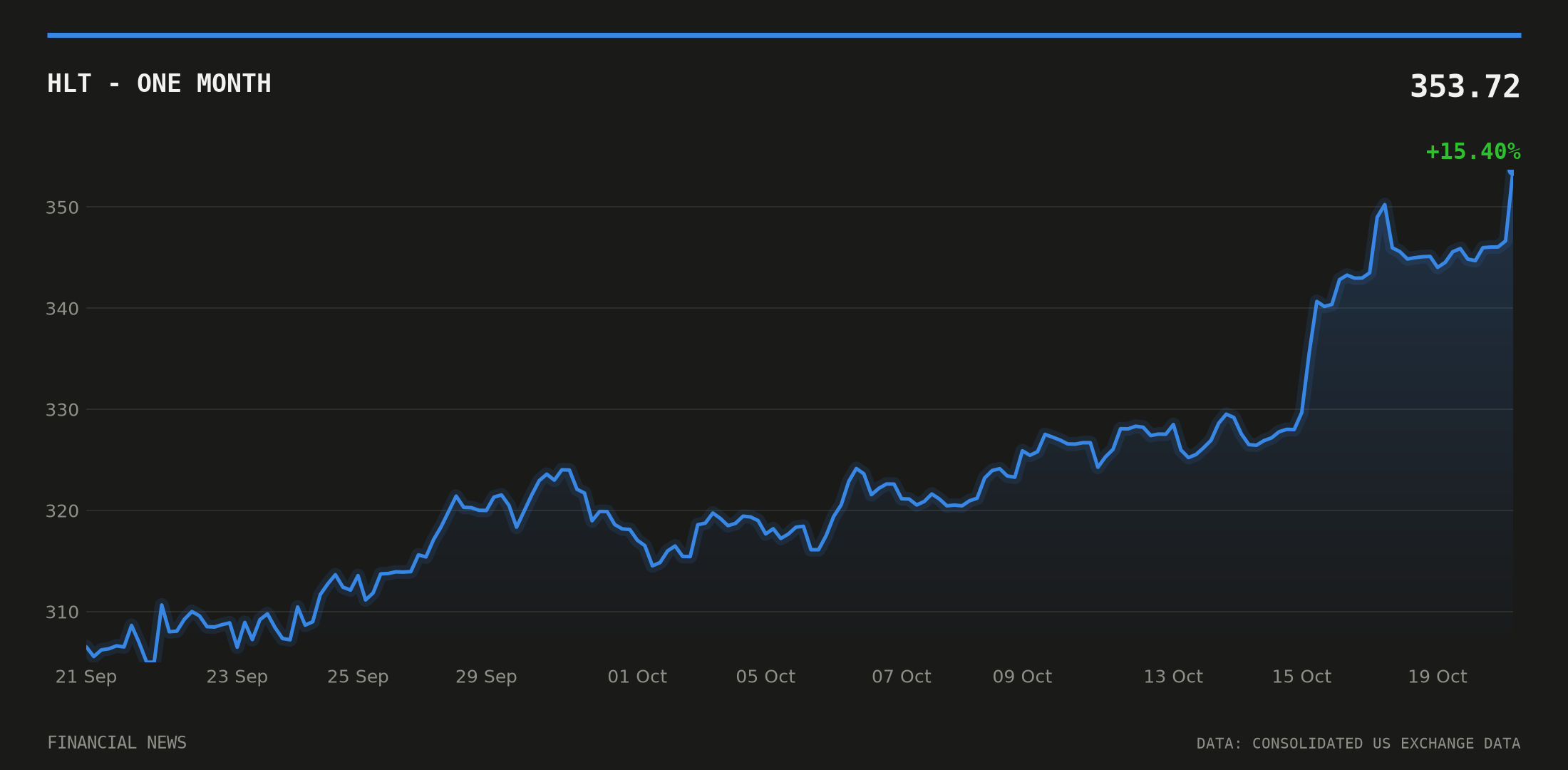
HLT shares last traded at $353.72, up 2.26% on the day and 10.01% over the previous 20 trading sessions, touching a 20-day high the same day the listing news broke, according to consolidated US exchange data. Daily short-sale ratios for the stock ranged from roughly 0.26 to 0.52 across the fortnight before the announcement, FINRA data show, with no spike suggesting unusual positioning ahead of the news.
The macro backdrop
The announcement lands against a steady US rates backdrop. The 10-year Treasury yield stood at 5.09% on 16 October, barely changed from 5.10% a week earlier, while the 2-year yield eased to 4.74% from 4.77%, according to Federal Reserve data. The yield curve’s spread between the two maturities widened slightly to 0.38 percentage points. US unemployment ticked up to 4.2% in September from 4.1% the prior month, Fed data show, while consumer prices continued their gradual rise.
None of that macro picture bears directly on Hilton’s decision. Listing-venue switches of this kind are typically driven by fee structures, index eligibility considerations and exchange relationship terms rather than by funding costs, as the Marriott and Host Hotels precedents illustrate.
What happens next
Hilton expects no disruption to trading continuity through the transition. Investors holding HLT shares need take no action, the company said, and the stock will carry the same ticker on both exchanges during the crossover window between the 4 and 5 November sessions. Market participants will be watching whether other hospitality names follow the pattern set by Marriott, Host Hotels and now Hilton in shifting their primary listing to Nasdaq.
This article is for information only and is not investment advice or a recommendation to buy or sell any asset. Markets move quickly; figures are correct as sourced at the time of writing. Always do your own research before making financial decisions.
