

Halliburton (NYSE: HAL) has signed memorandums of understanding with two partners, Eneva and WESCA, to pursue energy development opportunities in Venezuela, the company said on 21 September 2026.
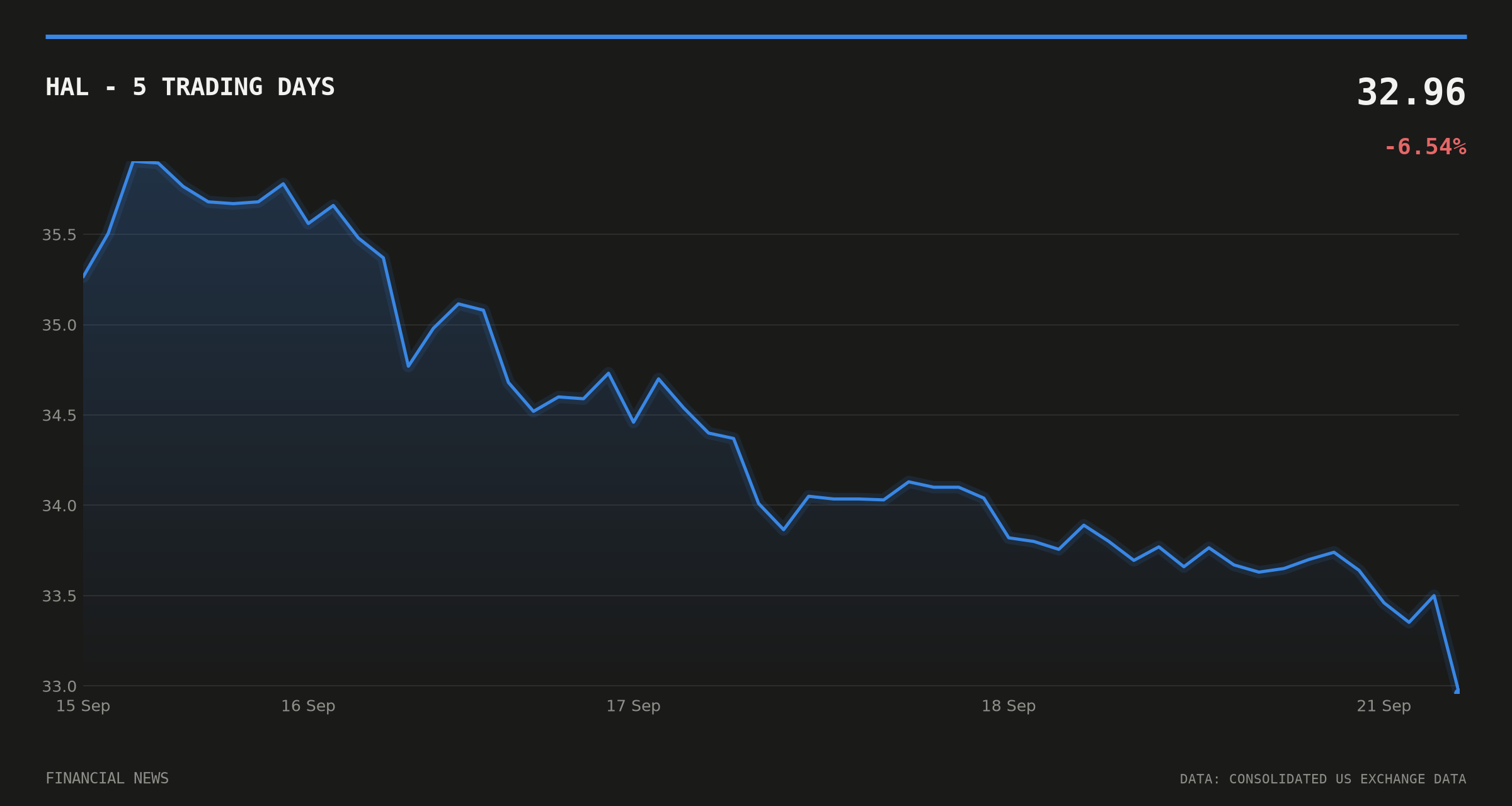
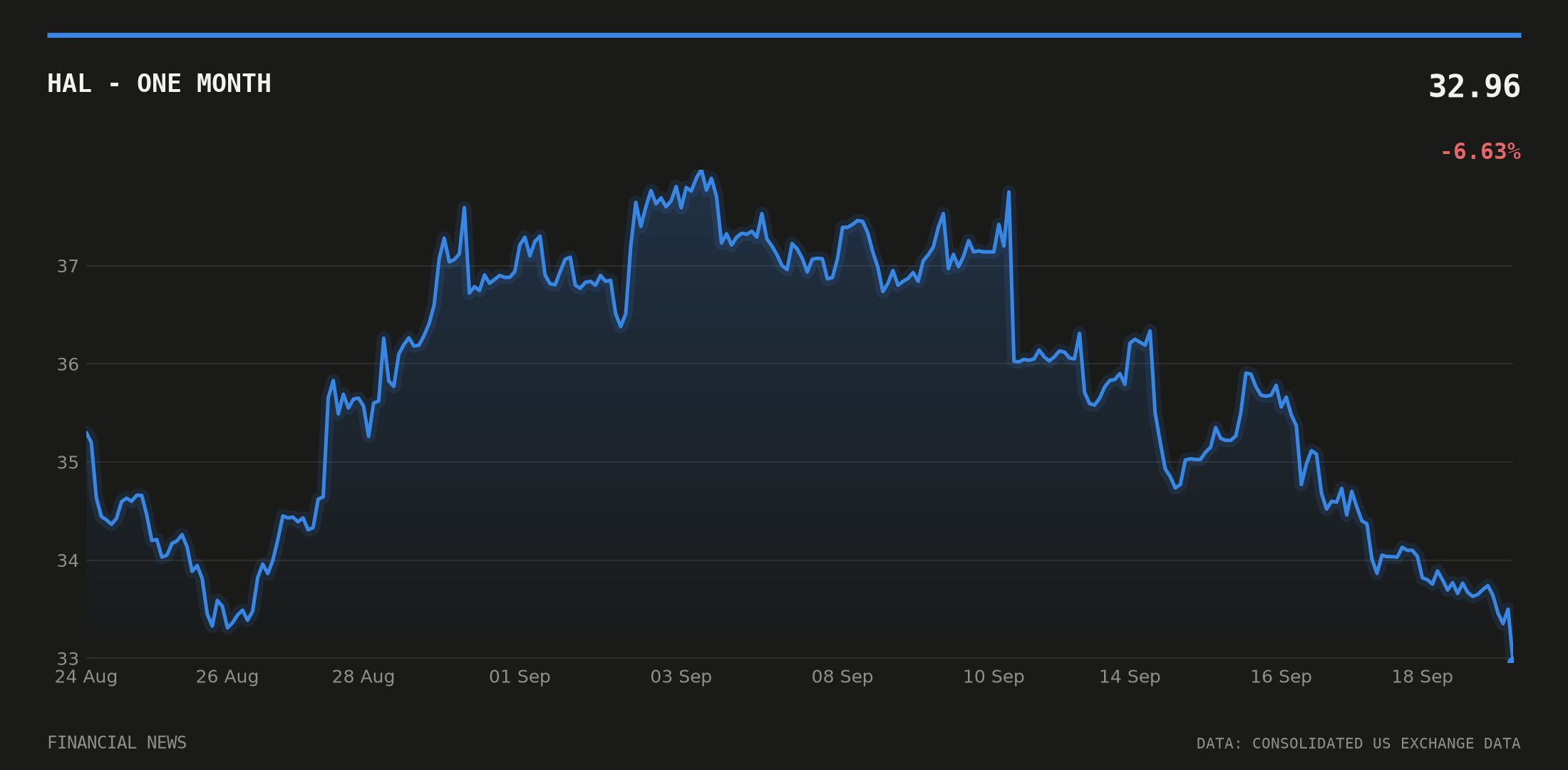
HAL shares closed the session down 2.14% at $32.93, extending a 10.32% decline over the preceding 20 trading days, according to consolidated US exchange data.
The Halliburton Venezuela agreements are non-binding. They set out an intent to help customers advance oil and gas projects in the country rather than committing Halliburton to specific fieldwork or spending. Under the WESCA MoU, Halliburton would support field evaluation and development planning, as first reported by Reuters. The Eneva agreement builds on an existing relationship the two companies have in Brazil, where Eneva ranks among the country’s largest private natural gas operators.
Halliburton’s own release points to “nearly nine decades” of prior experience in Venezuela and cites established bases and local expertise as grounds for advancing the new projects.
Why Halliburton is only signing this now
The timing is the story behind the story. Halliburton had been effectively locked out of Venezuela for years under US sanctions targeting the Maduro government’s oil sector, a bar that briefly eased under a narrow general licence in 2019-2020 before tightening again.
That changed after Nicolás Maduro was captured in a US military operation on 3 January 2026, as Military.com reported at the time. Washington’s Office of Foreign Assets Control followed in February 2026 with a general licence permitting oilfield-service companies back into Venezuelan fields, a shift Rigzone reported reversed the sanctions bar that had kept firms like Halliburton out.
Before that broader licence, OFAC’s General Licence No. 50/50A had authorised only a handful of oil majors — BP, Chevron, Eni, Repsol and Shell — to resume Venezuelan operations, according to analysis from Baker McKenzie. Oilfield-service companies, whose work underpins the majors’ output, were left waiting. Halliburton’s MoUs are among the first visible moves by a services firm to test that newly opened door.
A profitable company navigating a soft patch
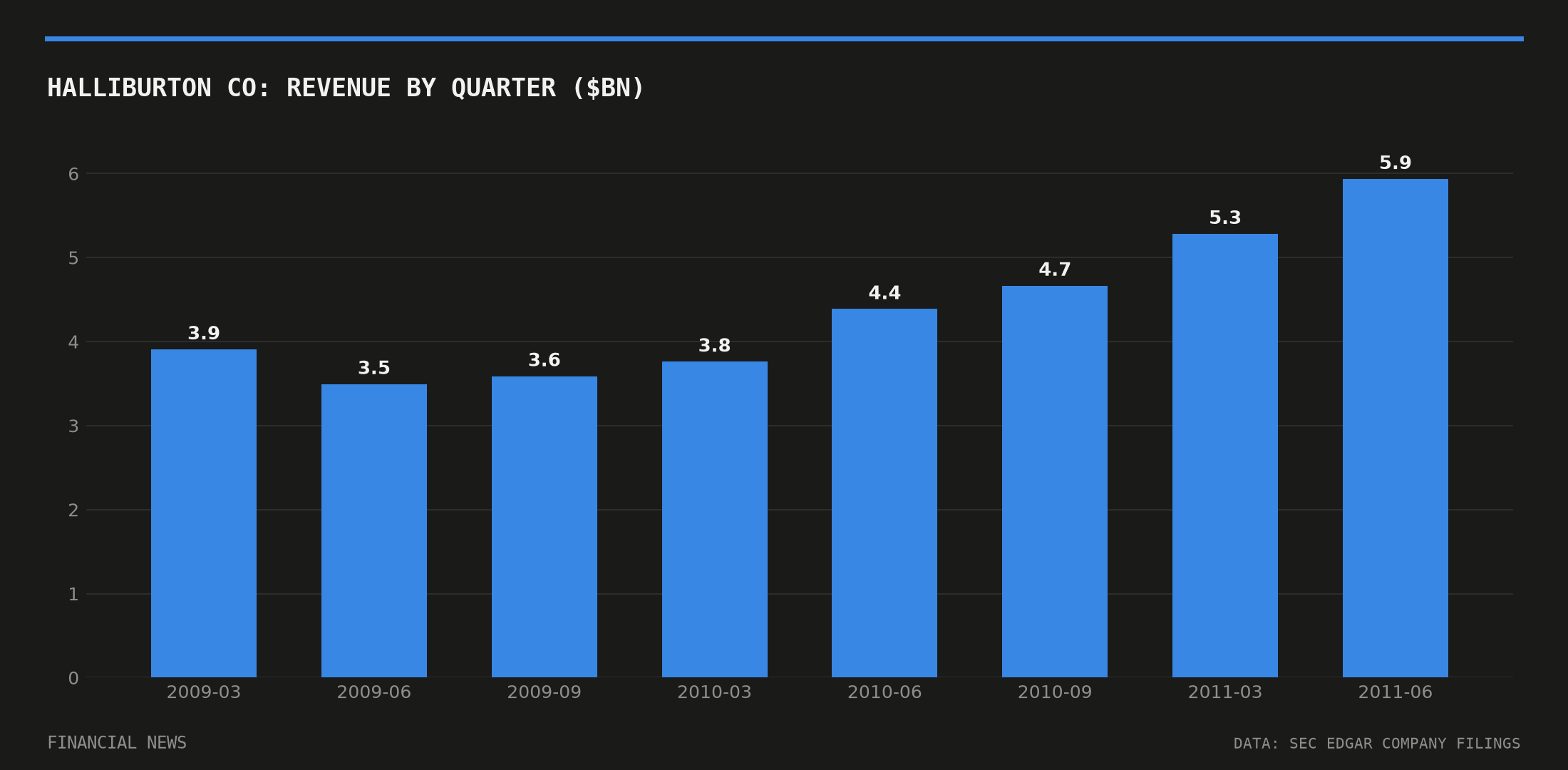
The Venezuela push comes as Halliburton works through a stretch of uneven earnings. The group reported net income of $534m on diluted earnings per share of $0.64 for the second quarter of 2026, filings with the SEC show. That followed a first quarter with $461m in net income and $0.55 in diluted EPS, a marked recovery from the third quarter of 2025, when net income fell to just $18m and diluted EPS to $0.02, according to Halliburton’s 10-Q filing for that period.
Trading volume in HAL ran 1.51 times the 20-day average around the announcement, consolidated exchange data show, with the stock’s 20-day range spanning a high of $37.98 and a low of $32.93 — the level it closed at on the day the Venezuela agreements were disclosed. FINRA short-sale data put the daily short-volume ratio in HAL at 0.256 on 18 September, having ranged as high as 0.531 earlier in the month, though the figures do not on their own explain the share-price move.
What the deal does not commit Halliburton to
Nothing in the agreements obliges Halliburton to deploy equipment, staff or capital in Venezuela on a firm timeline. MoUs of this kind typically formalise an intent to negotiate scope, not a contract to perform work, and Halliburton’s statement frames the Eneva and WESCA pacts as vehicles to “help customers advance projects” rather than as project awards in themselves.
That distinction matters given how recently the legal path reopened. The general licence issued in February 2026 governs which activities oilfield-service providers may undertake and under what conditions, and its terms — along with any successor guidance from OFAC — will shape how quickly MoUs of this kind convert into actual fieldwork.
What to watch
Market participants tracking the reopening of Venezuela’s oil sector are watching whether other service companies follow Halliburton’s lead, and whether OFAC extends or narrows the scope of the licences issued since Maduro’s capture. Halliburton has not disclosed a timeline for moving from memorandum to contract, and its statement gives no indication of expected revenue or investment tied to the Venezuela work.
This article is for information only and is not investment advice or a recommendation to buy or sell any asset. Markets move quickly; figures are correct as sourced at the time of writing. Always do your own research before making financial decisions.
