

A tax attorney in a Brisbane office is most likely currently handling the finances for a family business that has been running smoothly through a discretionary trust for twenty years. A federal tax change designed in Canberra is threatening to cause costly complications at the state level, making that quiet arrangement suddenly much less comfortable. Queensland Treasurer David Janetzki wants an explanation for why no one seems to have given this enough thought.
The proposed minimum 30% tax on discretionary trusts by the federal government is the first point of contention. The goal of the proposal, which is supported by Treasurer Jim Chalmers, is to close a long-standing loophole that has permitted certain trust arrangements to allocate income in ways that lower tax obligations below what the government deems reasonable. Chalmers published exposure draft legislation and presented companies with a restructuring option: switch from discretionary to fixed distributions in order to avoid being subject to the new federal tax. That seems like a sensible offramp on paper. However, tax attorneys soon pointed out that reorganizing a trust in Queensland could result in state transfer duty, or simply stamp duty, which could cost companies tens of thousands of dollars or more in unanticipated taxes.
Chalmers was the target of David Janetzki’s Queensland trust tax warning, which arrived in early September 2026. The federal government’s guaranty that companies would be able to restructure without incurring additional costs was publicly questioned by the Queensland Treasurer. According to Janetzki, when a trust modifies its structure, Queensland cannot just ignore stamp duty obligations that result from state law. The Commonwealth’s draft legislation is being reviewed by the state’s Revenue Office, but Janetzki made it clear that he cannot guaranty automatic exemptions. He wants Chalmers to clarify how the federal and state tax systems are meant to work together because, at the moment, it seems like no one is sure.
This kind of federal-state divide seems to be common in Australian politics, but the middle-man companies are always the ones who suffer as a result. The wealthy are not the only people who use discretionary trusts. They are prevalent in small and medium-sized businesses, including farms, family-owned stores, professional practices, and tradies that incorporated years ago on the advice of their accountant.
These individuals typically lack the means and desire for intricate legal restructuring. The kind of vicious cycle that undermines public confidence in the tax system itself occurs when people are told they must modify their trust structure in order to avoid a new federal tax, only to have that modification possibly result in a state tax.
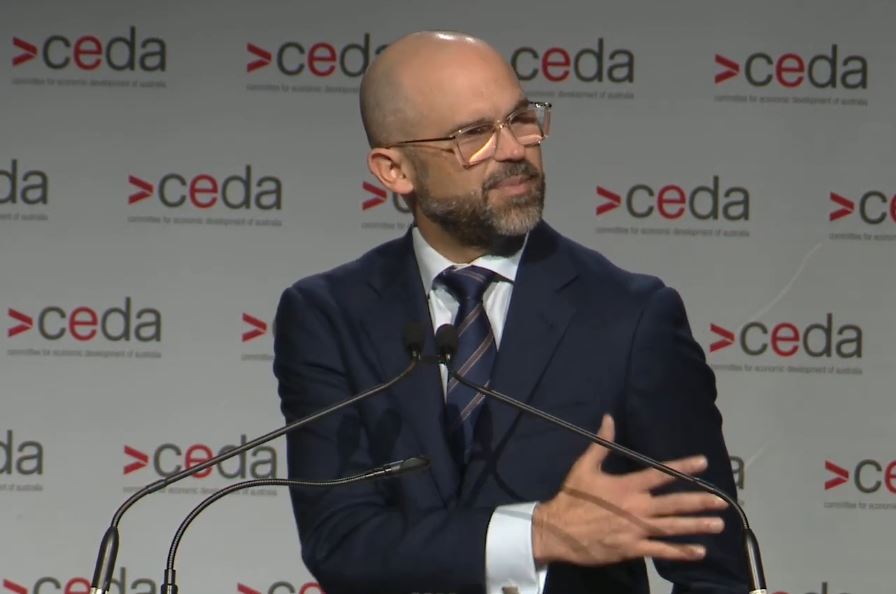
It’s important to remember that Janetzki is facing financial difficulties of his own. For the first time in seventeen years, Queensland’s credit rating was lowered in September 2026, which Janetzki attributed to Labor’s “legacy of fiscal vandalism.” In response, he has already expressed opposition to tax increases or spending reductions. The context is important.
There is little opportunity for a Queensland treasurer to grant stamp duty exemptions out of goodwill while simultaneously avoiding new revenue measures and protecting the state’s fiscal credibility. There must be a source of funding, and Canberra may need to provide compensation or legislative coordination to allow companies to restructure without state-level repercussions.
Awaiting clarification from both governmental levels, industry associations and tax advisors are keeping a close eye on the situation. Before the legislation is finalized, the exposure draft may be amended to address the stamp duty overlap. However, possible and likely are not the same thing, and anyone who has followed Australian tax reform is aware of how slowly, if at all, intergovernmental coordination proceeds. For years, the Commonwealth and the states have been at odds over how to distribute GST. There’s no reason to think this will be any different.
The David Janetzki Queensland trust tax warning is important because it highlights a real-world issue concealed within a policy announcement. It appears that the federal government did not fully consider how the workaround would interact with state-level obligations when designing a tax change and providing a workaround. Companies now have to choose between two systems because they don’t know if solving one issue will lead to another. Decisions can be frozen just by that uncertainty. Furthermore, freezing isn’t a strategy for small operators managing family trusts in Queensland; rather, it’s just a way for them to wait for an unforeseen bill.
