

David Ellison has named Ynon Kreiz, the outgoing chief executive of Mattel, as co-chief executive of the combined Paramount and Warner Bros Discovery (NASDAQ: WBD), effective when the merger closes. Ellison, chairman and chief executive of Paramount Skydance (NASDAQ: PSKY), will keep long-term strategy and creative direction; Kreiz takes day-to-day operations, according to Reuters.
The deal carries roughly $80bn in debt and a Reuters analysis puts the targeted merger cost savings at around $6bn, figures that frame Kreiz’s mandate as a Paramount-Warner Bros cost-cutter brought in to tighten the combined group’s finances.
The appointment came the evening of 30 September, hours after a federal judge approved an antitrust settlement that cleared the last hurdle to the deal, Reuters reported. The merger is expected to close on 6 October 2026.
A settlement that limits the cost-cutter’s reach
The same Reuters analysis that flagged Kreiz’s $6bn savings target also flagged a constraint on it: Paramount’s antitrust settlement binds the combined company to spending commitments worth at least $300m. That leaves Kreiz working through a mandate that is narrower than the headline savings figure implies.
Kreiz’s record at Mattel, where he is credited with launching the Barbie film, is being cited as evidence he can operate beyond toys, according to the Times of Israel. He holds an economics and management degree from Tel Aviv University and an MBA from UCLA Anderson, and sits on the board of Warner Music Group, per Paramount’s own announcement.
Why the balance sheet needs one
Paramount Skydance’s own filings show why an operations-focused co-chief executive has appeal. Net income came to $168m on revenue of $7.347bn in the first quarter of 2026, a margin of roughly 2.3%, according to its 10-Q filing. By the second quarter, net income had fallen to $41m on revenue of $6.913bn, a margin closer to 0.6%, the company’s subsequent quarterly filing shows. Diluted earnings per share slipped from $0.15 to $0.04 over the same two quarters.
That thinning margin sits against quarters in late 2024 and early 2025 when the pre-merger entity reported no revenue or net income in its filings, a reflection of the corporate restructuring that preceded the deal rather than underlying trading. The contrast between a $7.3bn-revenue quarter with a $168m profit and a $6.9bn-revenue quarter with just $41m left over is the kind of swing that puts pressure on an incoming management team to show it can protect margins once Warner Bros Discovery’s assets and debt load are folded in.
Market positioning and the Skydance name question
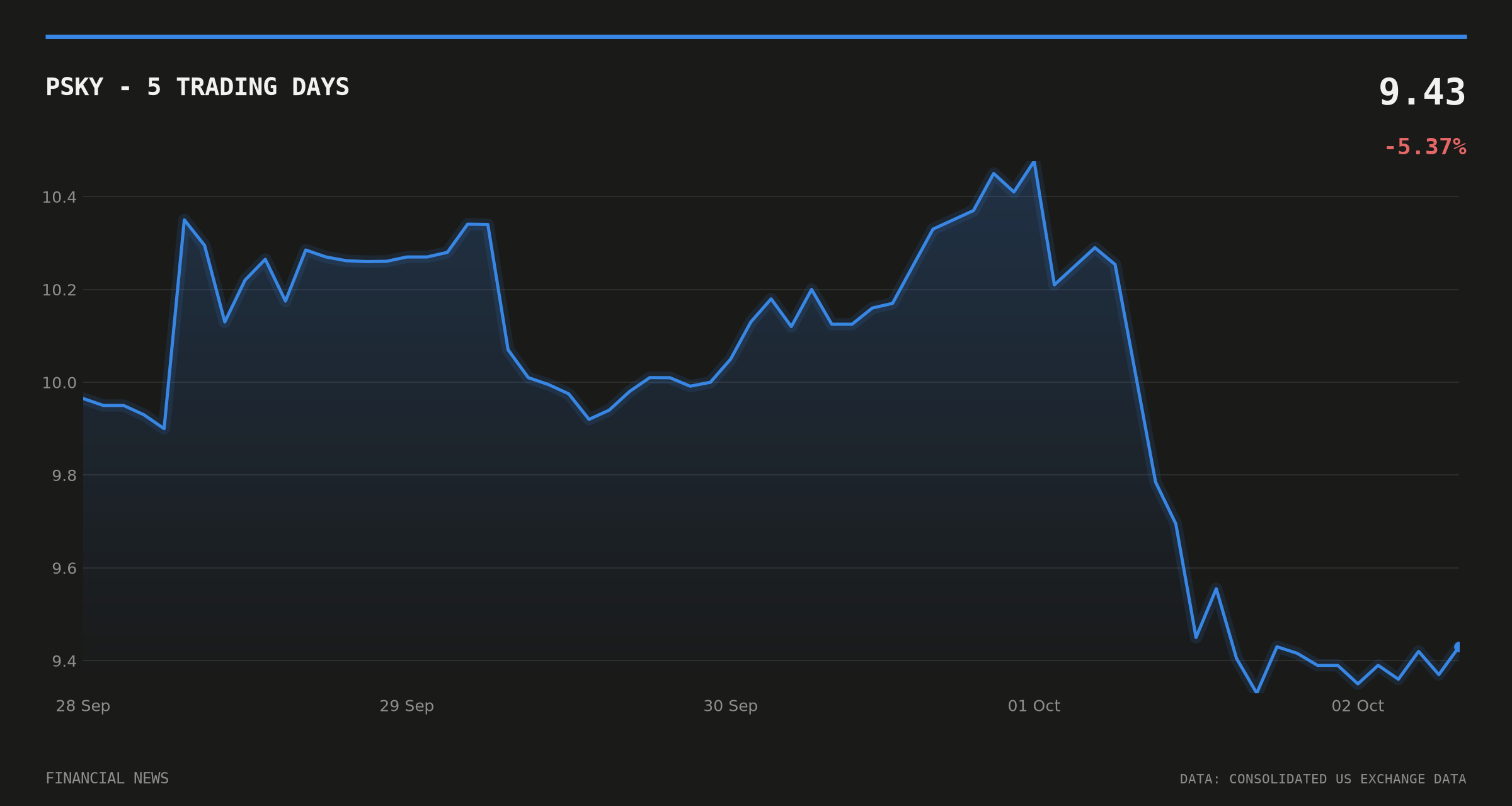
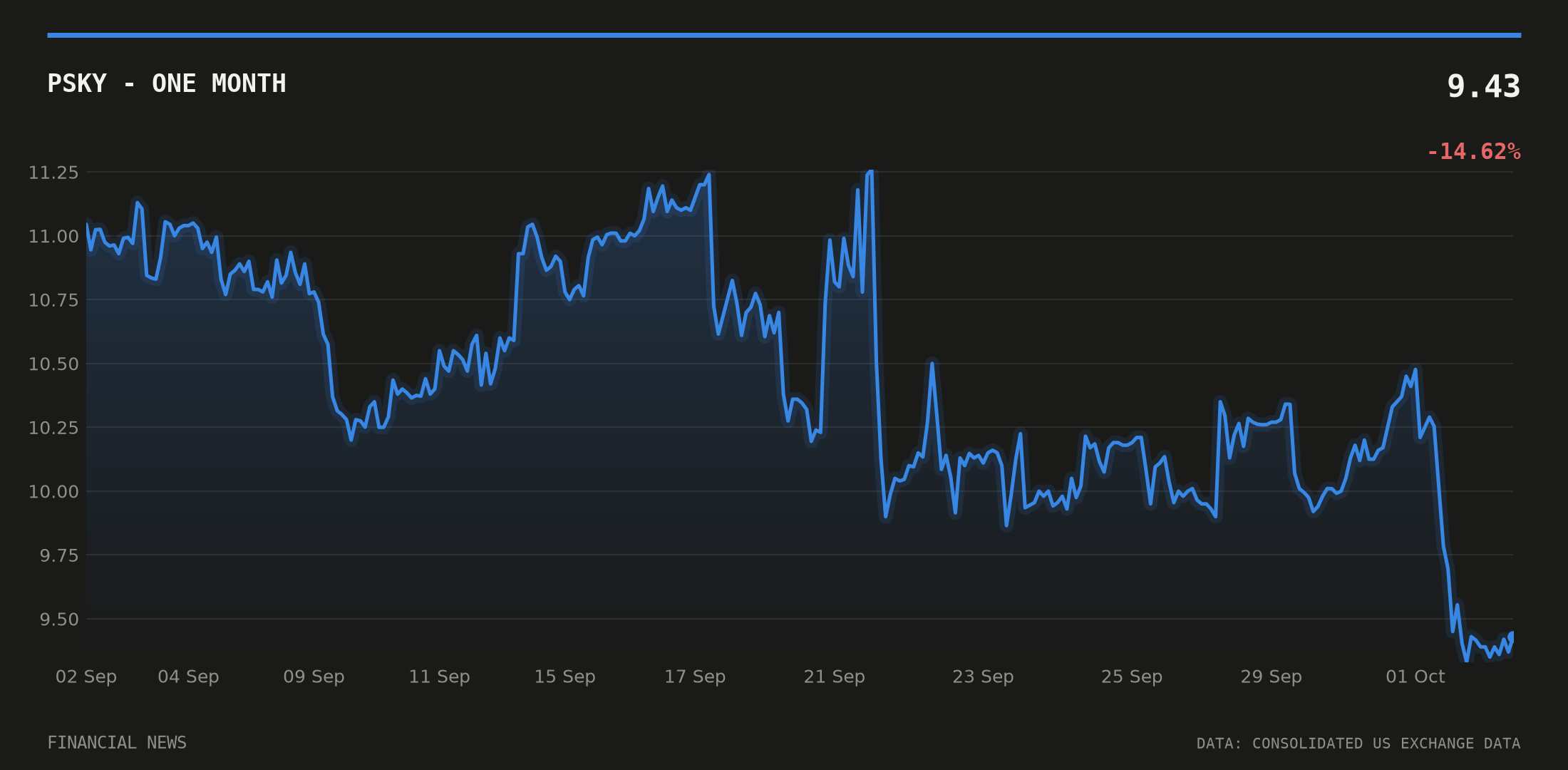
Paramount Skydance shares last traded at $9.3782, down 0.13% on the day and 11.11% over the past 20 days, having touched a 20-day low of $9.33 and a high of $11.26, according to consolidated US exchange data. Daily short-sale volume ratios on the stock ranged between 0.545 and 0.773 across the ten sessions to 1 October, FINRA data show, with no clear directional build-up either side of the Kreiz announcement.
Separately, a Form 4 was filed with the SEC on 1 October for Warner Bros Discovery insider Anthony Noto, the same day as the Kreiz news, though the filing did not specify share or value figures in the version reviewed.
A claim attributed to CNBC and reported by Benzinga that the combined company will be named ‘Skydance’ does not appear in Paramount’s own press release announcing the Kreiz appointment, which continues to refer to the entity as the combined Paramount and Warner Bros Discovery, or as Paramount Skydance Corporation. Variety separately reports the merger is expected to close on 6 October 2026, while Barrett Media has reported Kreiz is set to join as co-chief executive a day earlier, on 5 October.
What the debt load means now
The appointment lands against a backdrop of elevated US borrowing costs that bear directly on a company carrying roughly $80bn in merger-related debt. The 10-year Treasury yield stood at 5.29% as of 30 September 2026, up from 5.26% the prior session, according to Federal Reserve data. The 2-year yield held closer to flat at 4.88%, while the 10-year/2-year spread widened slightly to 0.46 percentage points from 0.41, suggesting markets are pricing a modestly steeper path for long-term borrowing costs just as Paramount-Warner Bros Discovery prepares to refinance and service its combined obligations.
Warner Bros Discovery shareholders approved the $110bn merger in April 2026, clearing the way for the deal that now awaits only its scheduled close. Investors will be watching whether Kreiz’s operational remit can move the needle on margins once the companies’ books are consolidated, and whether the $300m in settlement-linked spending commitments noted by Reuters limits how quickly the targeted $6bn in savings can materialise.
This article is for information only and is not investment advice or a recommendation to buy or sell any asset. Markets move quickly; figures are correct as sourced at the time of writing. Always do your own research before making financial decisions.
