

Costco Wholesale (NASDAQ: COST) posted fourth-quarter fiscal 2026 results on Thursday, beating Wall Street on both revenue and profit. The retailer’s Q4 earnings topped consensus by a wide margin, extending a run of estimate-beating quarters.
Diluted earnings per share came to $6.75, ahead of the $6.52 consensus estimate, while revenue reached $95.72bn against forecasts of $94.86bn, according to Benzinga.
Costco Q4 earnings: the headline numbers
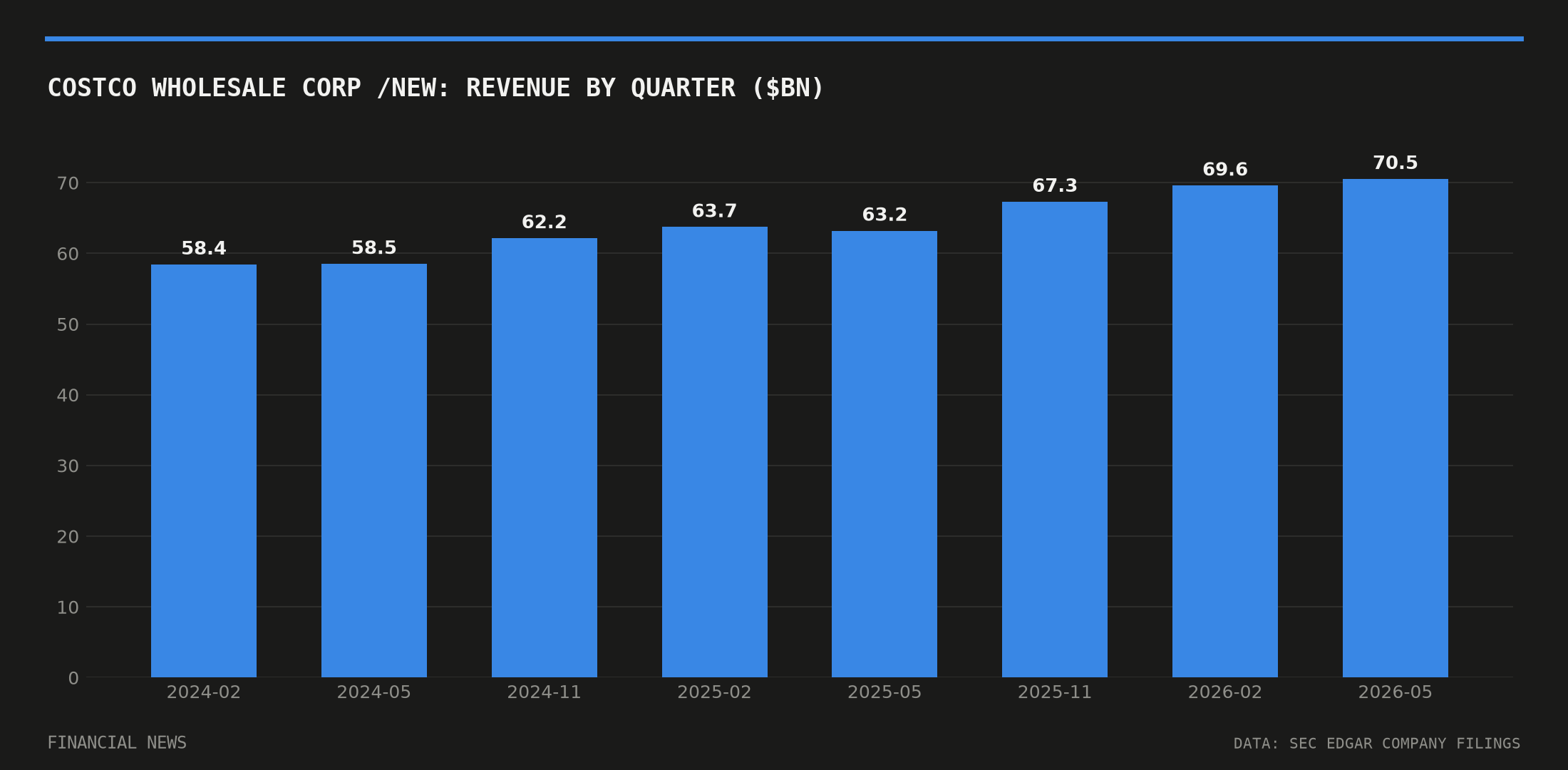
Net sales for the 16 weeks to 30 August rose 11.2% to $93.9bn, from $84.4bn a year earlier, Costco said in its results filing. Total revenue, which includes membership fees, climbed from $86.16bn in the same period last year.
Net income for the quarter reached $2.998bn, up from $2.610bn a year earlier, according to reporting from the Associated Press. Comparable sales rose 9.4%, with digitally-enabled comparable sales up 19.5%, Costco disclosed in its earnings statement carried by StockTitan.
For the full fiscal year, net sales rose 10.1% to $297.2bn from $269.9bn, with net income of $9.226bn, or $20.76 per diluted share, against $8.099bn and $18.21 a year earlier. That full-year EPS figure ties out exactly with the sum of Costco’s three prior quarterly filings for fiscal 2026 – $4.50, $4.58 and $4.93 – plus the newly reported $6.75, a consistency check against the company’s own SEC filings.
The tariff refund that flattered the beat
Roughly $0.15 of the $6.75 EPS came from a one-time refund tied to tariffs imposed under the International Emergency Economic Powers Act, according to FinanceFeeds. Costco said it reinvested part of that windfall into member pricing, partly offsetting the gain.
Strip the refund out and underlying EPS lands closer to $6.60 – still above the roughly $6.52 that analysts had pencilled in, but a narrower beat than the headline number implies. It is the kind of detail that matters more to analysts modelling the next quarter than to the topline story of another earnings beat.
Muted market reaction
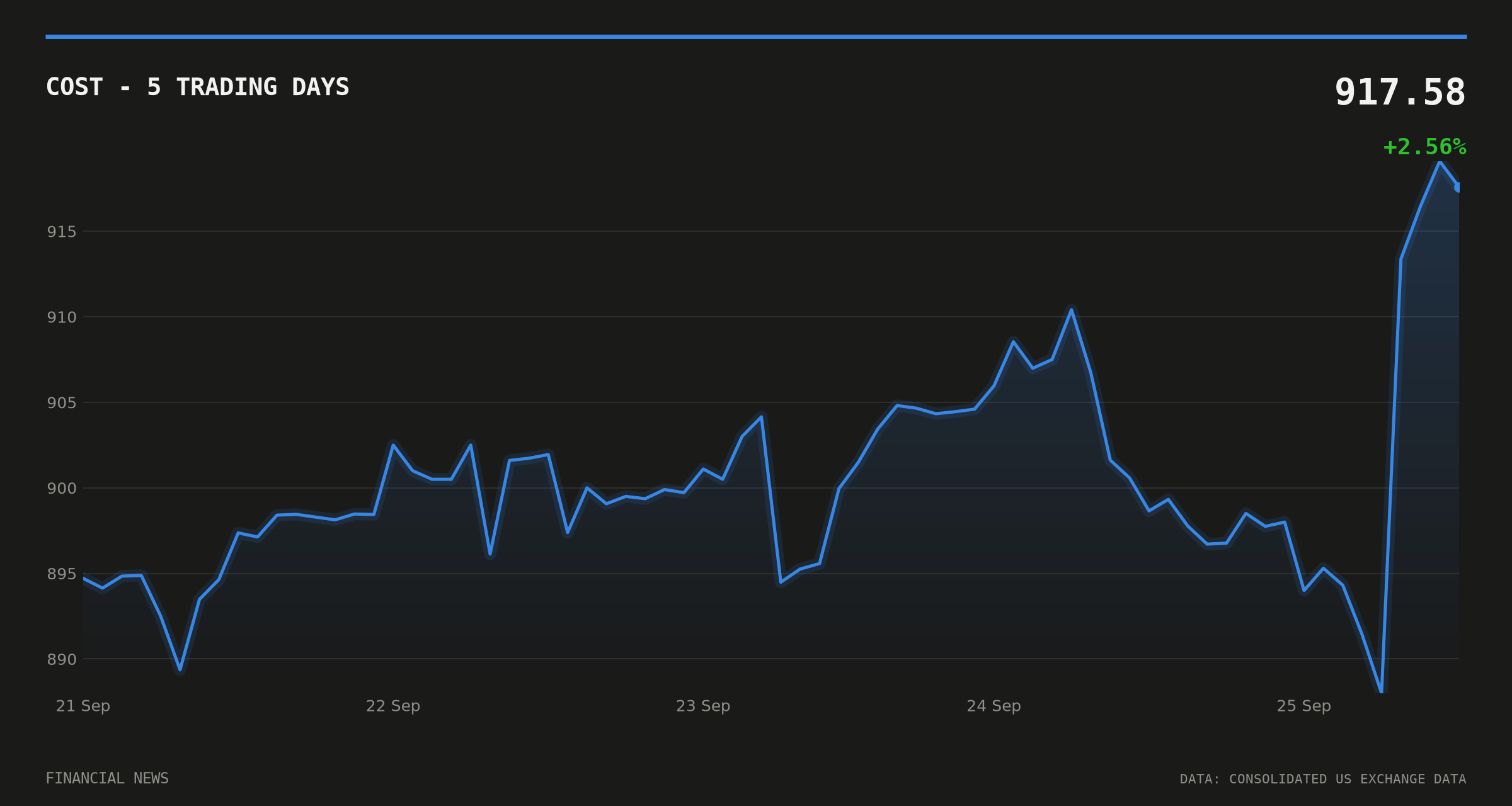
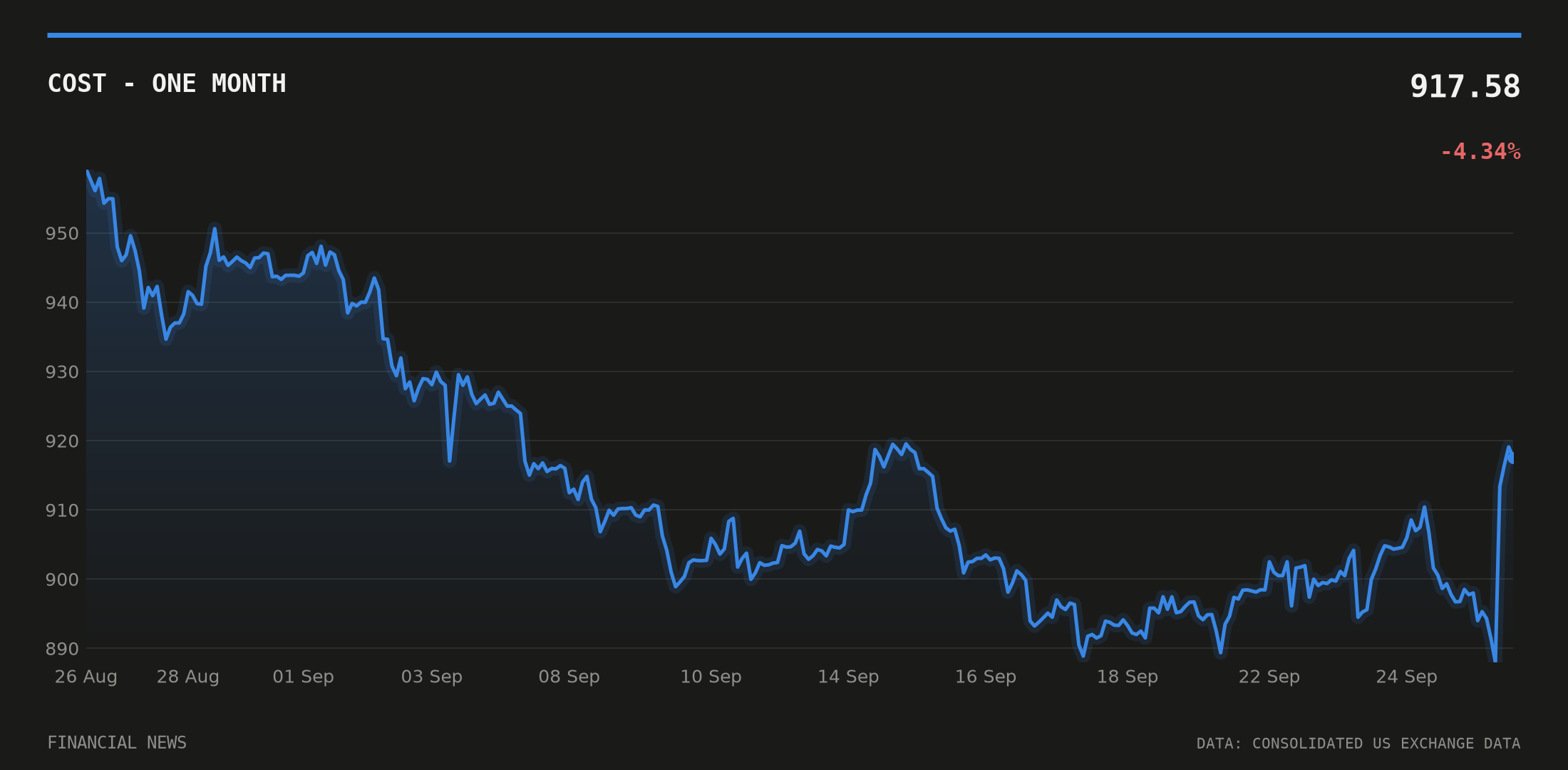
COST shares closed at $919.51 on 25 September, up 2.7% on the day but only 0.39% above where they traded 20 days earlier, alongside volume running more than double the 20-day average. Some coverage noted initial after-hours trading was close to flat as investors weighed comparable-sales trends against the headline print, rather than reacting purely to the EPS beat.
Costco’s digital push featured heavily on the earnings call, with the company pointing to an expanding nationwide DoorDash delivery partnership as a driver of the jump in digitally-enabled comparable sales, a detail highlighted by 24/7 Wall St.
Positioning and macro backdrop
FINRA short-sale volume data showed COST’s daily short ratio holding in a narrow 0.39 to 0.56 range through the fortnight before results, data that points to no significant bearish positioning building ahead of the report.
The earnings landed against a backdrop of rising long-end borrowing costs: the 10-year Treasury yield stood at 5.11% on 23 September, up from 4.96% a fortnight earlier, according to FRED data from the Federal Reserve Bank of St. Louis. The 2-year yield sat at 4.85%. Higher long-term rates tend to weigh on high-multiple consumer names even when quarterly numbers beat forecasts, which may help explain why Costco’s share price gain lagged the scale of its earnings beat.
Costco’s membership-renewal rates and comparable-sales trajectory into the new fiscal year are likely to be the next data points investors watch, alongside any further disclosure on how much of the tariff-refund benefit persists into future quarters.
This article is for information only and is not investment advice or a recommendation to buy or sell any asset. Markets move quickly; figures are correct as sourced at the time of writing. Always do your own research before making financial decisions.
