

Microsoft (NASDAQ: MSFT) revamped its Copilot app on 25 September 2026, adding a natural-language coding tool and an always-on AI agent aimed at business users. The redesign folds Word, Excel and PowerPoint directly into the app, according to Microsoft’s official blog.
The company built the update around three new capabilities: Home, Code and Autopilot. Code lets users generate apps and dashboards from plain-language prompts using the same underlying technology as GitHub Copilot, with early access due by the end of the month and a preview for Microsoft 365 Premium and Pro subscribers later this year, as first reported by Reuters.
Microsoft revamps Copilot into a ‘super app’
Autopilot, the agentic feature, evolves the “Scout” agent Microsoft introduced at its Build developer conference in June 2026, and can act on tasks without step-by-step user input, according to reporting citing GeekWire and The Verge. Fortune described the relaunch as a “super app” push targeting business users with AI agents, positioning Microsoft against OpenAI and Anthropic’s own enterprise offerings, in its coverage.
The redesign also merges Microsoft’s previously separate consumer and enterprise Copilot tracks. Several consumer-only features, including Copilot Podcasts, Group Chat and Deep Research, have been discontinued as part of the consolidation, according to The Letter Two. Microsoft plans to keep everyday features such as chat and Office integration within standard seat licences, while charging usage-based fees for Code, Autopilot and its newest models, Fortune reported.
Shares near 20-day high
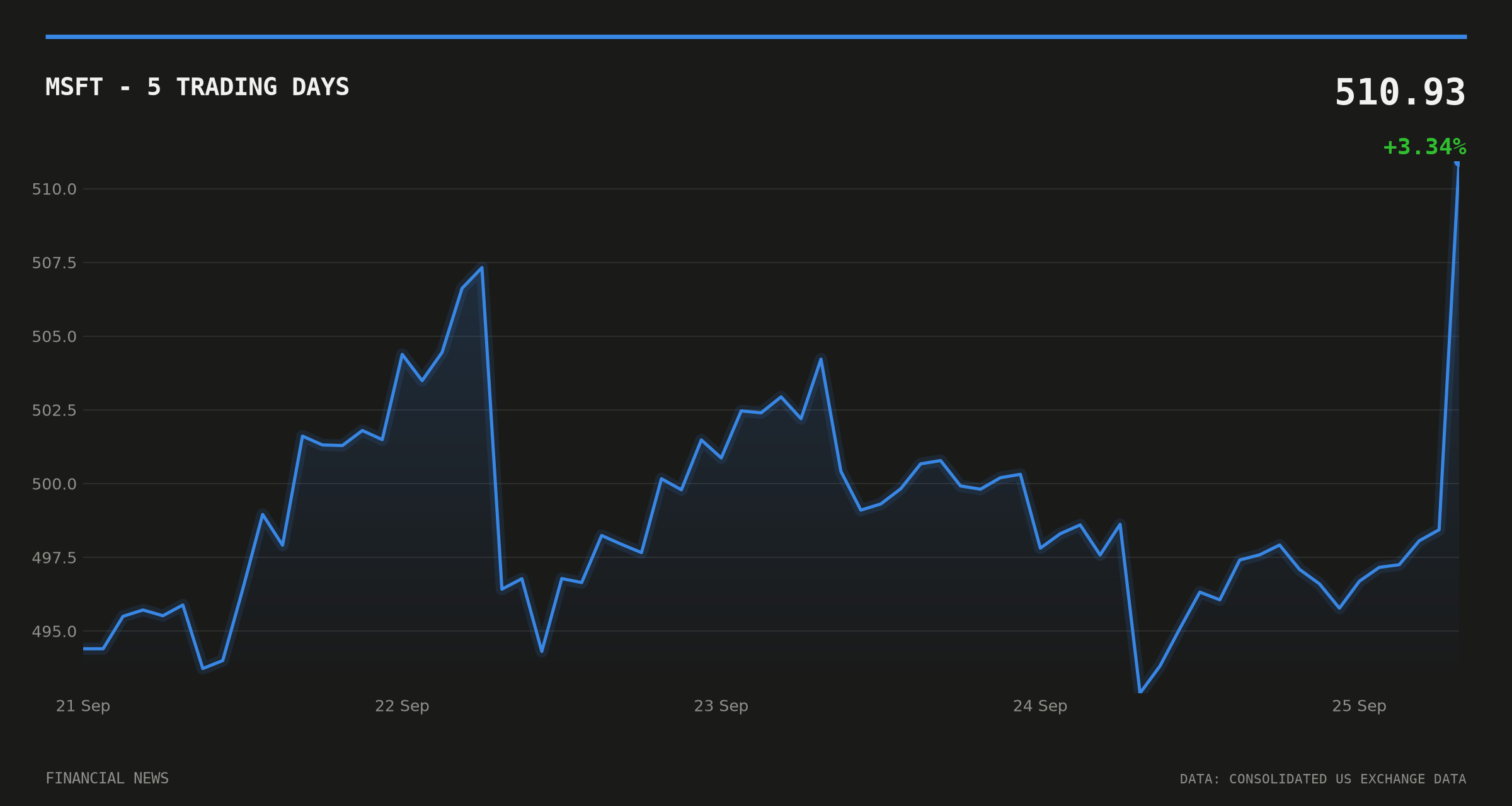
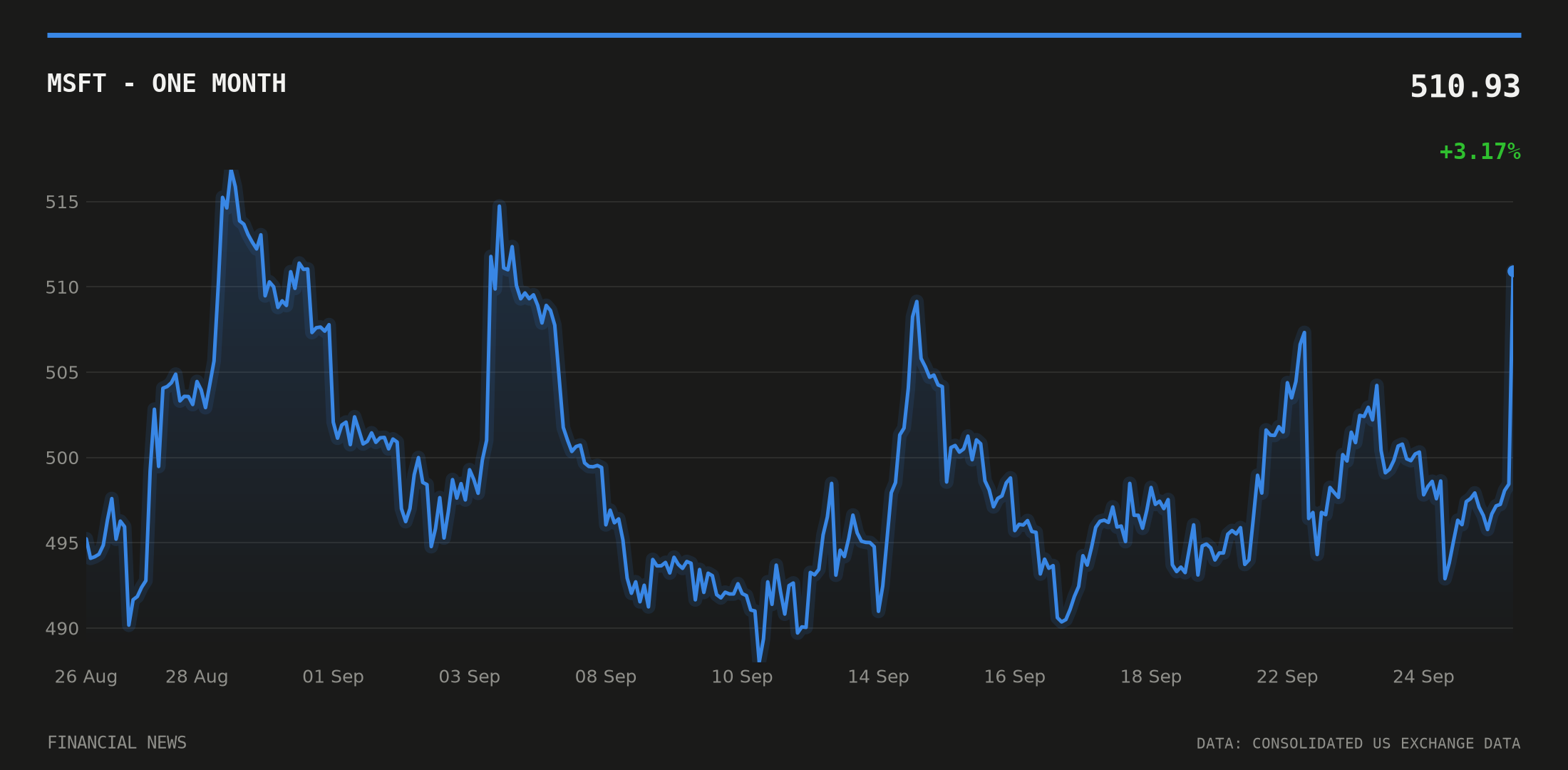
Microsoft shares last traded at $508.89, up 2.47% over the prior 24 hours and close to their 20-day high of $509.14, according to consolidated US exchange data cited by Reuters. The stock has gained 1.42% over the past 20 trading sessions, with the low over that window at $488.00.
Trading volume around the announcement ran well below the 20-day average, at roughly 22% of typical turnover, the exchange data show. FINRA’s daily short-sale volume data for Microsoft put the short ratio between 0.31 and 0.50 over the two weeks before the launch, with no unusual spike ahead of the news, based on FINRA figures in the run of trading days from 11 to 24 September.
Earnings backdrop
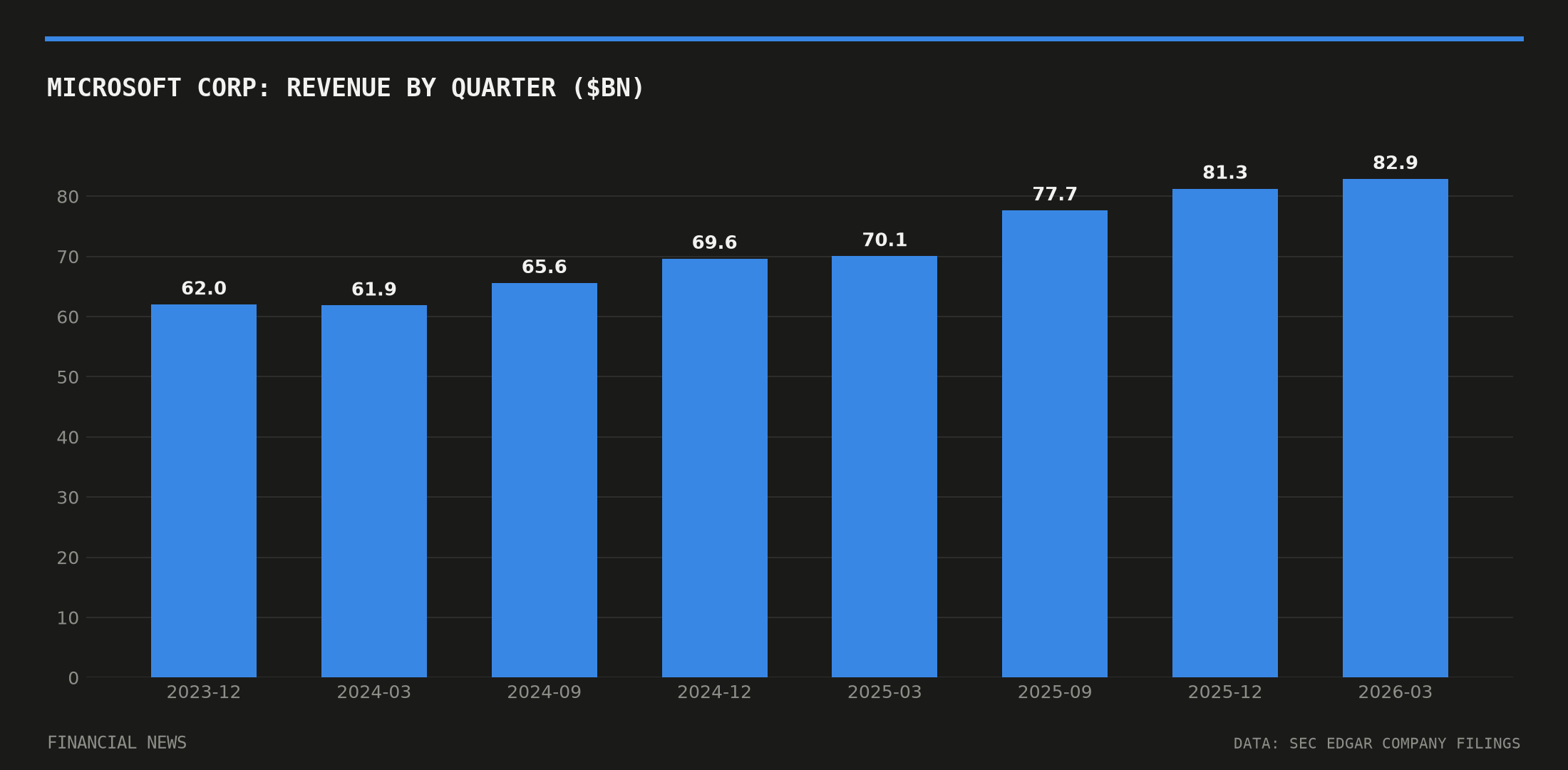
The Copilot overhaul lands as Microsoft’s underlying business keeps expanding. The company reported net income of $31.78bn on revenue of $82.89bn for the quarter ended 31 March 2026, diluted earnings per share of $4.27, according to its 10-Q filed with the SEC on 29 April 2026. That followed a quarter ended 31 December 2025 in which net income reached $38.46bn on revenue of $81.27bn, with diluted EPS of $5.16, filings show.
Revenue has climbed steadily through Microsoft’s recent fiscal quarters: from $65.59bn in the quarter ended September 2024 to $77.67bn a year later, then $81.27bn and $82.89bn in the two quarters since, according to figures drawn from Microsoft’s quarterly filings. None of those filings references the Copilot product launch directly; the SEC record contains no disclosure specific to Wednesday’s announcement.
Rates backdrop for tech stocks
Wednesday’s product news arrived against a backdrop of rising US borrowing costs. The 10-year Treasury yield stood at 5.11% as of 23 September 2026, up from 4.96% previously, while the 2-year yield rose to 4.85% from 4.71%, according to data from the Federal Reserve Bank of St. Louis. The 10-year/2-year spread widened to 0.31 percentage points from 0.26, a shift some market participants have watched for signs of how rate expectations feed into valuations for high-multiple technology names such as Microsoft.
US inflation and employment data released alongside the rate moves showed consumer prices rising to an index level of 334.131 in August 2026 from 332.813 the prior month, while the unemployment rate held steady at 4.1%, Federal Reserve data show. Neither figure relates directly to Microsoft’s product decisions, but both form part of the macro conditions investors are weighing as AI spending commitments from large technology companies continue to grow.
Microsoft has not disclosed pricing details for the usage-based charges tied to Code and Autopilot, nor a specific date for general availability beyond the end-of-month early access window and a later-this-year preview for Microsoft 365 Premium and Pro subscribers. Enterprise customers and rivals including OpenAI and Anthropic are likely to watch how Microsoft prices those agentic features once they move beyond preview.
This article is for information only and is not investment advice or a recommendation to buy or sell any asset. Markets move quickly; figures are correct as sourced at the time of writing. Always do your own research before making financial decisions.
