
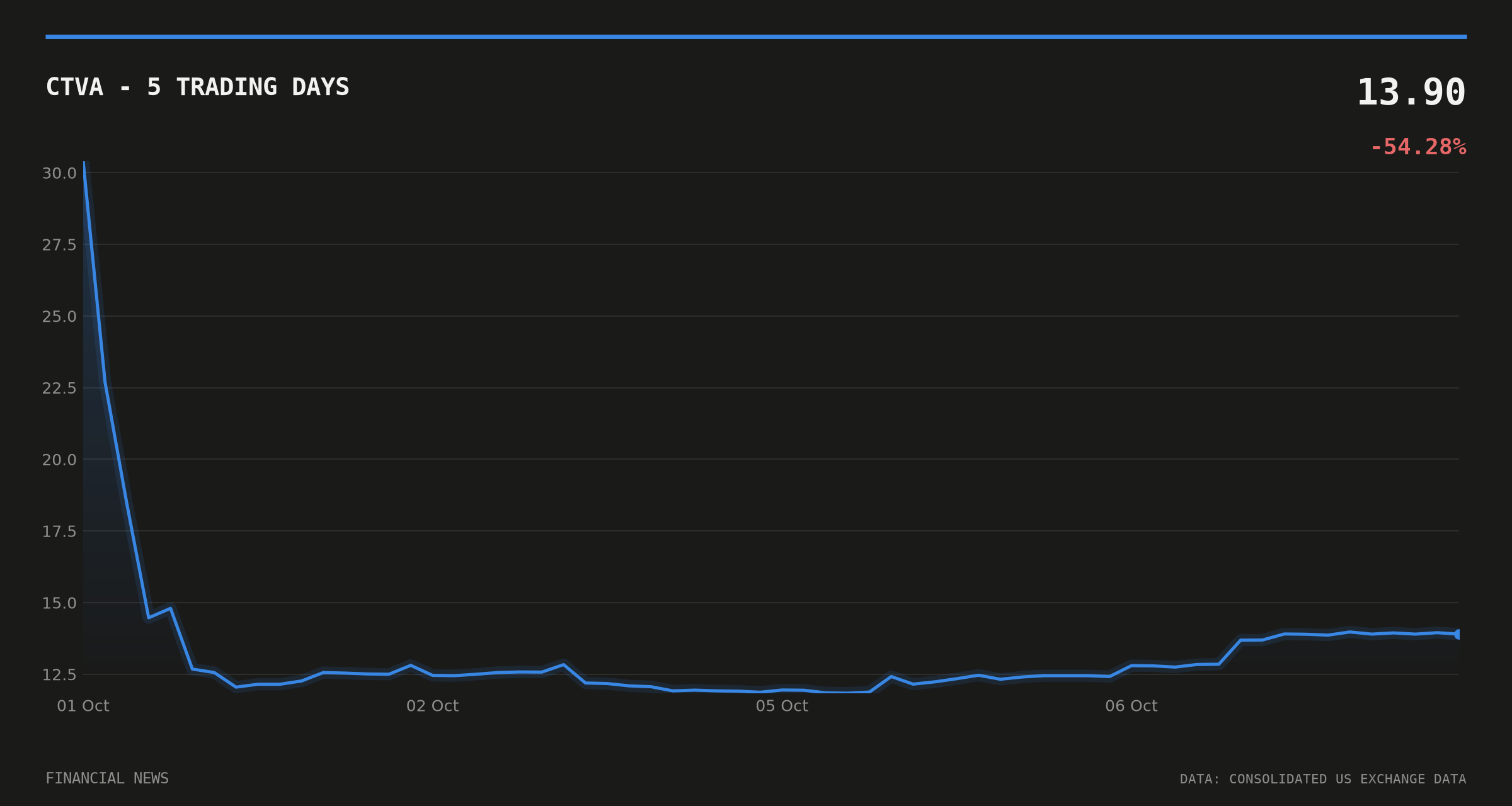

Corteva (CTVA) shares jumped 12.27% to close at $13.91 on 6 October 2026, lifted by a Corteva analyst upgrade from JPMorgan issued in premarket trading, according to The Motley Fool.
JPMorgan moved the stock to Overweight from Neutral, setting a $19.00 price target, down sharply from its prior $83.00 target, Investing.com reported. The revised target reflects Corteva’s size after shedding its seed business, not a view that the stock has become worth less in absolute terms.
JPMorgan turns bullish after the Vylor split
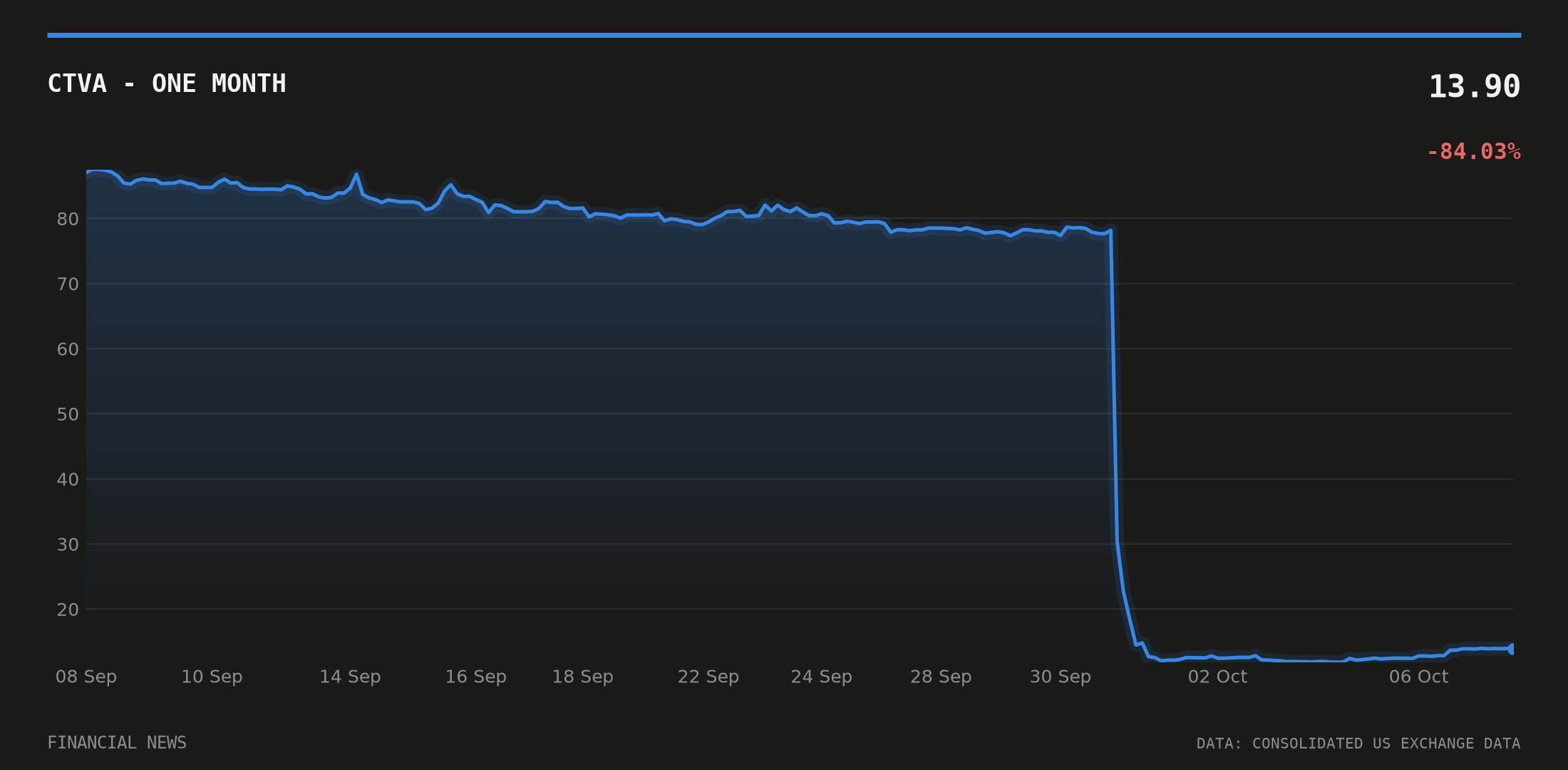
Corteva’s board declared a pro rata stock dividend distributing all shares of Vylor common stock to shareholders, completing the separation of its seed operations from the crop-protection business that remains under the Corteva name, according to a filing with the SEC.
JPMorgan’s upgrade argues that the market overshot in discounting the remaining business, which still carries potential PFAS and PFOA liabilities that the bank’s analysts model could peak near $1.3bn, or roughly $2 a share, The Motley Fool reported. GuruFocus cited the same valuation case, noting the bank flagged dividend appeal alongside the undervaluation thesis.
A separate market recap the same day put the gain even higher, with Vistap Global tracking CTVA at $14.01, up 13.08%, tying the move to the same JPMorgan call.
Spin-off resets the share price
The scale of the headline move is best read against the mechanics of the separation. Corteva’s shares sit roughly 83% below their level of 20 days ago, having traded between a high of $82.90 and a low of $11.84 over that window, consolidated exchange data show. That collapse is the arithmetic of the spin-off distribution, which removed the seed business’s value from the Corteva share price on 1 October, rather than a trading rout.
Against that reset base, Tuesday’s 12% gain is the first clear signal of how the market is pricing the standalone crop-protection business now that the dust from the separation has settled.
Earnings swings underpin the valuation call
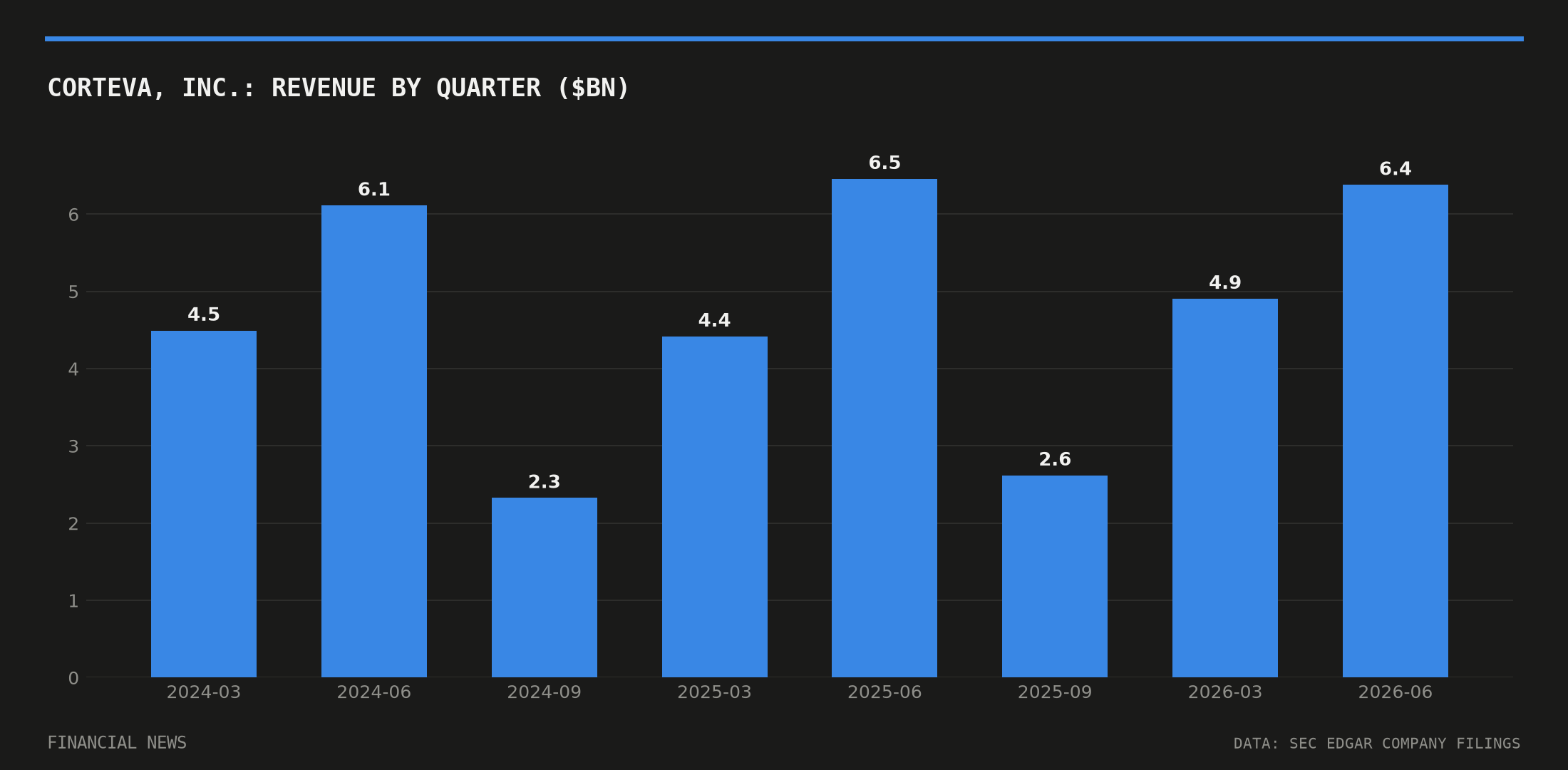
Corteva’s quarterly profit has swung sharply in recent years, a pattern that sits behind JPMorgan’s valuation argument. Net income ran to $1.314bn in the second quarter of 2025 before falling to a $320m loss in the third quarter, SEC filings show. The same seasonal pattern showed up in 2024, when a $1.053bn second-quarter profit was followed by a $524m third-quarter loss.
That volatility reflects the agricultural planting calendar, with revenue concentrated in the first half of the year; Corteva booked $6.379bn in second-quarter 2026 revenue against $4.905bn in the first quarter, filings show. JPMorgan’s bet is that the post-split business, stripped of the seed segment’s own cycle, can be valued more cleanly on that remaining footprint.
Short interest eases as the rally builds
Positioning data point the same way. FINRA’s daily short-sale ratio for Corteva fell to 0.277 on 6 October from 0.593 as recently as 30 September, according to FINRA figures, suggesting the rally was not primarily a function of short-sellers covering positions.
Markets broadly were calm around the move. The 10-year Treasury yield stood at 5.31% on 5 October, barely changed from 5.28% the prior session, per FRED data, indicating the CTVA spike was stock-specific rather than a reaction to shifting rate expectations.
Investors will next watch Corteva’s quarterly results for confirmation that the standalone crop-protection business can deliver the earnings JPMorgan’s valuation case assumes, with PFAS liability disclosures likely to feature in that debate.
This article is for information only and is not investment advice or a recommendation to buy or sell any asset. Markets move quickly; figures are correct as sourced at the time of writing. Always do your own research before making financial decisions.
