
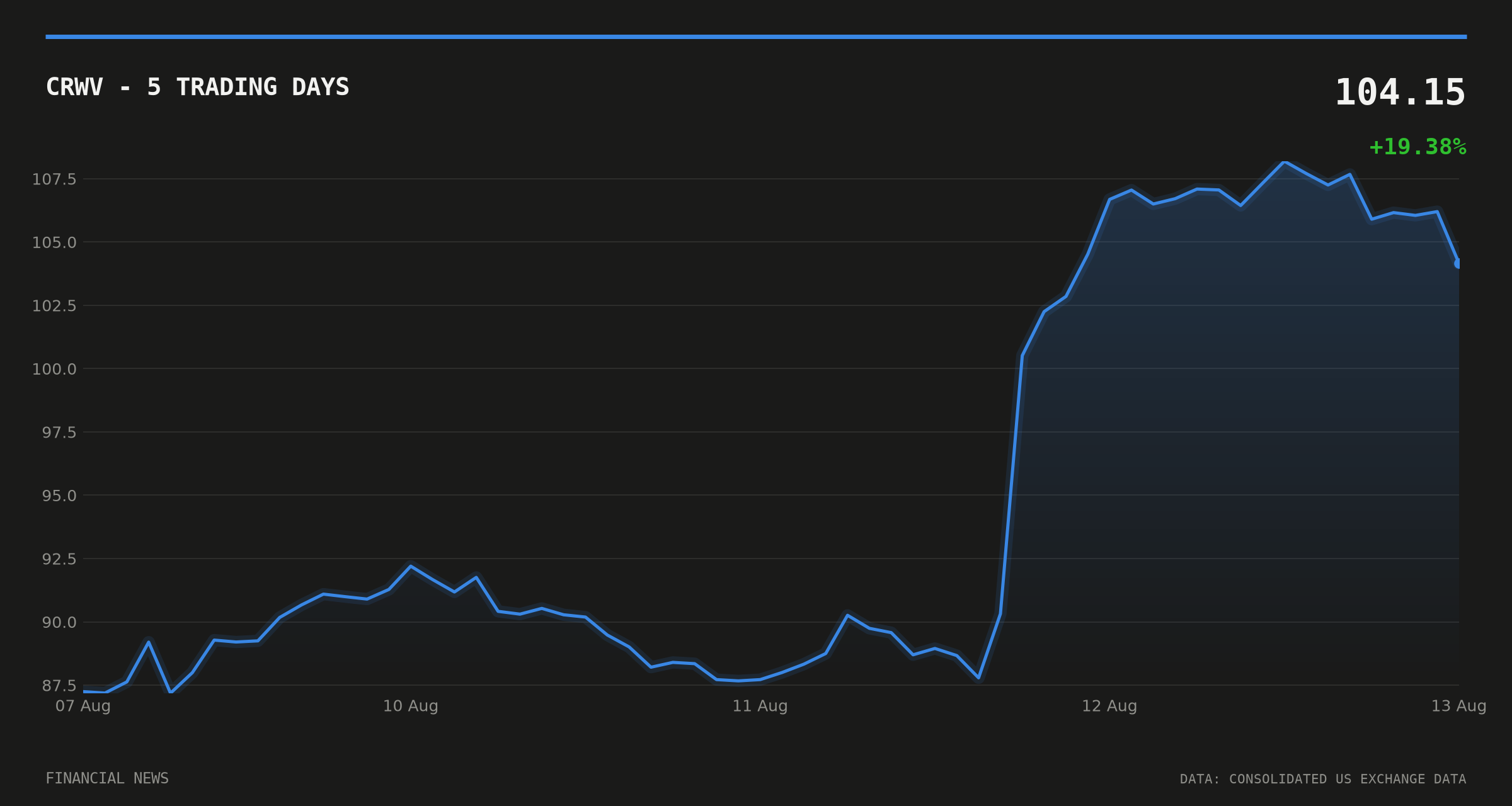

CoreWeave, Inc. (NASDAQ: CRWV) shares surged after a CoreWeave earnings beat for the second quarter of 2026, filed with US regulators on 11 August. The AI cloud computing group reported revenue of $2.575bn for the quarter ended 30 June, beating the roughly $2.56bn Wall Street consensus, according to CoreWeave’s 8-K earnings release filed with the SEC.
The stock closed at $90.32 on 11 August, the day of the release, and had climbed to $107.95 by a market snapshot taken at 15:00 UTC on 12 August — a move of roughly 19.5%, as first reported by MarketWatch.
CoreWeave earnings beat driven by AI demand and backlog
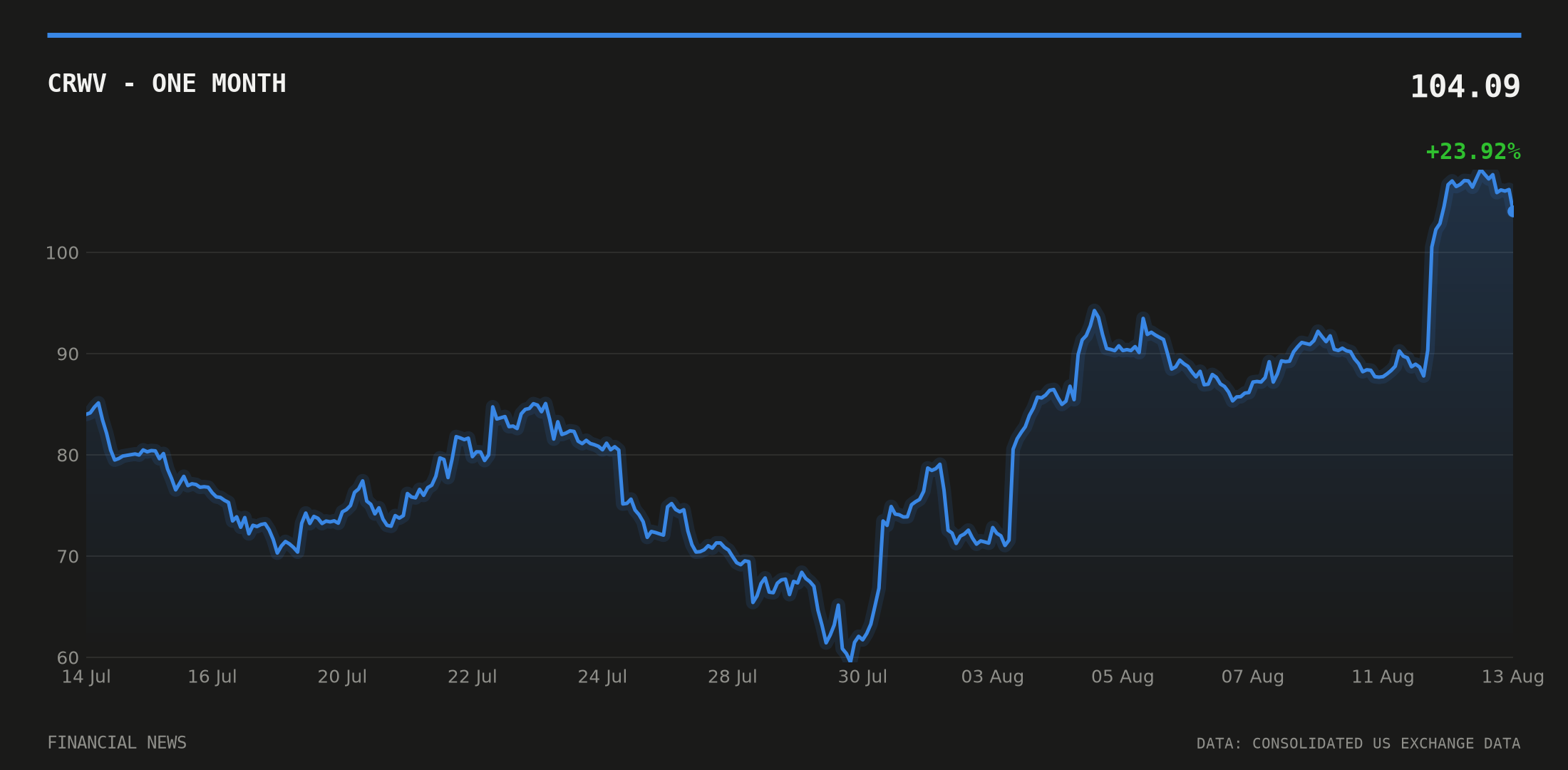
CoreWeave posted an adjusted net loss of $567m, implying an adjusted loss per share of roughly $1.03, ahead of an approximately $1.20 estimate cited by analysts, according to finbold.com. The company’s revenue backlog reached approximately $104bn as of 30 June, excluding more than $25bn of net new commitments added in early third-quarter deals, the earnings release said.
Two contracts underpin that backlog. CoreWeave signed a $21bn AI cloud capacity agreement with Meta Platforms running through 2032, layering on a prior $14bn commitment, alongside a new multi-year compute agreement with Anthropic, as Yahoo Finance reported. Quarterly revenue has climbed steadily since the first quarter of 2025, when the company reported $981.6m, according to CoreWeave’s own SEC filings.
Wall Street raises price targets, though not unanimously
Analysts moved quickly after the results. JPMorgan raised its CoreWeave price target to $110 from $105, keeping a Neutral rating, according to MarketBeat. Wells Fargo analyst Michael Turrin lifted his target to $160 from $155, keeping an Overweight rating and citing contribution margins of 30-35% in the quarter, Yahoo Finance reported.
Not every desk turned bullish. Morgan Stanley’s Ryan Lountzis kept a Hold rating with a $99 target, below the roughly $108 level the stock traded at after the rally, finbold.com reported. FINRA short-sale volume data shows short interest in CRWV had already been declining ahead of the results, with the short ratio easing from 0.677 on 22 July to 0.57 on 4 August, according to FINRA’s daily short sale volume data — a pattern that raises the question of whether the post-earnings move triggered further short covering.
The losses behind the CoreWeave earnings beat
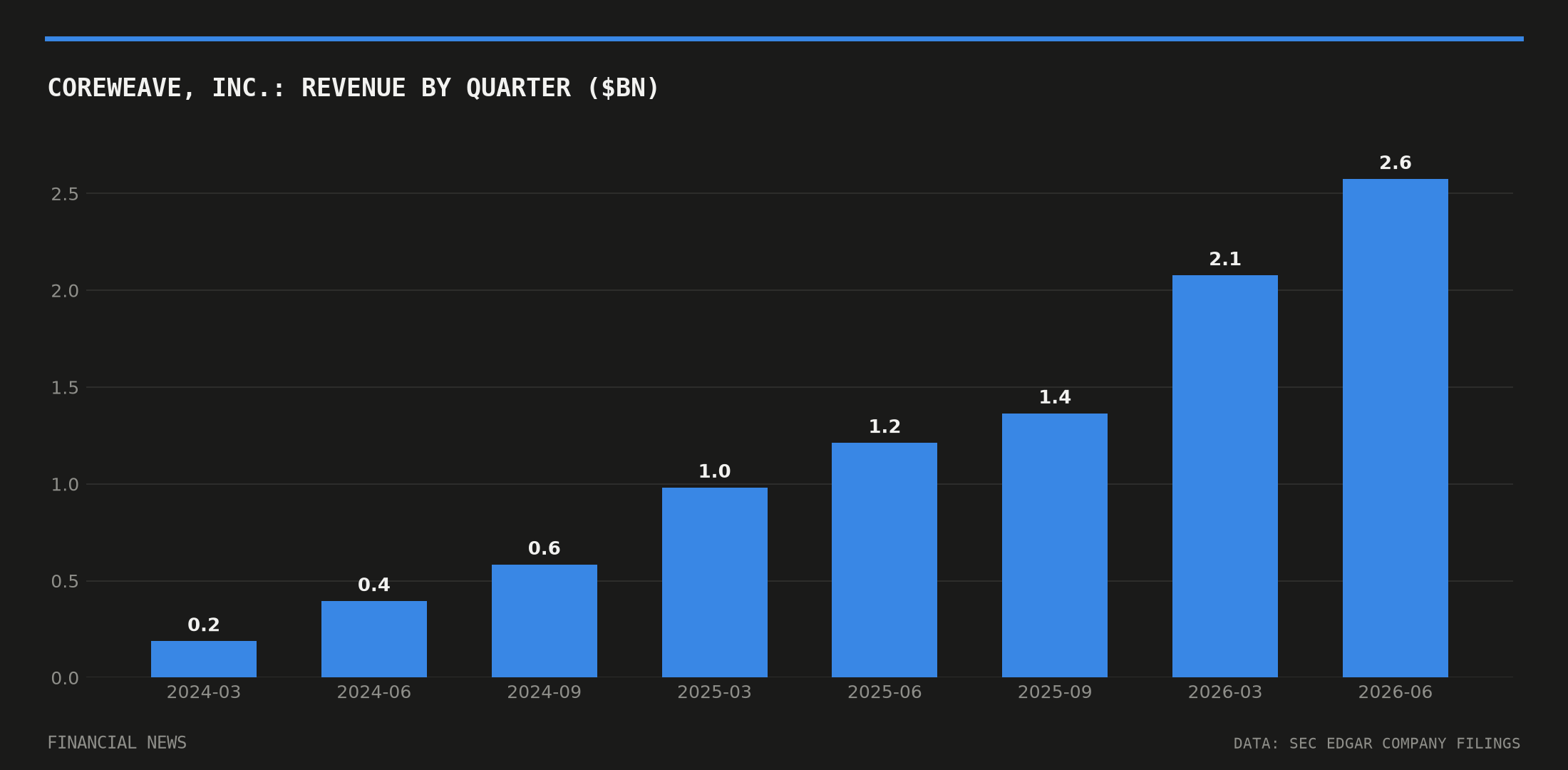
The revenue and adjusted-earnings beat sits alongside a widening loss under standard accounting rules. GAAP net loss reached $626m in the quarter, more than double the $290m loss booked a year earlier, with diluted loss per share of $1.14 versus $0.60, the earnings release filed with the SEC shows. The main driver was interest expense, which rose to $640m from $267m a year earlier.
That jump reflects the scale of CoreWeave’s debt-funded infrastructure buildout. The company raised more than $10bn in unsecured debt and convertible bonds during the quarter, including a $3.1bn term loan, its inaugural Eurobond, and a $1bn strategic investment from Jane Street, according to the SEC filing. CoreWeave’s net loss has widened in every quarter for which it has reported since early 2025: from $314.6m in the first quarter of that year to $715.3m by the third quarter, then $740m in the first quarter of 2026, filings show. The ‘AI momentum’ the earnings beat points to is demand and backlog growth, not a route to GAAP profitability — a distinction that matters as the buildout continues.
What to watch next
CoreWeave’s rally comes against a slightly less accommodating rate backdrop. The 10-year US Treasury yield rose to 4.72% on 10 August from 4.65% previously, according to data from the Federal Reserve Bank of St. Louis — a modest headwind for high-leverage, high-growth names that the earnings-driven rally clearly outweighed this week.
Market participants are watching whether the more than $25bn of net new commitments signed in early third-quarter deals convert into revenue at a similar pace to the Meta and Anthropic agreements, and whether interest costs stabilise as the debt raised in the second quarter is deployed. CoreWeave’s next scheduled disclosure will show whether the backlog CoreWeave points to as evidence of demand keeps outrunning the financing costs of building the capacity to serve it.
This article is for information only and is not investment advice or a recommendation to buy or sell any asset. Markets move quickly; figures are correct as sourced at the time of writing. Always do your own research before making financial decisions.
