

Boston Dynamics has appointed Rohit Prasad, a former Amazon (NASDAQ: AMZN) artificial-intelligence executive, as its chief executive, effective 7 October 2026.
Prasad fills a role left vacant for roughly seven months, since Robert Playter stepped down as Boston Dynamics CEO in February 2026 after three decades at the company.
From Alexa to robotics
Prasad was Amazon’s senior vice president and head scientist for Artificial General Intelligence, a role in which he is credited with building out the Alexa voice assistant and creating the Nova family of foundation models, according to the company’s announcement. GeekWire’s Tech Moves column confirmed the Amazon exit and the move into robotics leadership.
He takes the reins of a business with no listed shares of its own. Boston Dynamics has passed through three owners since its 1992 founding: Google X between 2013 and 2017, SoftBank from 2017 to 2020, and Hyundai Motor Group since 2020, which still controls the firm.
Boston Dynamics CFO Amanda McMaster had run the business on an interim basis during the gap between Playter’s departure and Prasad’s arrival, according to BigGo Finance. Hyundai has said it wants a factory capable of producing 30,000 robot units a year by 2028, a target that frames why the group has now installed an AI specialist rather than a career roboticist at the top of its robotics unit, Reuters reported via Investing.com.
No read-through for Amazon
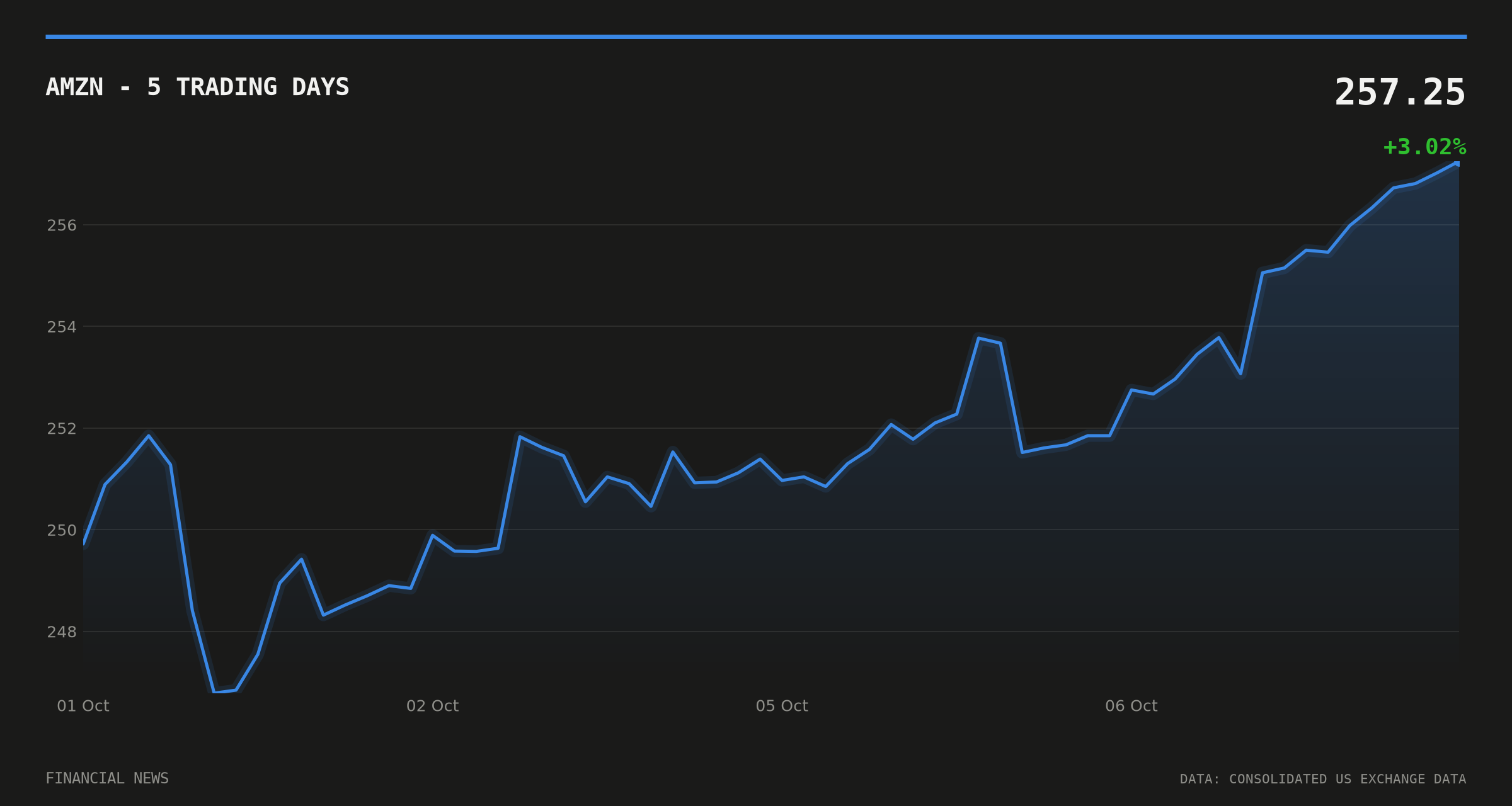
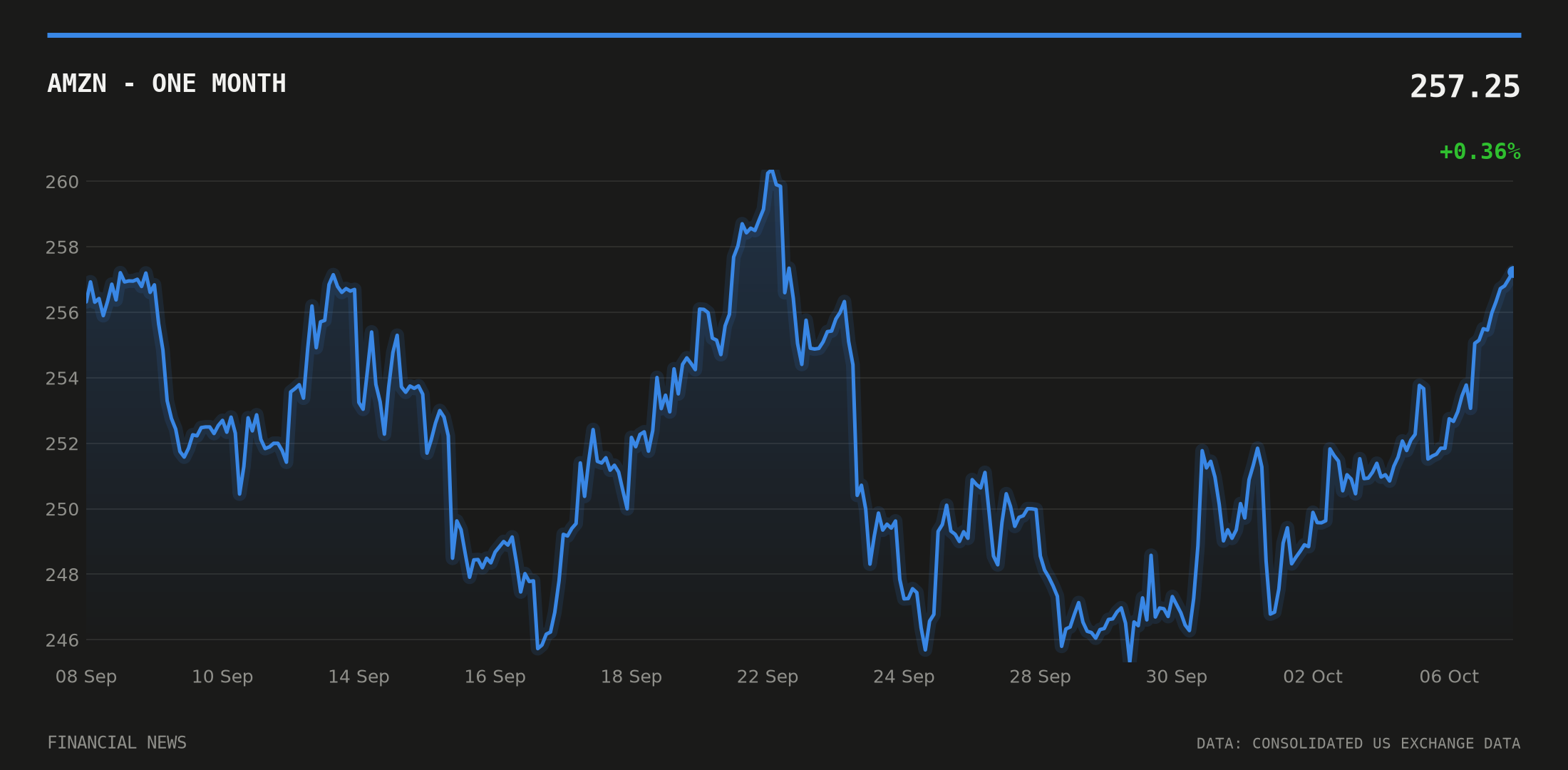
The appointment carries no read-through for Amazon’s own numbers. Prasad’s departure is a personnel change at a Hyundai-owned subsidiary, not an Amazon corporate event, and the group’s shares traded at $257.25, up 0.68% over 24 hours, a move in line with ordinary daily noise rather than any reaction to the Boston Dynamics news.
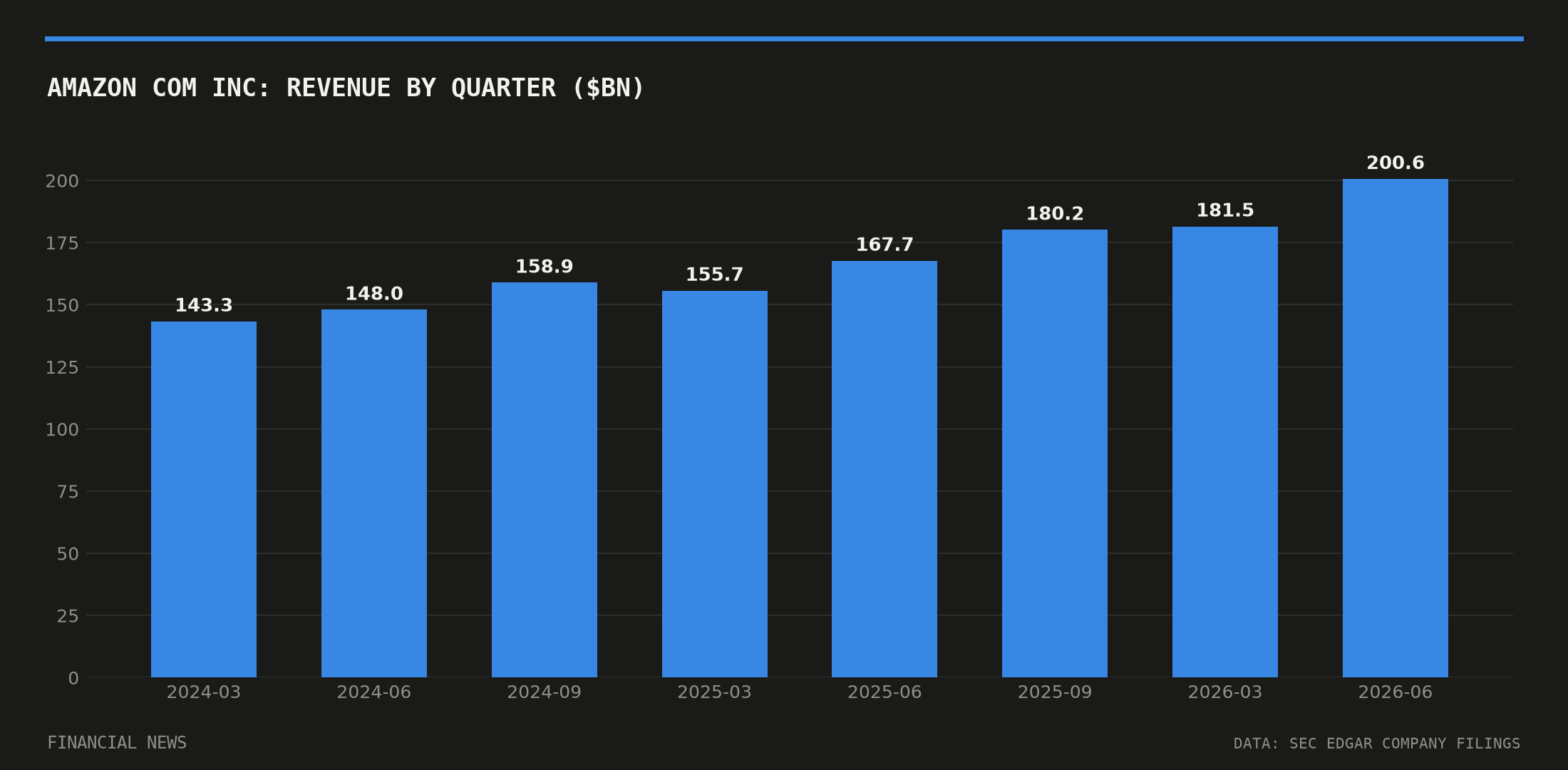
Amazon’s scale dwarfs the robotics maker Prasad is leaving behind for. The group reported net income of $62.6bn on revenue of $200.6bn in the second quarter of 2026, filings show, against net income of $30.3bn on revenue of $181.5bn in the first quarter and $21.2bn on revenue of $180.2bn in the third quarter of 2025. Diluted earnings per share rose from $2.78 in the first quarter of 2026 to $5.75 in the second, continuing a steady climb from $0.98 in the first quarter of 2024.
Those filings sit alongside a separate, unrelated disclosure: a Form 4 filed with the SEC on 5 October 2026 recorded a routine stock transaction by Douglas J. Herrington, who has served as chief executive of Amazon’s Worldwide Stores division since July 2022. Herrington has no connection to Prasad’s former AI unit or to the Boston Dynamics appointment, and the filing’s timing beside the CEO news is coincidental rather than corroborating.
Macro backdrop steady
The appointment lands against a largely unchanged US rates picture. The 10-year Treasury yield stood at 5.31% on 5 October 2026, barely moved from 5.28% the previous reading, while the 2-year sat at 4.84%, leaving the 10y-2y spread at 0.48 percentage points, according to Federal Reserve data. US unemployment was 4.2% in September, up from 4.1% a month earlier, and consumer prices continued their gradual climb, index readings show.
Short interest in Amazon shares has stayed in a tight band through the period, with FINRA’s daily short-sale ratio for the stock ranging between 0.239 and 0.344 across the ten trading sessions to 6 October, figures that show no sign of positioning shifting around the Boston Dynamics announcement.
For Hyundai, the test now is whether an executive built on language models and voice assistants can translate that experience into commercial humanoid robots at factory scale. Prasad’s background lies in AI research rather than hardware engineering, a contrast Boston Dynamics will need to reconcile as it pushes toward Hyundai’s stated manufacturing targets.
This article is for information only and is not investment advice or a recommendation to buy or sell any asset. Markets move quickly; figures are correct as sourced at the time of writing. Always do your own research before making financial decisions.
