
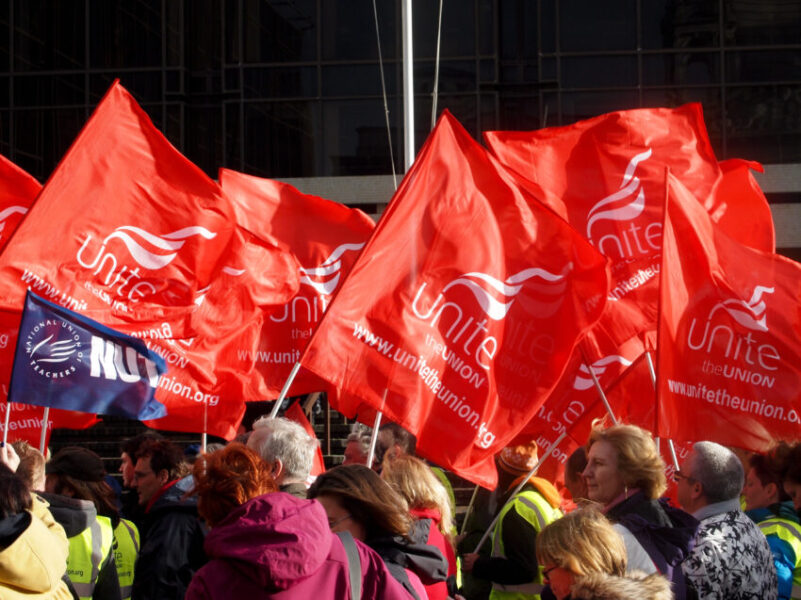

Unite, the influential trade union, has proposed a 1% wealth tax on the super-rich to fund significant pay rises for public sector workers.
This initiative, expected to generate £25 billion annually, also aims to address the NHS staffing crisis by filling over 100,000 vacant positions.
Unite’s Bold Proposal
Unite, the prominent trade union, has put forward a daring proposal to implement a 1% wealth tax on the assets of the UK’s wealthiest individuals. The intended goal is to utilise the revenue generated, estimated at £25 billion annually, to facilitate substantial 10% pay increases for public sector workers and to address the significant shortfall in NHS staffing by filling over 100,000 vacant positions.
This ambitious demand is set to be presented at the Trades Union Congress (TUC) conference in Brighton next month. The proposal is not merely about financial redistribution but highlights the growing tensions between Keir Starmer’s administration and the union movement, particularly amidst Labour’s emphasis on fiscal responsibility.
The Fiscal Impact
The proposed wealth tax targets individuals with fortunes exceeding £4 million, applying to their assets including properties, shares, and bank accounts, albeit exempting mortgaged properties. Under this model, a person with £6 million in assets would be taxed on the £2 million above the threshold.
Sharon Graham, Unite’s general secretary, emphasised the necessity of this levy, describing the British economy as ‘broken’ and urgently in need of investment in public services and industry.
Union Solidarity and Broader Support
Unite’s proposal has garnered significant backing from other key unions. The RMT transport union has echoed the call for a wealth tax to fund public investment, and the Usdaw shop workers’ union advocates for the abolition of the two-child benefit cap.
Additionally, the PCS civil service union supports opposition to cuts in the winter fuel allowance and seeks more stringent taxation on corporations and the wealthy. The collective stance of these unions further intensifies the pressure on Labour to align with their funding demands.
Potential Political Fallouts
The TUC conference will serve as a crucial platform for these discussions, potentially ending the unofficial truce between many unions and Labour. This truce has been a cornerstone of support for Keir Starmer’s successful general election campaign.
The anticipation of Chancellor Rachel Reeves’ first budget on 30 October adds another layer of complexity, as Labour MPs and ministers prepare for possible friction at the conference.
Economic and Social Imperatives
The backdrop of recent pay agreements between the government and striking workers across various sectors, including healthcare and transportation, further complicates the situation. Labour’s leadership is under growing pressure to balance fiscal prudence with the urgent social and economic needs articulated by their traditional supporters.
Unite’s proposed levy emerges as a bold solution to prevent a return to austerity measures, aiming to bolster public services and ensure a more equitable distribution of wealth.
The Broader Economic Debate
The discourse surrounding the wealth tax proposal is emblematic of the broader economic debate within the UK. On one side, there are calls for stringent fiscal discipline; on the other, there is a pressing need for substantial public investment.
The upcoming TUC conference is poised to amplify these discussions, placing Labour at a critical juncture as they navigate between these competing imperatives.
Future Implications
The outcome of this discourse will have long-lasting implications for the UK’s economic landscape and social fabric.
Labour’s ability to reconcile these demands with their policy objectives will be scrutinised closely by both supporters and critics.
In conclusion, Unite’s bold proposal for a 1% wealth tax emerges as a potential remedy for pressing public sector pay and NHS recruitment issues.
As Labour contends with this proposition at the forthcoming TUC conference, the path they choose will critically shape the future economic and social policies of the UK.

