

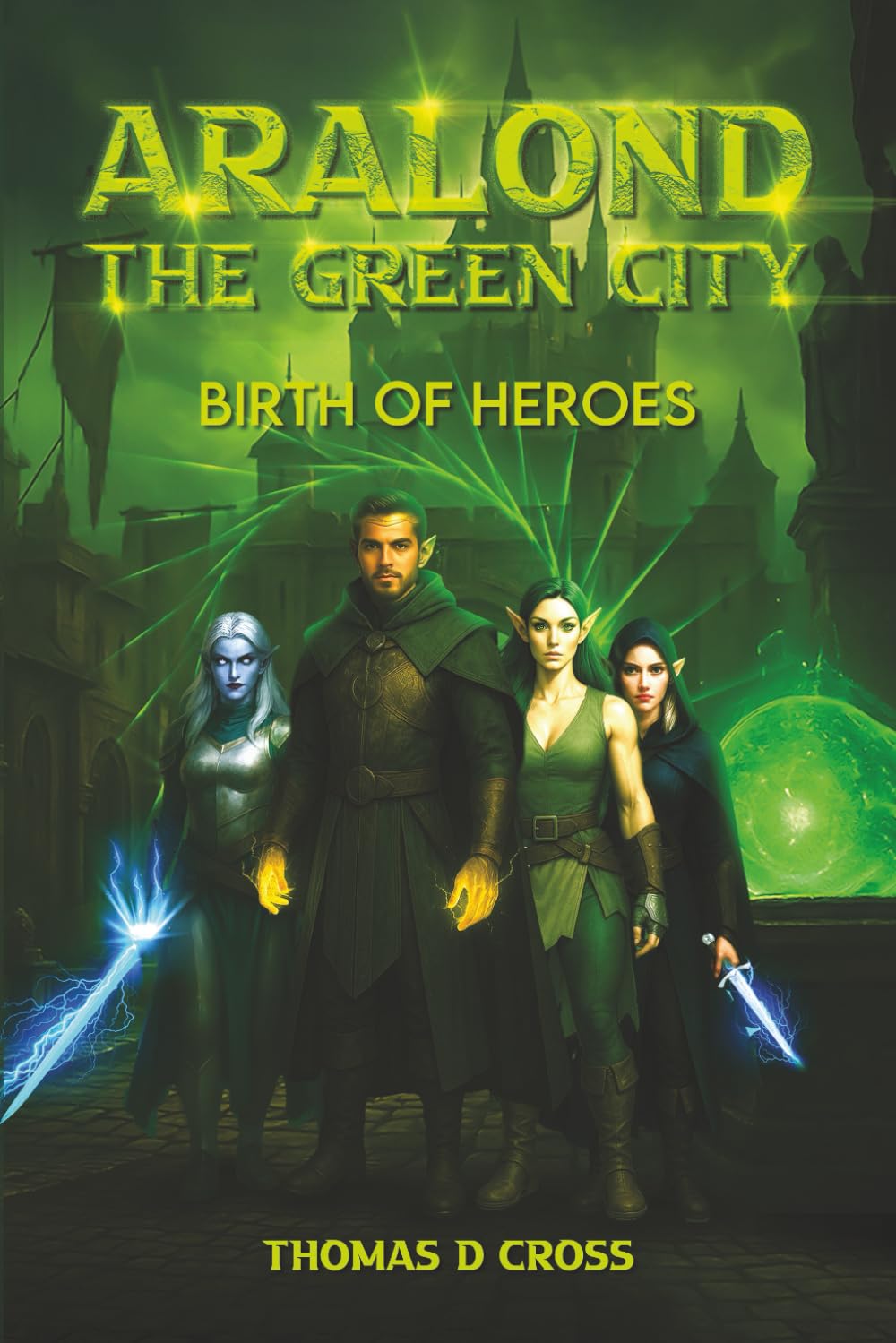
Thomas D. Cross released Aralond: The Green City Birth of Heroes on 28th January 2026 — the result of what he describes as decades of practice and close reading, and an epic fantasy built not around the thrill of conquest but around the harder, quieter work of repair.
The distinction matters. Considerably.
Most epic fantasy is ultimately about winning — armies clash, heroes prevail, darkness retreats. Thomas D. Cross is doing something different. His novel opens with an emergency and a hard choice, places its readers inside moral danger and fierce imagination from the opening chapters, and builds toward a world whose survival depends not on a single act of heroism but on whether communities can commit to rebuilding what has been broken. When cities fall, the book argues, courage becomes a decision — made not once, in battle, but repeatedly, in the slow work that follows.
The story moves through Daniel Darkcrow.
Driven from accident and loss into a destiny he did not seek, Darkcrow must choose what to protect and whom to trust as empires, demons and ancient powers converge on Aralond — the promised sanctuary at the centre of the novel’s world. The stakes escalate quickly. Yet Thomas D. Cross does not let the scale of the conflict flatten his characters. Battles arrive with genuine weight behind them; intimate scenes of rescue, grief and repair sit alongside the larger set pieces, giving the novel a texture that spectacle alone cannot produce. Readers who come for the scope will stay for the people inside it.
Freedom over domination. Rescue as a daily, muscle-building practice. These are not typical banner-lines for epic fantasy — a genre that has historically been more comfortable with chosen ones and prophesied victories than with the unglamorous ethics of rebuilding. Cross positions Aralond deliberately against that tradition. The book asks hard questions about leadership, lineage and the price of protection, and it keeps those questions visible rather than resolving them conveniently. Suffering is not sentimentalised. Communities thrive in this world when people share sacrifice and face difficult truths — or they do not thrive at all.
That steady humanism running beneath the fantasy is what distinguishes the novel most sharply.
Cross writes with what early readers describe as clarity and heat — crisp prose, energetic dialogue, scenes shown rather than explained. His voice balances mythic language with grounded human detail, the register shifting between the large and the immediate in ways that keep the narrative moving without losing its moral grip. Moral dilemmas are placed inside the action rather than extracted from it, so readers feel the consequences of each choice rather than simply observing them from a comfortable distance.
The target audience is broadly drawn but specifically served. Fans of character-driven quests and mythic sagas will recognise the architecture of the world Cross has built — the ancient powers, the colliding empires, the figure at the centre of events who must grow into the role history has assigned him. But the novel sits closer to Ursula K. Le Guin’s ethical seriousness than to the grimdark bleakness that dominated epic fantasy for much of the past two decades. Book clubs that enjoy long-form world-building and genuine moral conversation will find the novel rewards exactly that kind of engaged, unhurried reading.
Cross writes from Maine, and the novel carries the marks of long, solitary craft — sharpened by family and a tight circle of early readers who pushed the drafts toward their current form over what the author describes as years of revision. He grew up reading tales of gods and ruin, absorbed the tradition carefully, and then spent the time required to understand what he wanted to do differently. What he wanted, it appears, was a fantasy world where repair over ruin is not merely a theme but a structural commitment — where the question of how broken things get rebuilt is taken as seriously as the question of how they were broken in the first place.
That is rarer in the genre than it should be.
Aralond: The Green City Birth of Heroes is available now in paperback and ebook through Amazon, all major online stores and major retailers.
The city refuses to fall. Cross spent decades making sure readers would understand why that matters.
