

The U.S. Federal Aviation Administration certified Boeing’s (NYSE: BA) 737-10 on 20 October 2026, clearing the largest member of the 737 MAX family to carry passengers. The approval ends years of delay for the jet, which Boeing originally planned to deliver from 2020.
Boeing can now deliver the aircraft, with WestJet confirmed as the first customer to receive the type. The FAA said the certification followed years of review of the aircraft’s design and safety systems.
Boeing 737-10 certification caps a long regulatory process
The certification programme ran to nearly 1,000 test flights, with safety assessments and design reviews built into the process, according to a Boeing statement distributed on PR Newswire.
The jet is the last of the four 737 MAX variants to win type certification, following the smaller MAX 7 in August 2026. Boeing has pitched the 737-10 on seat economics, positioning it against rival narrowbody jets for high-density domestic and regional routes.
CNBC reported that US Transportation Secretary Sean Duffy said the certification process should move faster in future. The outlet also carried comment from United Airlines chief executive Scott Kirby, who said the airline had waited so long for the MAX 10 that lie-flat seats ordered for the aircraft are now sitting unused in a warehouse.
A costly wait shows up in the filings
Boeing’s quarterly results through the delay period show a run of net losses even as revenue climbed. The planemaker reported a net loss of $4m in the first quarter of 2026, narrowing sharply from a $5.34bn loss in the third quarter of 2025, according to SEC filings. The loss widened again to $444m in the second quarter of 2026, per Boeing’s 10-Q filing.
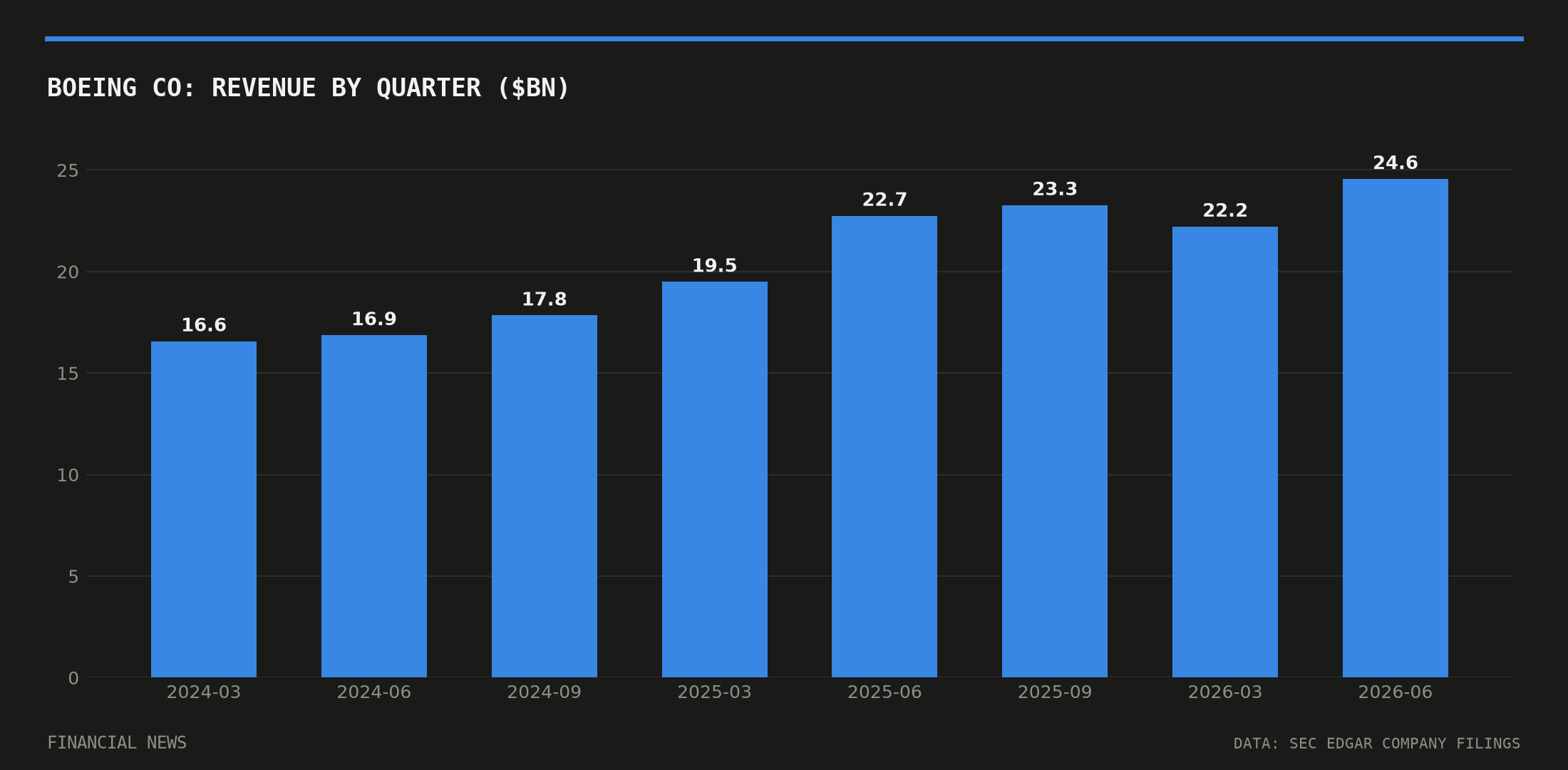
Revenue has moved in the opposite direction. Boeing booked $16.57bn in the first quarter of 2024, rising each period to $24.56bn in the second quarter of 2026, filings show. The combination of climbing sales and persistent losses has framed outlet coverage of the MAX 10 as a potential aid to Boeing’s financial recovery, though the company has not itself guided to a return to profit.
Earlier in the delay period, losses ran far deeper: Boeing reported a $6.17bn net loss in the third quarter of 2024 and a $1.44bn loss the quarter before that, both tied to production and programme costs across the 737 MAX line. Diluted losses per share over the same stretch ranged from 16 cents to $9.97, according to the company’s quarterly disclosures.
Positioning and macro backdrop
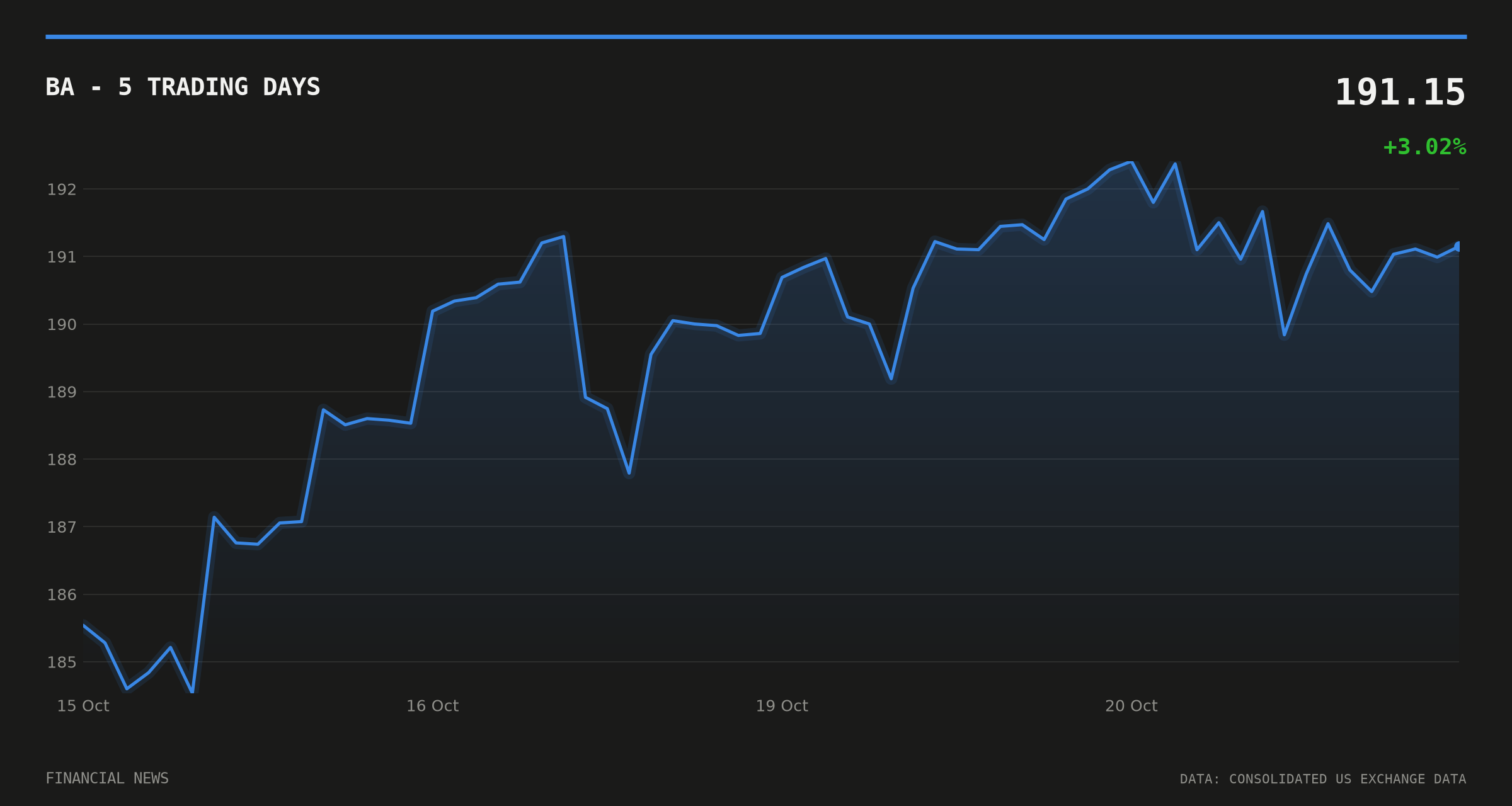
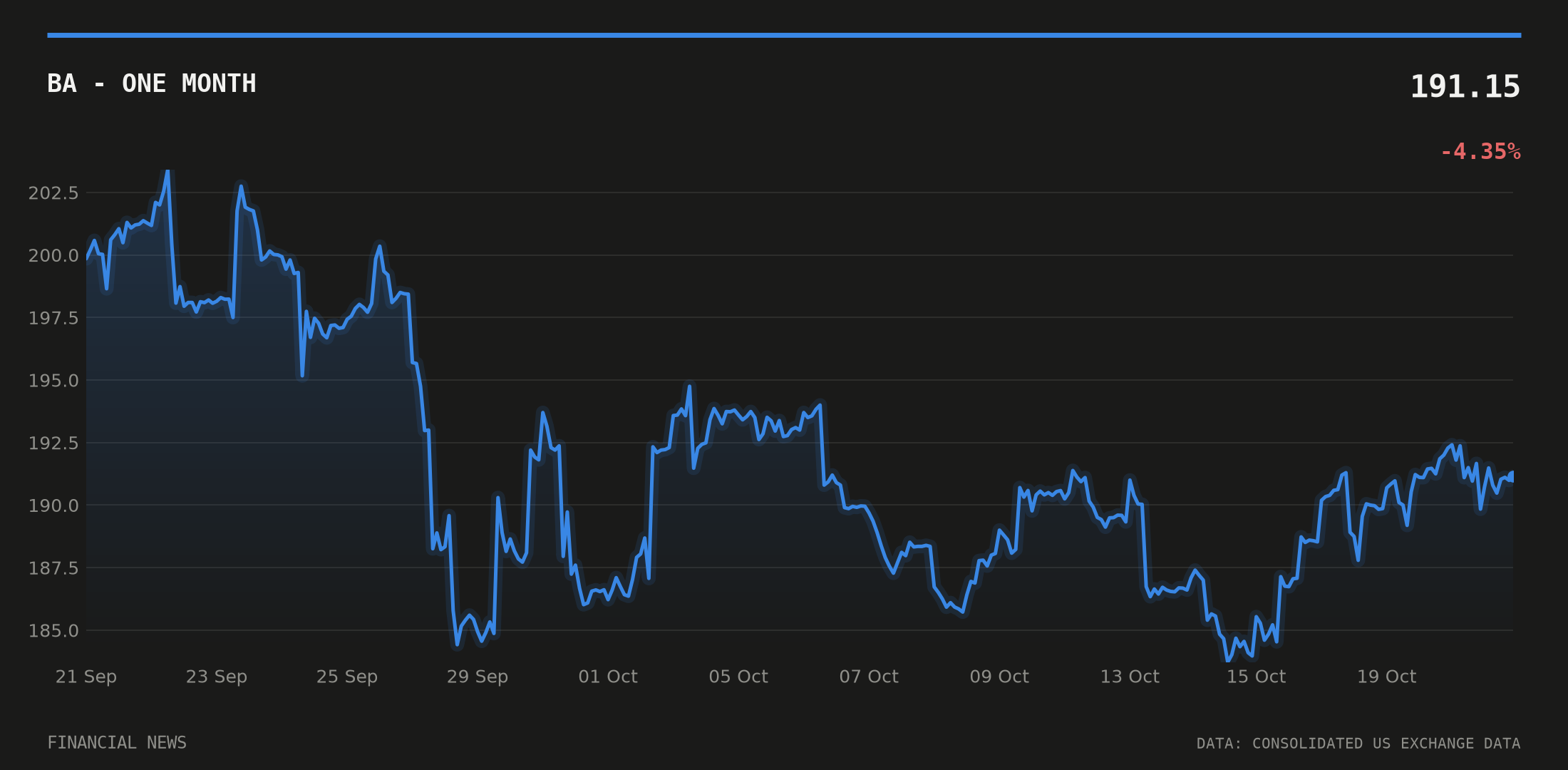
Boeing shares closed at $191.15 on 20 October, up 0.21% on the day but down 1.32% over 20 days, with trading volume 34% above the 20-day average, according to consolidated US exchange data. The stock has traded between $183.72 and $194.75 over that span.
FINRA short-sale data show the daily short-volume ratio for Boeing easing from 0.500 on 8 October to 0.368 on the day of certification, a shift consistent with reduced bearish positioning heading into the announcement, according to FINRA figures.
The certification lands against a backdrop of rising US borrowing costs. The 10-year Treasury yield stood at 5.15% on 19 October, up from 5.09% the prior session, while the 2-year yield held at 4.77%, according to FRED data from the Federal Reserve Bank of St. Louis. The 10-year/2-year spread narrowed slightly to 0.33 percentage points from 0.38.
What the certification unlocks
With all four 737 MAX variants now type-certified, Boeing’s near-term task shifts to ramping deliveries and working through its order backlog. Reuters reported the certification clears the way for deliveries to begin, though the pace at which Boeing can scale production remains a separate question from the regulatory approval itself.
Airlines that ordered the MAX 10 years ago, including United, now face their own logistics in deploying aircraft and cabin fittings bought on an earlier timetable. Kirby’s comment on unused lie-flat seats, carried by CNBC, points to a cost of the delay that sits outside Boeing’s own accounts but shapes how carriers plan to bring the jet into service.
This article is for information only and is not investment advice or a recommendation to buy or sell any asset. Markets move quickly; figures are correct as sourced at the time of writing. Always do your own research before making financial decisions.
