

Walmart (NYSE: WMT) launched a combined membership on 20 October 2026 that bundles Walmart+ with Sam’s Club Plus for $120 a year. The retailer says the new Walmart Sam’s Club membership saves shoppers close to $100 against buying the two schemes separately, according to a Reuters report.
The maths behind that saving: Walmart+ costs $98 a year on its own, while Sam’s Club Plus costs $120 after a price rise in May 2026, putting the combined standalone cost at $218 a year, CNBC reported.
What the $120 Walmart Sam’s Club membership includes
Members get free delivery from both Walmart and Sam’s Club, warehouse-club access, a choice of Peacock or Paramount+ streaming, and 2% cash back on Sam’s Club purchases, CNBC reported. The bundle also carries a fuel discount of 10 cents a gallon at more than 17,000 participating stations, according to ABC News.
Walmart chief executive John Furner said: ‘We’re giving people a reason to expect more from their memberships,’ as quoted by CNBC. Walmart is also extending both memberships as a staff benefit to its US field associates, the company said in its official announcement.
Membership growth and a softer consumer
The bundle lands as Walmart’s membership business has been one of its fastest-growing lines. Global membership revenue rose 17% and Sam’s Club membership income grew 6% in the period covered by its most recent results, CNBC reported. Walmart recorded its slowest quarterly comparable sales growth in six years in August 2026, Reuters said, with spending among lower- and middle-income households under particular strain.
That tension – fast membership growth against a slowing core business – sits alongside a broader warehouse-club and discount sector that has drawn stronger US footfall, with chains such as Costco (NASDAQ: COST) and discount grocers picking up share as shoppers chase value, according to Reuters.
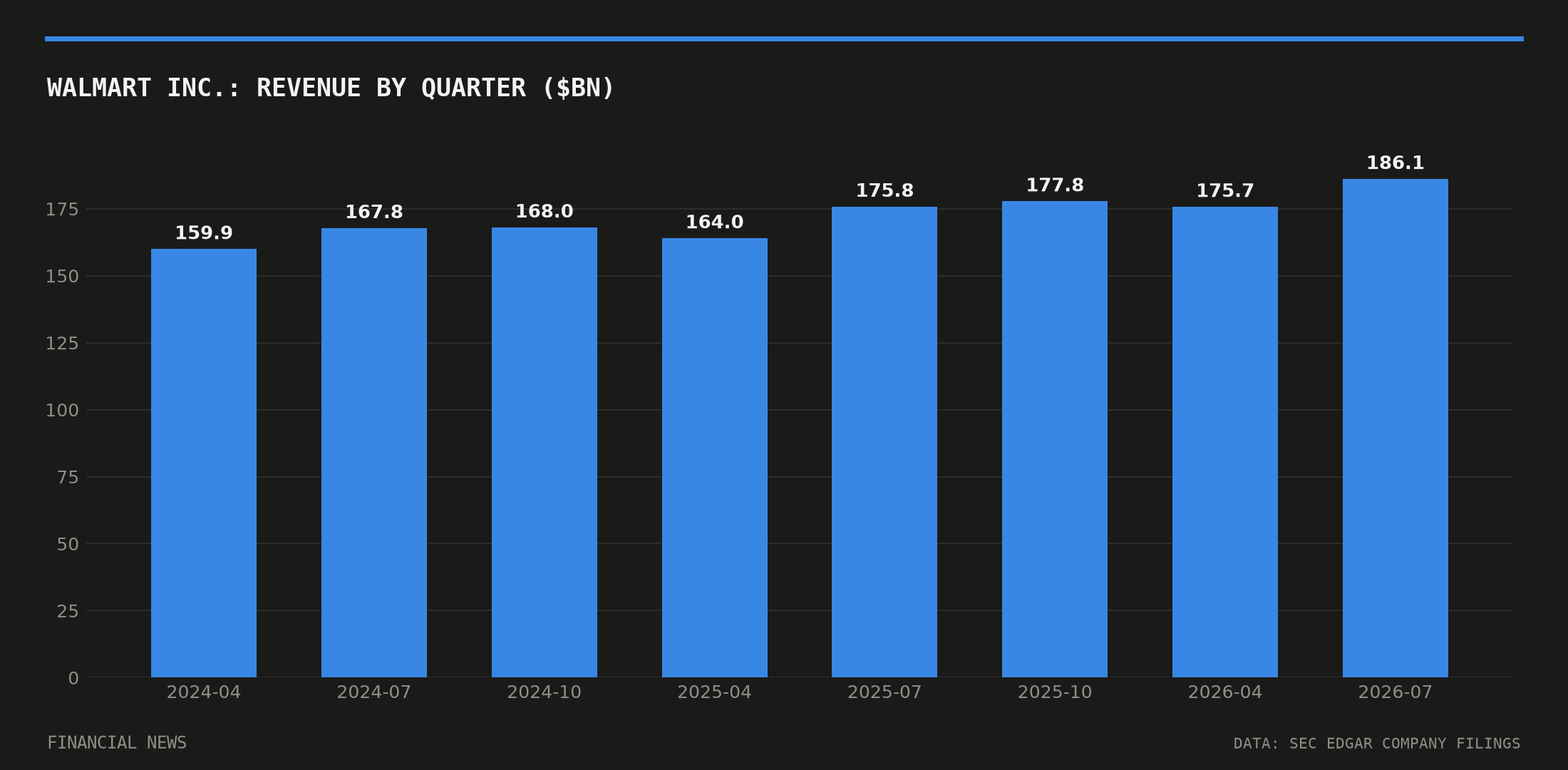
Walmart’s quarterly filings show net income running between $4.5bn and $7bn over the past two years, with the most recent quarter to 31 July 2026 posting net income of $6.37bn on revenue of $186.1bn, up from $175.7bn a year earlier, according to SEC filings. Diluted earnings per share for that quarter came in at $0.80, against $0.88 in the equivalent quarter a year before, the filings show. Revenue in the quarter before that, to 30 April 2026, was $175.68bn with net income of $5.33bn, per the company’s 10-Q filing.
Insider filings and share moves ahead of launch
Days before the announcement, Walmart executives including Furner, Latriece Watkins and Christopher James Nicholas each filed Form 4 disclosures with the SEC on 16 October 2026, alongside a separate Form 4 from BJ’s Wholesale Club Holdings (NYSE: BJ) executive Laura Felice filed the same day, according to EDGAR records. The filings do not disclose share quantities or values in the data reviewed, and there is nothing to suggest they relate directly to the membership launch.
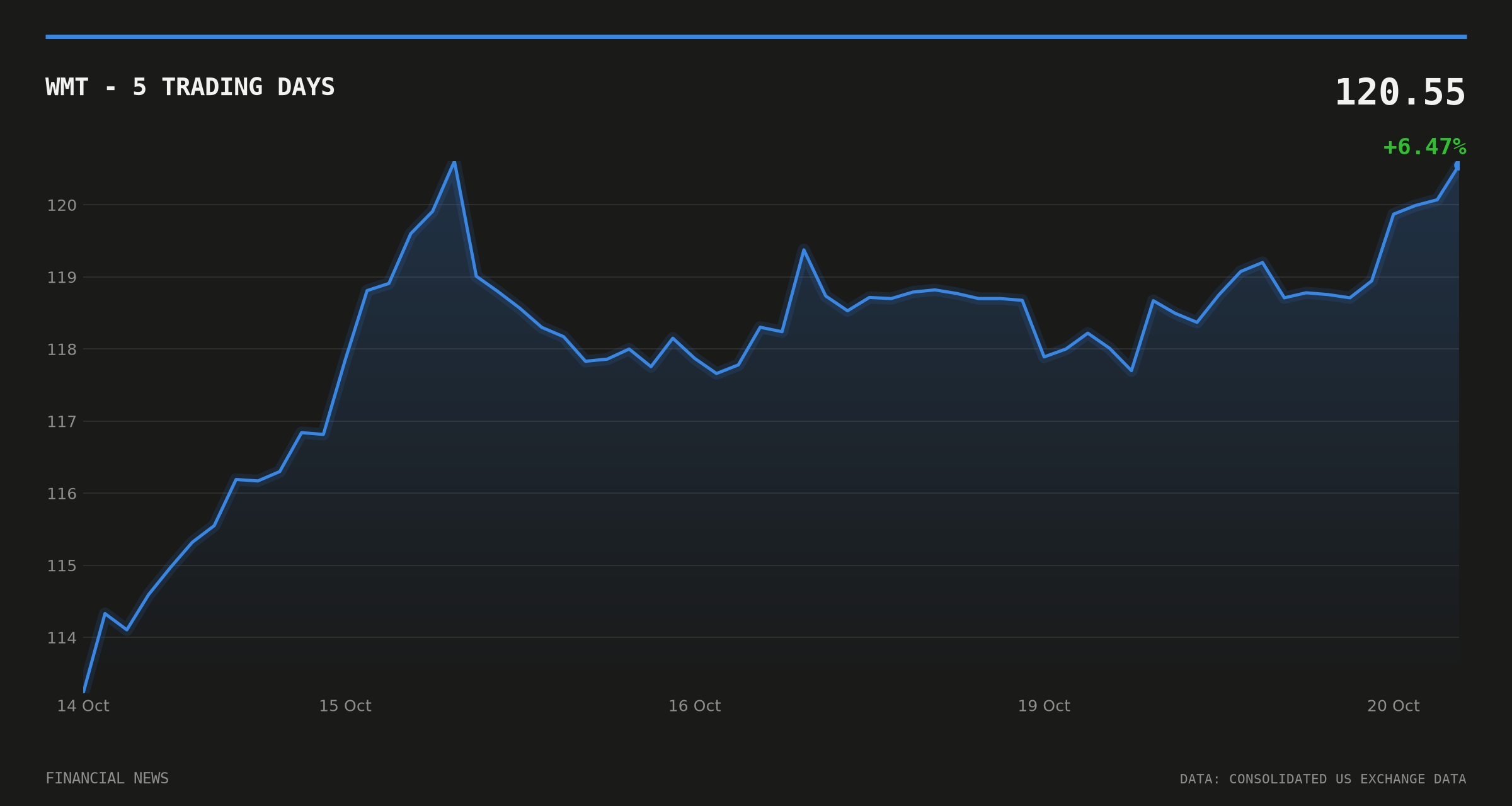
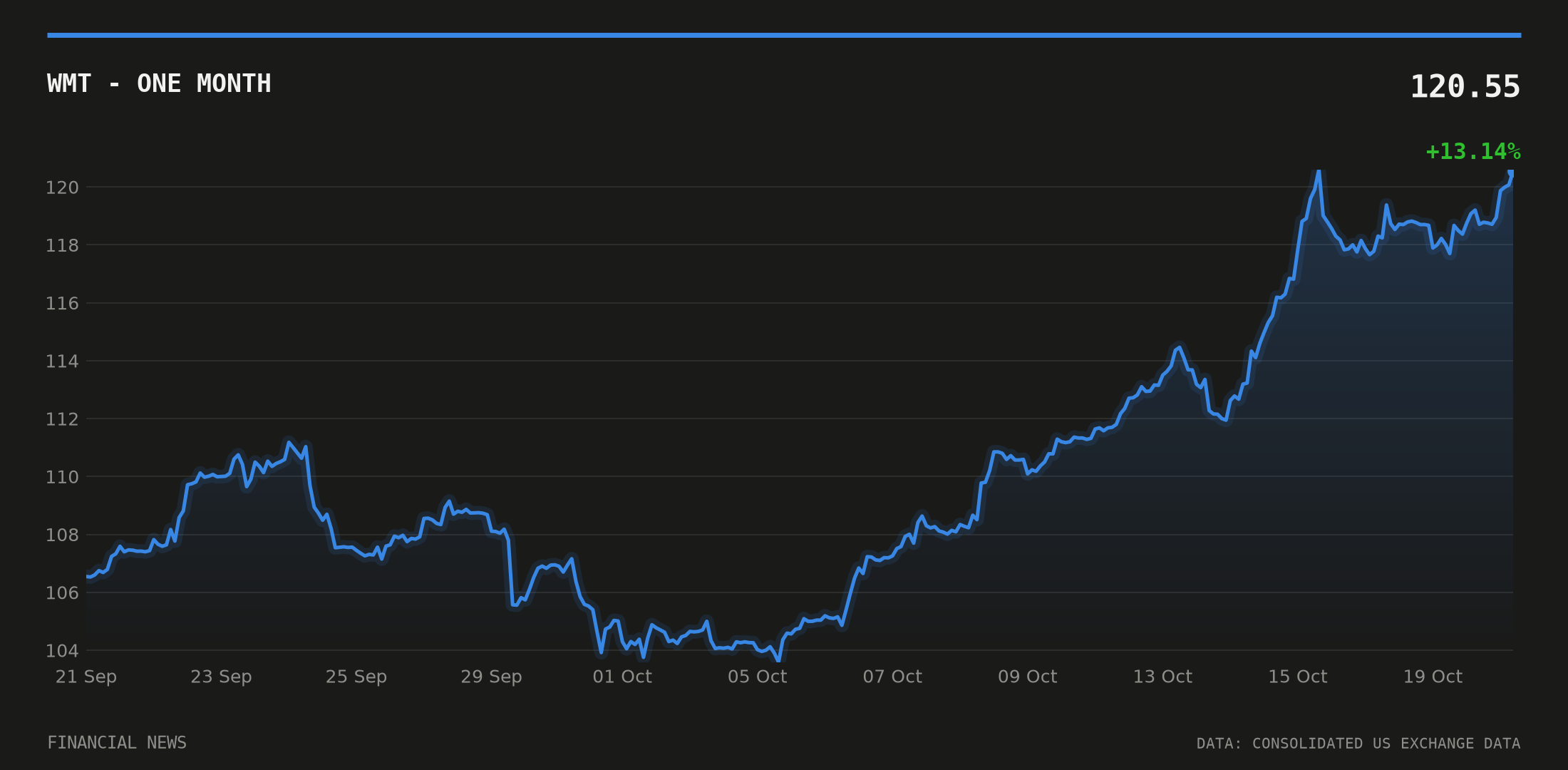
WMT shares traded 1.36% higher on the day of the announcement, changing hands at $120.40, having climbed almost 12% over the prior 20 trading sessions, according to consolidated exchange data. The stock’s 20-day high of $120.605 sits just above that level, with volume running at roughly a third of its 20-day average at the time of the update. Short interest in the stock, as tracked by FINRA’s daily short-sale data, has ranged between roughly 0.40 and 0.55 of trading volume across the first three weeks of October, showing no clear directional shift around the announcement.
The macro backdrop
The launch comes against a softer US jobs picture: unemployment rose to 4.2% in September 2026 from 4.1% the prior month, according to Federal Reserve data. US consumer prices continued to edge higher, with the all-items CPI index reading 336.3 in September versus 334.1 the prior month, Fed data show. Treasury yields have been broadly stable, with the 10-year yield at 5.09% as of 16 October, down marginally from 5.10%, and the 2-year yield at 4.74%, according to FRED.
Walmart has not said how many members it expects to take up the bundle, nor disclosed a target date for reporting uptake. Investors will get their next formal read on membership trends, and on whether the discount dents or supports Sam’s Club Plus pricing, when Walmart next reports quarterly results.
This article is for information only and is not investment advice or a recommendation to buy or sell any asset. Markets move quickly; figures are correct as sourced at the time of writing. Always do your own research before making financial decisions.
