

Gilead Sciences (NASDAQ: GILD) said on 19 October 2026 that its experimental ulcerative colitis pill met the main goal of a mid-stage trial. The Gilead ulcerative colitis trial, known as SWIFT, tested emvistegrast, an oral once-daily treatment, in adults with moderately to severely active disease.
At the 200mg dose, 66% of patients achieved a clinical response at Week 12 under the modified Mayo score, against 37% on placebo, according to PharmaShots. Clinical remission was reached by 31% of patients on the drug, compared with 8% on placebo, Reuters reported.
Trial data presented at European gastroenterology meeting
Gilead unveiled the late-breaking Phase 2 findings at United European Gastroenterology Week 2026. The company said its experimental once-daily pill reduced symptoms of the chronic bowel illness in more patients than placebo, meeting the trial’s main goal, as Reuters reported.
Emvistegrast, also known as GS-1427, is a selective oral alpha4beta7 integrin inhibitor. Gilead is positioning the pill against injectable biologics such as vedolizumab and oral rivals including Abivax’s obefazimod in a crowded inflammatory bowel disease field. The drug showed a generally well-tolerated safety profile during the induction phase, Benzinga reported.
Shares fall despite the positive readout
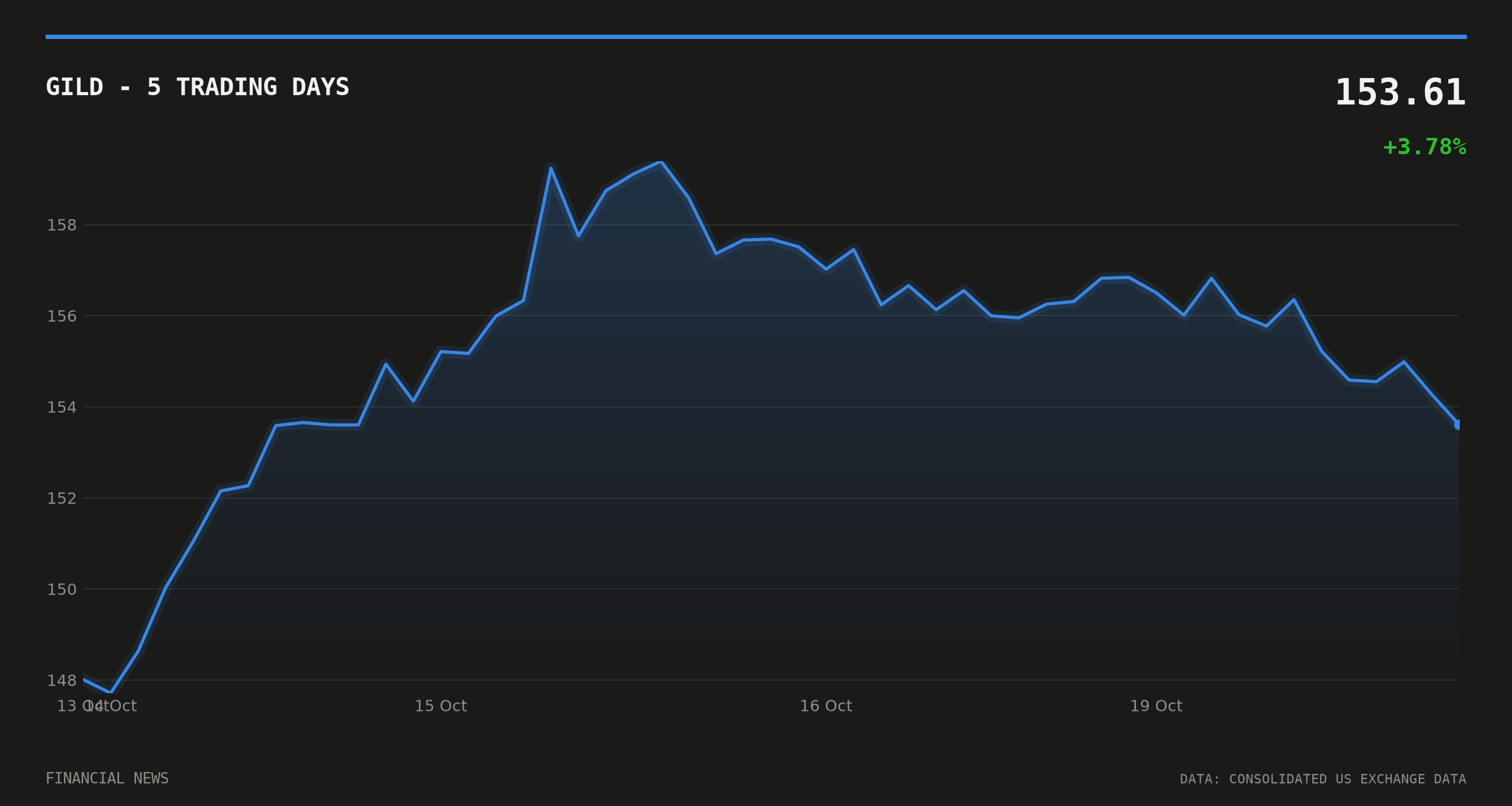
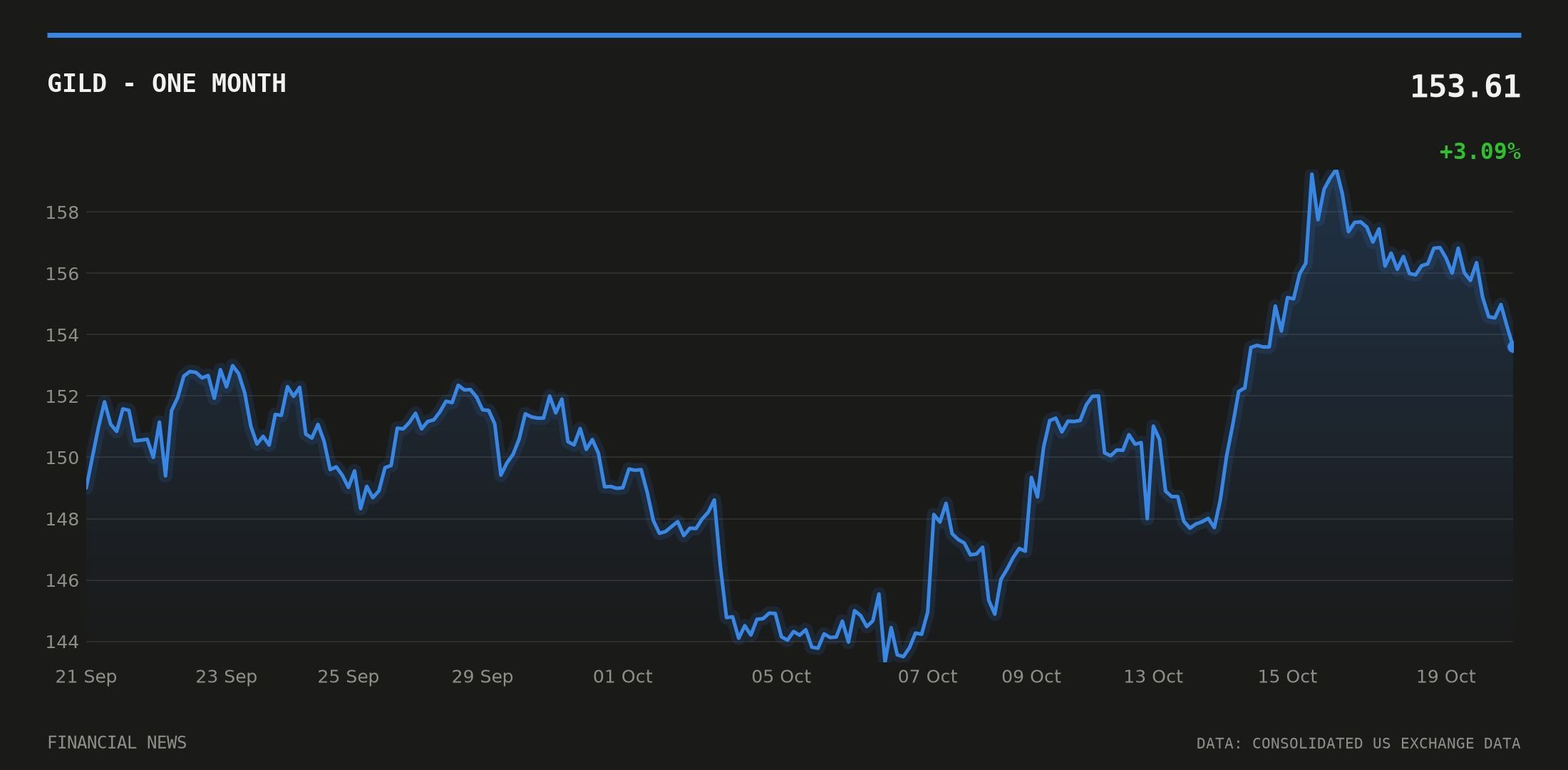
GILD shares closed at $153.555 on 19 October, down 1.42% on the day. Trading volume ran at 0.82 times the 20-day average, suggesting limited conviction behind the move.
RBC Capital Markets had told clients the emvistegrast readout was unlikely to move the stock, according to MarketScreener. The muted reaction underlines that Street positioning, rather than the trial’s raw numbers, set the terms of the share response.
FINRA short-volume data for GILD in the fortnight before the announcement showed the daily short ratio moving between roughly 0.37 and 0.57, with no sustained build-up that would point to advance positioning against the news.
Earnings swing colours the backdrop
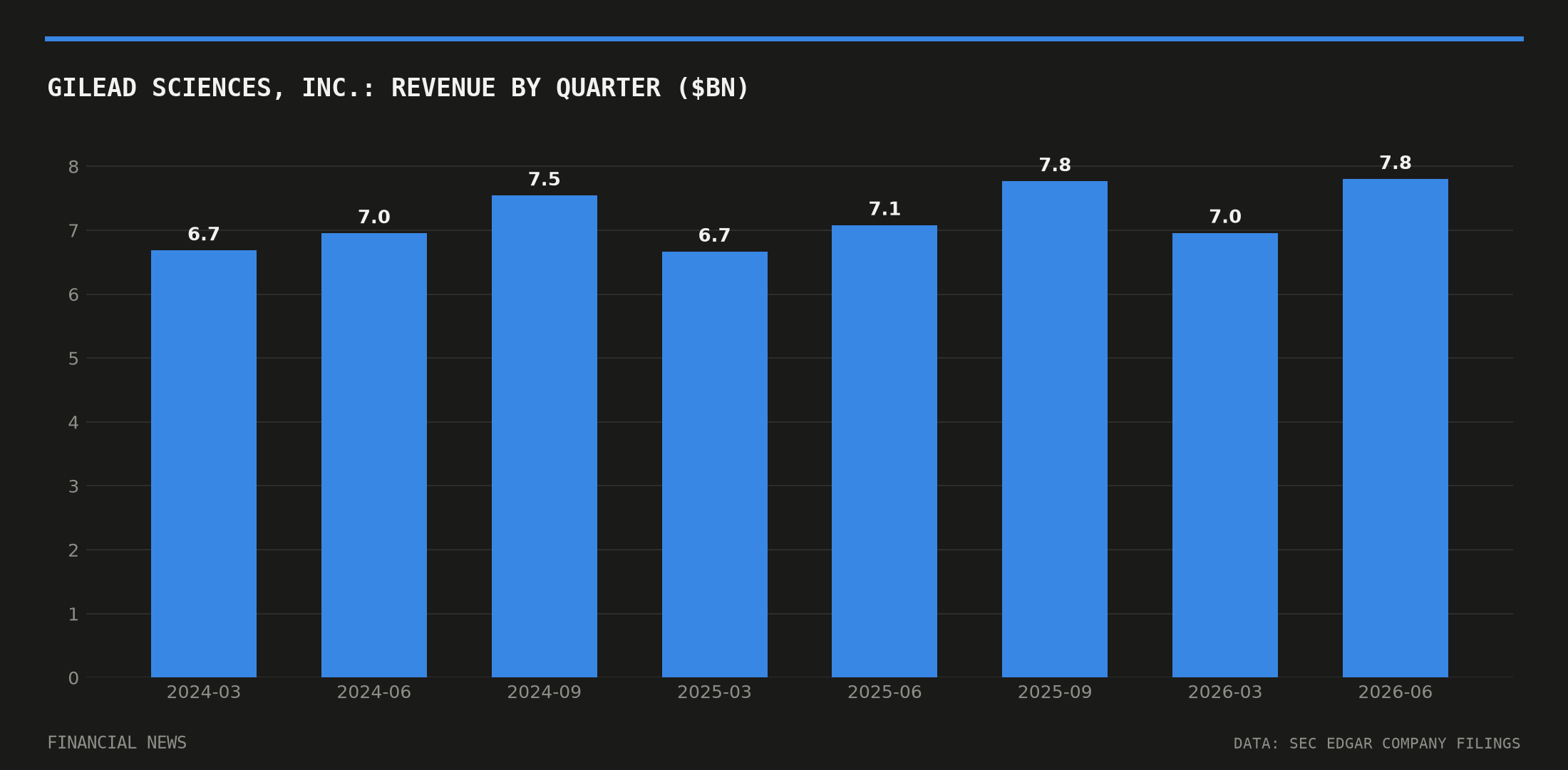
The trial news lands against a volatile run of quarterly results. Gilead posted a net loss of $10,496m, or diluted earnings per share of -$8.45, for the second quarter of 2026, a sharp reversal from net income of $2,021m and EPS of $1.61 in the first quarter, according to the company’s 10-Q filing with the SEC. Revenue for the second quarter came in at $7,803m, up from $6,960m in the first three months of the year, filings show.
The swing follows a pattern of uneven quarters stretching back through 2024 and 2025. Gilead reported a net loss of $4,170m in the first quarter of 2024 before returning to profit of $1,614m in the second quarter that year, and has posted net income in every quarter since bar the latest one, according to EDGAR records. Quarterly revenue has climbed steadily over the period, from $6,686m in the first quarter of 2024 to $7,803m two years later.
Two Gilead insiders, Andrew D. Dickinson and Johanna Mercier, filed Form 4 disclosures with the SEC on 16 October 2026, three days before the trial announcement, according to EDGAR records. The filings do not themselves indicate the direction or scale of any transactions tied to the disclosures.
Macro backdrop stays mixed for pharma stocks
The readout also arrives as broader market conditions stay unsettled for healthcare names reliant on long-dated pipeline bets. The 10-year US Treasury yield stood at 5.1% as of 15 October 2026, down slightly from 5.19% a month earlier, according to Federal Reserve data. The 2-year yield sat at 4.77%, leaving the 10-year/2-year spread at 0.35 percentage points, little changed from 0.33 points previously.
US consumer prices rose to an index level of 336.298 in September, up from 334.131 the prior month, Federal Reserve data show, while the unemployment rate ticked up to 4.2% from 4.1%. None of that macro data bears directly on Gilead’s trial outcome, but it frames a backdrop in which investors have shown little appetite to reward clinical headlines that fall short of outright surprise.
Gilead has not disclosed a timeline for advancing emvistegrast into late-stage testing. Investors will watch for further detail at the company’s next quarterly results and for any read-across from rival oral IBD programmes now in development.
This article is for information only and is not investment advice or a recommendation to buy or sell any asset. Markets move quickly; figures are correct as sourced at the time of writing. Always do your own research before making financial decisions.
