

Nasdaq (NASDAQ: NDAQ) reported a network disruption on 15 October 2026 that knocked out US equities market data feeds across its exchanges, the company said in a system status alert.
The outage began around 11:57am ET and affected all three of Nasdaq’s US equities markets – Nasdaq, Nasdaq Texas and Nasdaq PSX – causing intermittent gaps in data, Reuters reported.
Carteret facility traced as source
Nasdaq traced the disruption to a facility in Carteret, New Jersey, and directed market participants toward Chicago-based feeds as a backup once it confirmed those were unaffected, according to AdvisorHub. The same operational detail – the Carteret origin, the three affected venues, the Chicago workaround – was confirmed independently by The Korea Times, which picked up the Reuters wire in Asian trading hours.
Nasdaq did not immediately disclose a cause for the network fault or a timeline for full restoration. The exchange operator routinely publishes live status notices through its Nasdaq Trader platform, and the alert for this incident remained active in the hours that followed the initial report.
Shares higher, not lower
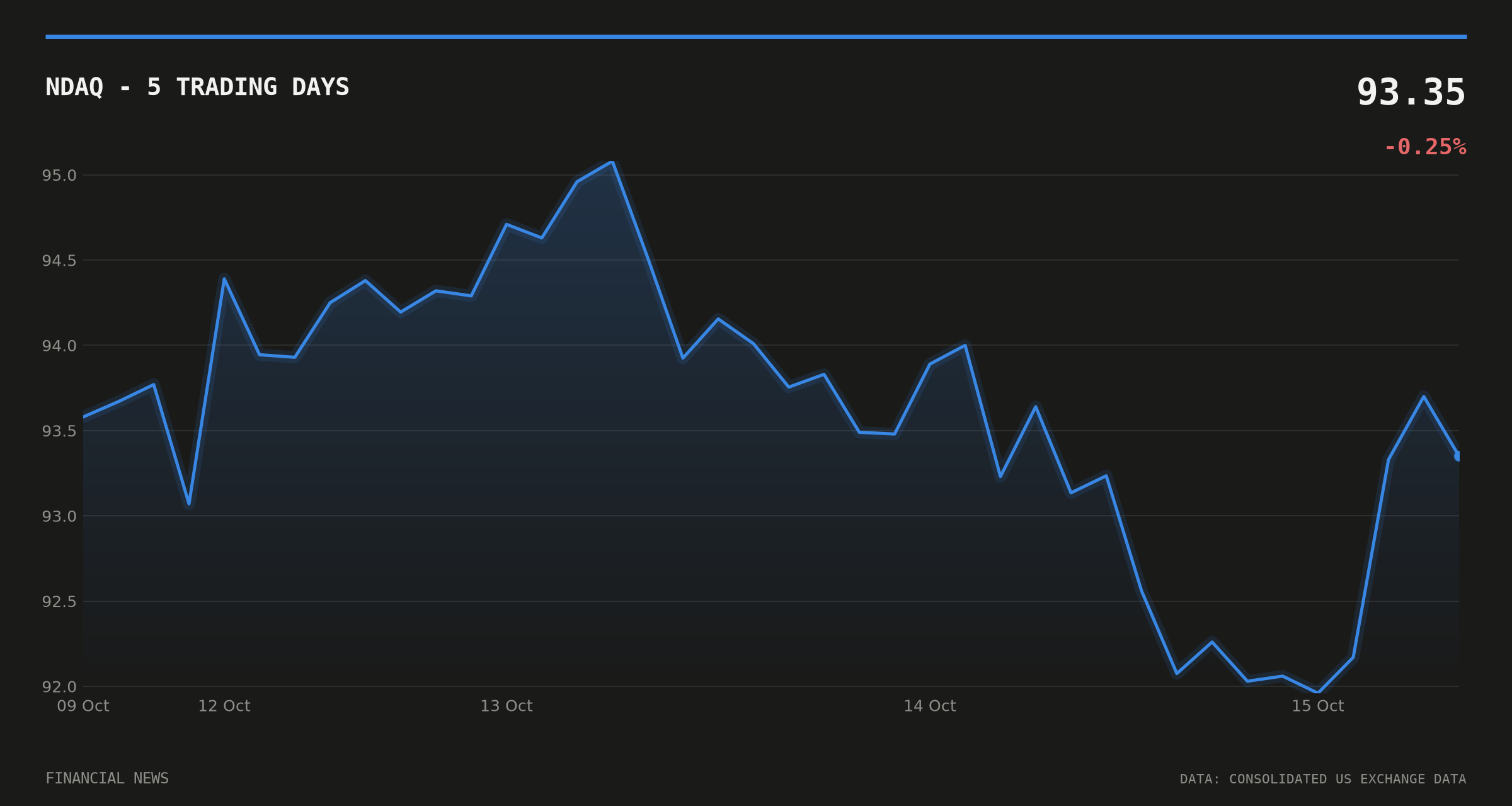
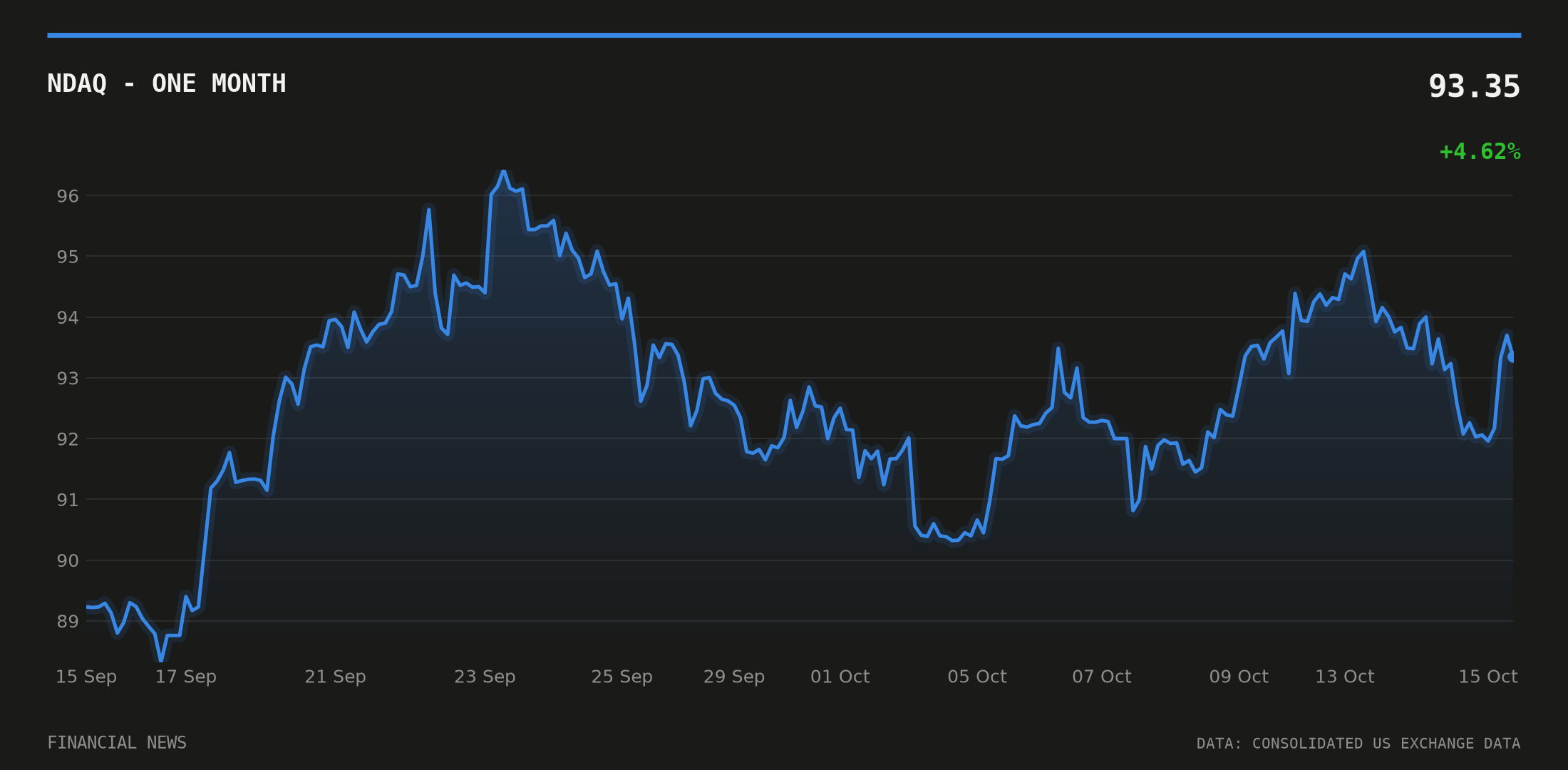
What stands out is the market’s reaction – or lack of one. NDAQ shares traded at $93.35 as of 4pm UTC on 15 October, up 1.18% on the day, even as the disruption was unfolding and being reported by wire services. Over the prior 20 trading days the stock had drifted down 1.48%, with a trading range between $90.32 and $95.08, consolidated exchange data show. Volume ran 26% above its 20-day average, consistent with elevated attention to the name rather than a flight from it.
A network fault that interrupts data feeds across an operator’s entire US equities franchise would, in an earlier era, have been read as a reputational blow. Here, investors appear to have treated it as a contained operational hiccup rather than a confidence shock.
Financial backdrop
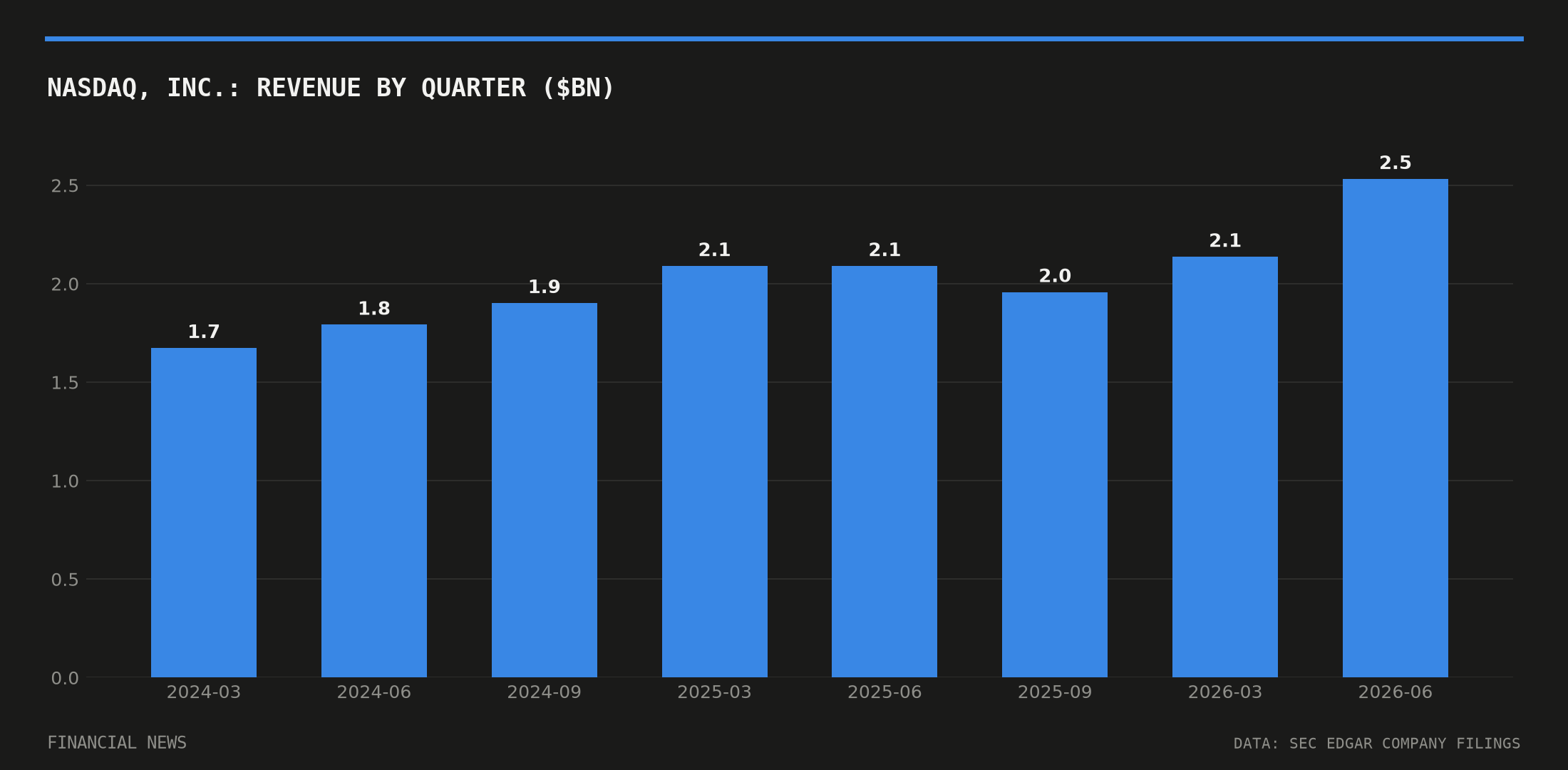
The disruption lands against a run of improving results at Nasdaq. Quarterly net income has climbed from $234m in the first quarter of 2024 to $507m in the second quarter of 2026, according to filings with the SEC. Quarterly revenue over the same stretch rose from $1.67bn to $2.53bn. That financial cushion gives the company room to absorb a short-lived technical failure without it reading as a structural weakness.
Short interest in the stock had been edging higher into the event, with FINRA’s daily short-volume ratio rising from 0.399 on 9 October to 0.464 on 14 October, the trading day before the disruption was reported. That remained well inside its recent range, however – the ratio touched 0.643 as recently as 6 October – and nothing in the FINRA data points to unusual positioning ahead of the outage.
The macro backdrop was equally quiet. The 10-year Treasury yield stood at 5.21% on 13 October, barely moved from 5.24% a session earlier, according to Federal Reserve data. A stable rates environment reinforces the reading of this as an idiosyncratic technology failure rather than part of any wider market stress.
What happens next
Nasdaq has not said whether it plans a post-incident report detailing the root cause of the Carteret facility fault, a step the exchange operator and peers have taken after past feed disruptions. Market participants will be watching Nasdaq Trader’s status page for any update on remediation steps, and whether regulators request further disclosure given the scope of the affected feeds. For now, the episode has registered as a brief technical interruption rather than a market event – a distinction the share price, if nothing else, has already made.
This article is for information only and is not investment advice or a recommendation to buy or sell any asset. Markets move quickly; figures are correct as sourced at the time of writing. Always do your own research before making financial decisions.
