

Raytheon, the defence arm of RTX (NYSE: RTX), has secured a $6.3 billion missile contract to produce and sustain Standard Missile-3 Block IB interceptors, the company said on 8 October 2026.
The deal runs five years with two additional option years, Reuters reported, confirming the value RTX disclosed in its own announcement.
Contract adds to a run of missile awards
The SM-3 IB work will be produced at Raytheon’s Tucson, Arizona, and Huntsville, Alabama, sites, according to local broadcaster KOLD, which cited the same contract structure.
It follows a $24.4 billion five-year SM-6 interceptor contract announced on 1 October 2026 and an August 2026 deal worth up to $22.9 billion to expand Tomahawk production, putting RTX’s publicly disclosed missile-defence awards over the past two months well into the tens of billions.
Raytheon president Phil Jasper said the contract would help replenish stocks and keep production aligned with operational needs, noting SM-3 Block IB had ‘proven its relevance in combat’, according to Defence Industry Europe.
Scale against RTX’s books
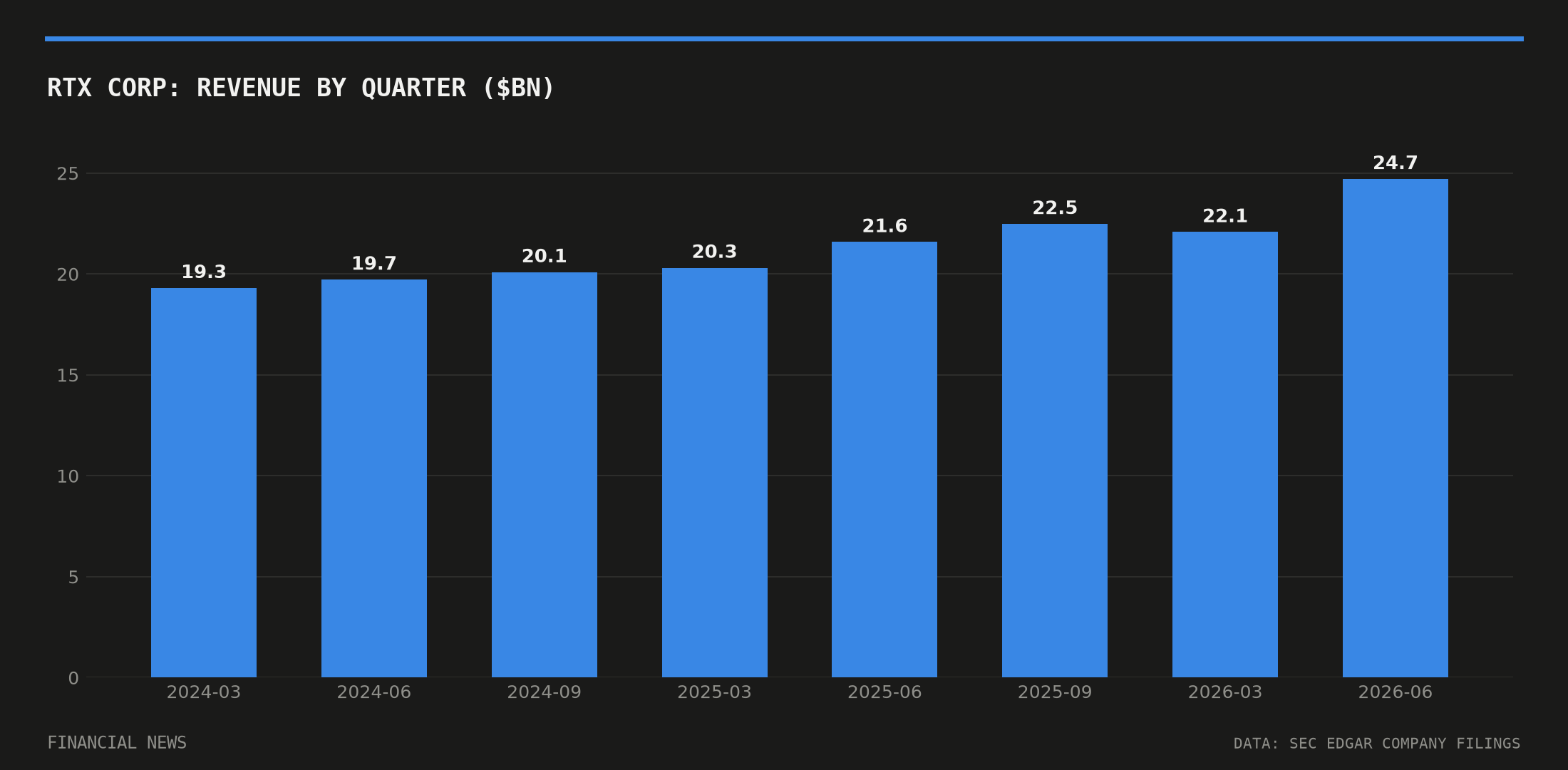
RTX’s most recent quarterly filing shows the scale the new award sits against. The company reported revenue of $24.708 billion for the quarter ended 30 June 2026, up from $22.076 billion in the first quarter. Net income for the second quarter came to $2.139 billion, against diluted earnings per share of $1.57.
The same 10-Q disclosed that Raytheon had already booked $542 million for Standard Missile-3 work with the Missile Defense Agency in the six months to 30 June 2026 — bookings recorded before Thursday’s award. Spread over five years, the new contract’s ceiling value implies roughly $0.9bn-$1.3bn a year, a fraction of RTX’s quarterly top line but a meaningful addition to the missile-defence order book.
Market reaction muted
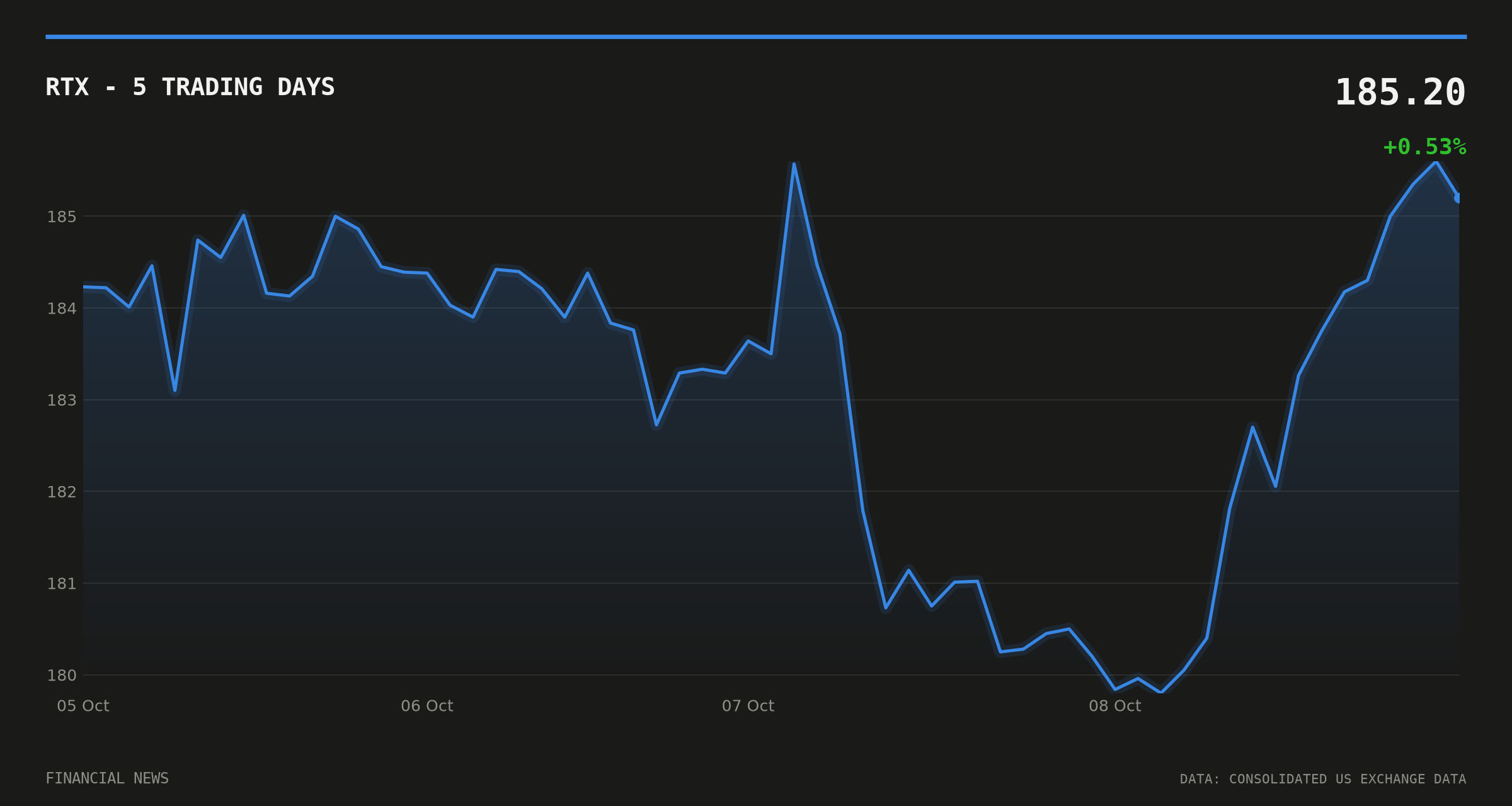
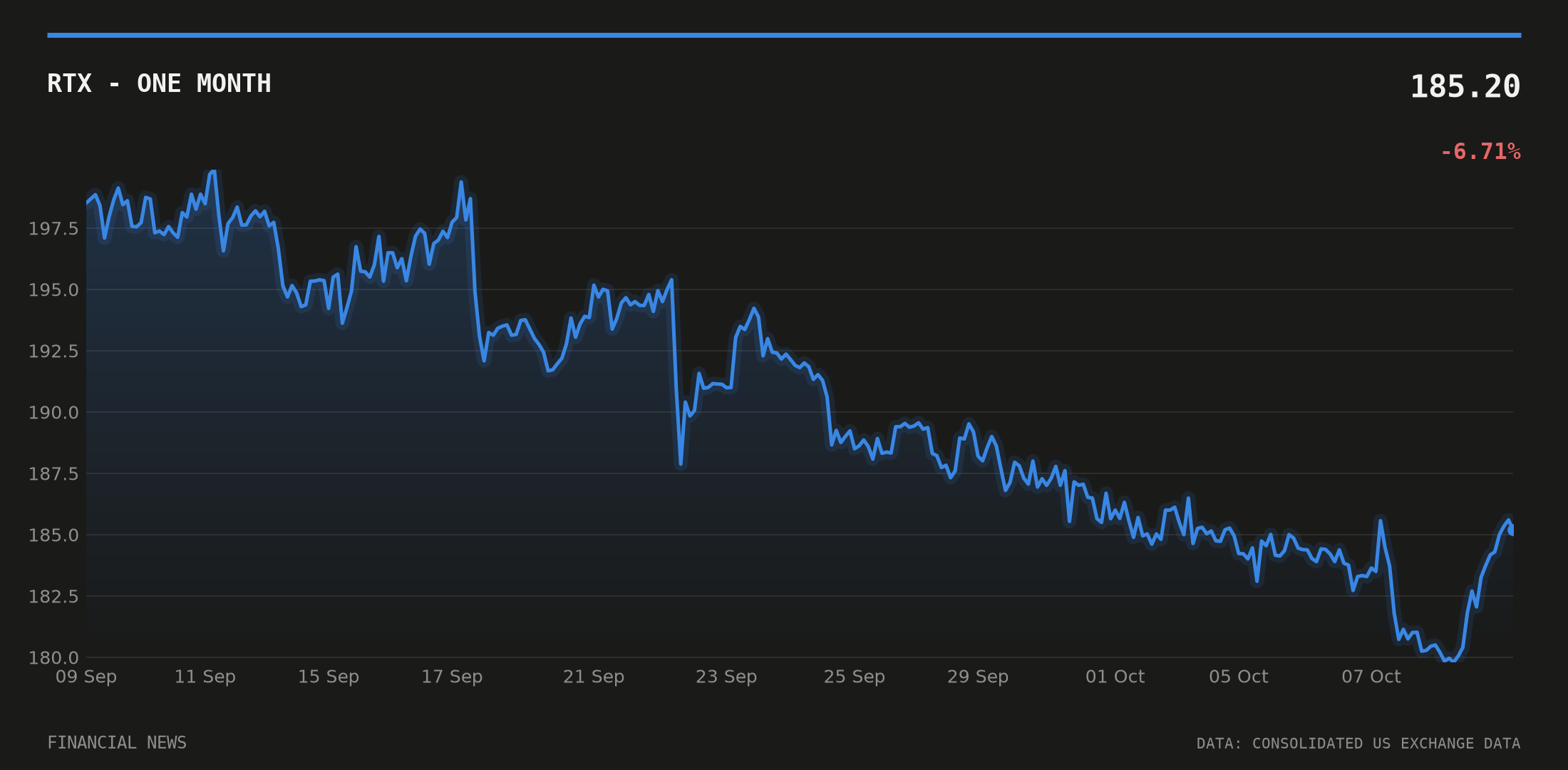
RTX shares closed at $185.37 on 8 October 2026, up 1.15% on the day, though still 4.33% below their 20-day high of $195.39. Trading volume ran 36% above the 20-day average.
FINRA short-sale volume data showed the stock’s short ratio ranging between 0.31 and 0.42 over the ten sessions through 8 October, showing no spike coinciding with the announcement.
Two RTX executives, Amy L. Johnson and Kevin G. DaSilva, filed Form 4 insider transaction reports with the SEC on 5 October 2026, three days before the contract news broke; the filings do not disclose share counts or values.
What the figure covers
RTX’s release describes the $6.3 billion as an “up to” ceiling value covering production and sustainment rather than a guaranteed funded amount, a structure typical of multi-year defence procurement deals that bundle a base period with option years. A separate same-day report put a related SM-3 Block IB production contract at $4.43 billion, a figure that appears to cover a narrower scope of funded rounds rather than contradict the $6.3 billion ceiling cited by RTX and Reuters.
The award comes against a backdrop of elevated US borrowing costs, with the 10-year Treasury yield at 5.28% on 7 October 2026, up marginally from 5.27% the prior session, according to Federal Reserve data. Defence contractors with long-dated, inflation-linked procurement books have drawn investor attention as the yield curve has narrowed, with the 10-year/2-year spread at 0.47 percentage points on 8 October, down from 0.51 points.
Investors will next watch RTX’s third-quarter results for guidance on how quickly the SM-3 IB, SM-6 and Tomahawk awards convert into booked revenue, after a run of contract wins that has outpaced the company’s recent quarterly disclosures.
This article is for information only and is not investment advice or a recommendation to buy or sell any asset. Markets move quickly; figures are correct as sourced at the time of writing. Always do your own research before making financial decisions.
