

Workers at Micron Technology’s (NASDAQ: MU) Taoyuan plant in Taiwan voted 99% in favour of authorising a strike, the union said, as first reported by Nikkei Asia.
Of 2,012 ballots cast, 1,994 backed strike action, with 14 against and four invalid, according to TokenPost‘s breakdown of the result. No walkout date has been set.
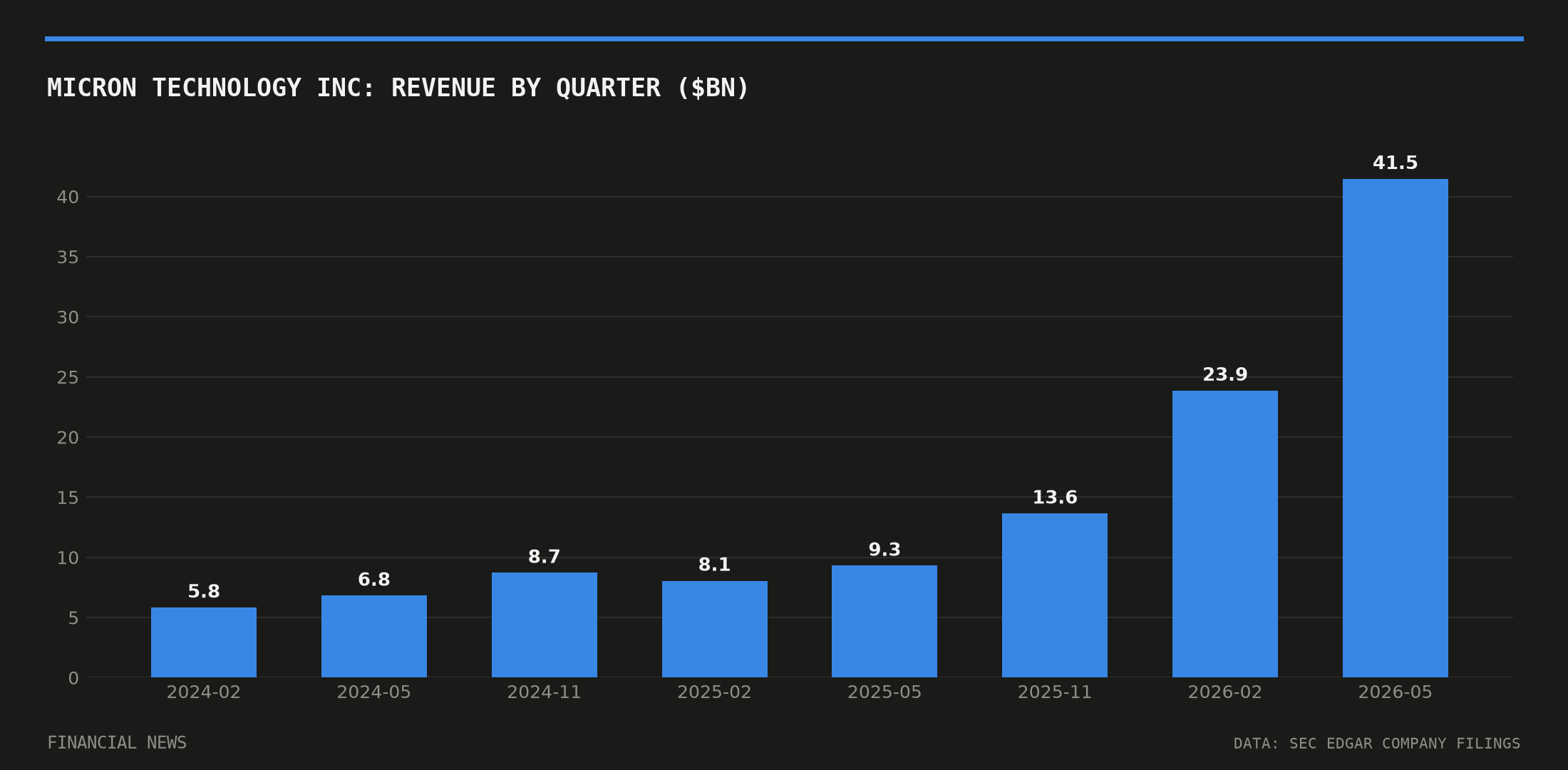
The vote lands against a backdrop of record earnings at the chipmaker. Micron’s 10-Q filing with the SEC shows net income of $28.24bn on revenue of $41.46bn for the quarter ended 28 May 2026, the strongest three months in the company’s history.
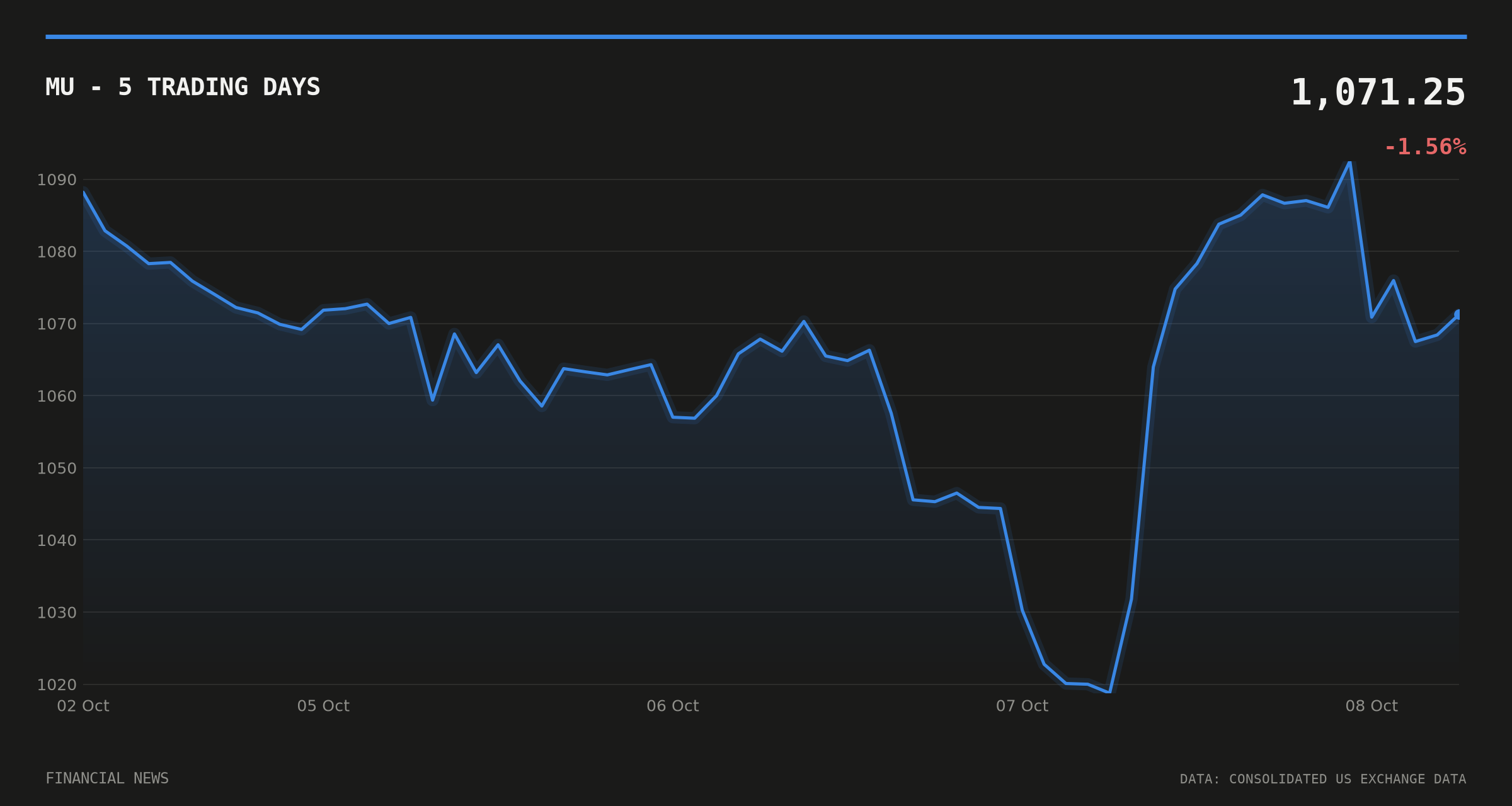
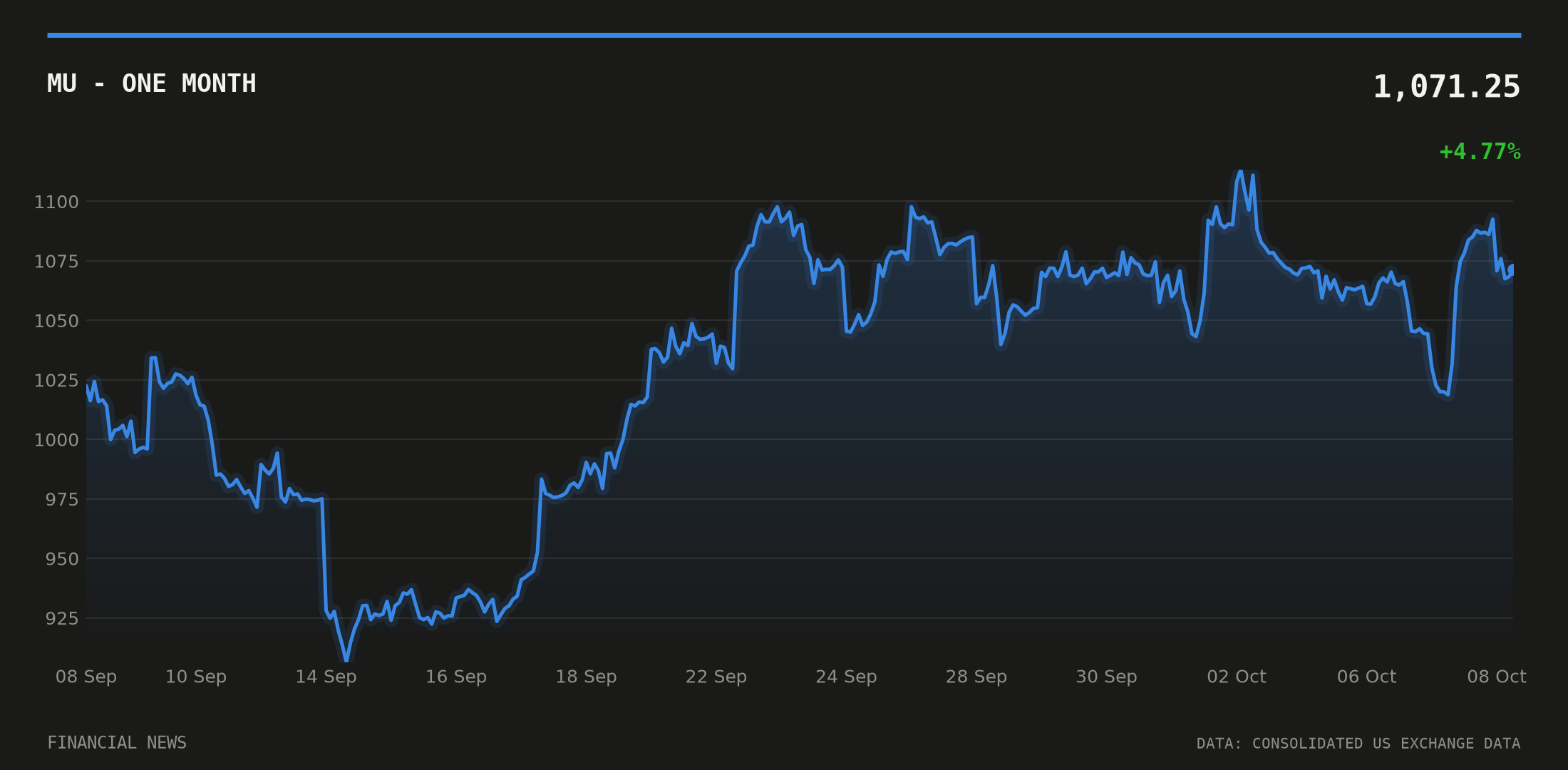
Reports characterising the move as part of a broader “chip-sector slump” sit awkwardly with Micron’s own trading pattern. Shares closed at $1,071.31, down 1.45% on the day, but are still up 8.95% over the trailing 20 sessions and well inside their 20-day range of $975.58 to $1,113.44, according to consolidated exchange data. GuruFocus reported MU actually rose 1.56% to $1,061.87 intraday on 7 October, the day the vote result broke.
What the union is demanding
The Taoyuan union wants Micron to scrap its existing one-off bonus scheme and replace it with a permanent arrangement allocating 15% of operating profit to staff, CNBC reported. The union has previously said Micron declined to discuss the proposal.
Micron has offered Taiwan employees bonuses equivalent to 35 to 68 months of pay for fiscal 2026, with a minimum cash payout of NT$1.7m, per the same CNBC report. The union’s 15% benchmark echoes a deal Samsung’s chip division struck with its own union in May, agreeing to share 10.5% of divisional operating profit, according to BigGo Finance.
Taiwan accounts for roughly 15,000 of Micron’s global workforce, with unions at Taoyuan and Taichung together covering more than 80% of those staff – among the highest union density anywhere in the company, which cut 10% of its global headcount in 2023.
Record profits, record stakes
The scale of Micron’s earnings explains the union’s arithmetic. The company’s fourth-quarter results, reported on 30 September, showed net income climbing to $37.7bn for the quarter from $3.2bn a year earlier, driven by an eleven-fold jump in data-centre revenue, CNBC reported. For the full 2026 fiscal year, Micron posted GAAP net income of $84.97bn on revenue of $133.19bn, versus $37.38bn in revenue the year before.
Set against that, the union argues its members’ share of the upside has been thin. Against a backdrop of record, AI-driven profit growth, the dispute centres less on whether Micron can afford to pay more and more on what share of the gains flows to the factory floor.
No sign of a bearish shift in positioning
Trading data give little indication that investors are treating the vote as a serious operational threat. FINRA’s daily short-sale volume ratio for Micron stood at 0.408 on 7 October and 0.392 the day before, both within the stock’s recent range of 0.33 to 0.55 over the preceding two weeks. That pattern shows no spike in bearish positioning coinciding with the strike-vote headlines.
The wider market backdrop was choppier. US Treasury yields have stayed elevated, with the 10-year note at 5.27% on 6 October, down only slightly from 5.31% the previous reading, according to FRED data from the Federal Reserve Bank of St. Louis. Chip stocks broadly came under pressure in the same session, which is the more plausible driver of any sector-wide weakness than Micron’s own labour dispute.
What happens next
The union has called on members to take 19 October off work to attend a rally in Taipei, explicitly stating the action would not itself constitute a strike, Yahoo Finance reported. That date is the next marker for whether the dispute escalates toward an actual work stoppage or stays at the authorisation stage, where it has sat since the vote closed.
This article is for information only and is not investment advice or a recommendation to buy or sell any asset. Markets move quickly; figures are correct as sourced at the time of writing. Always do your own research before making financial decisions.
