
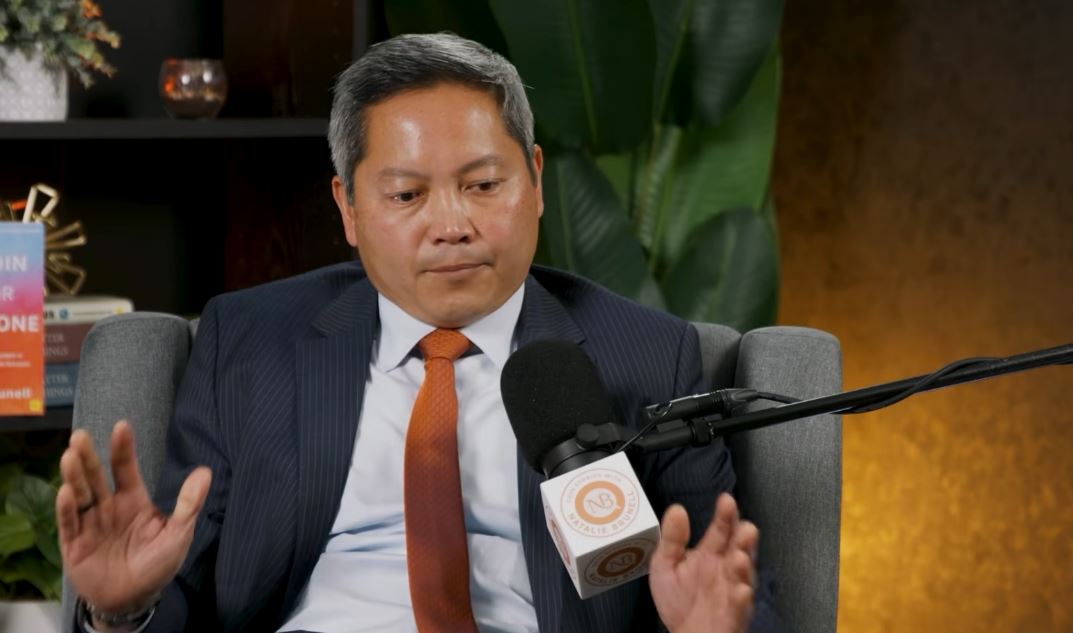

The trade seems like something you would joke about at a dinner party on its face. Sell about 7,000 Bitcoin for between $60,000 and $65,000 each. Observe the decline in price. Then, at about $80,318 apiece, purchase 4,603 Bitcoin. Consider it a success. Phong Le, the CEO of Strategy Inc., basically did that in 2026, and he isn’t saying he’s sorry.
As soon as the Phong Le Strategy Bitcoin trade was made public, it sparked controversy. Generally speaking, investment logic is not meant to go like this: buying higher and selling lower. However, Le’s explanation—which is presented in a number of interviews and public appearances—is more complex than the headline figures imply. A shift in the perception of Bitcoin did not drive the sales. They were strategic—a way to pay dividends on preferred stock, lower the company’s net debt to zero, and replenish a cash reserve of about $7 billion before starting to accumulate again. Le has consistently presented this as capital management rather than conviction management.
Strategy’s balance sheet as of early September 2026 shows about 845,050 BTC. That amount is more than 4% of the 21 million Bitcoin that will ever be produced. There is no other business on the planet that can compare. Over the course of 2026 alone, Strategy bought about 175,000 BTC, and the 7,000 it sold is a rounding error in context, meaning that its net purchase rate was about 25 times its sales volume. The company paid about $369.7 million for the most recent disclosed acquisition, which involved 4,603 BTC at an average price of roughly $80,318 per coin. The acquisition was financed by equity sales, which are now a key component of Strategy’s financial architecture.
It’s worth taking a step back to comprehend how a Virginia-based business intelligence software company came to this conclusion. Under the leadership of founder Michael Saylor, Strategy, formerly known as MicroStrategy, made its first major Bitcoin acquisition in 2020. Over time, the company’s entire identity was consumed by what began as a Treasury Reserve decision. In 2022, Saylor became Executive Chairman, and Le became CEO, taking over the strategy and the associated pressure. The rebranding from MicroStrategy to Strategy Inc. was more of an acknowledgment than a change in direction; the enterprise analytics software division is still in existence, but it is essentially a footnote. The market identity of the company is, without a doubt, Bitcoin.
Beyond the balance sheet of Strategy, Le’s thesis is more comprehensive. He has publicly stated that he believes 75% of nation-states will hold Bitcoin as a strategic reserve and that all financial institutions will eventually have some sort of Bitcoin strategy. Additionally, he predicts that the price of Bitcoin will hit $260,000.
CEOs of businesses with this level of Bitcoin exposure have a good reason to be publicly optimistic, but it’s genuinely impossible to know whether those predictions turn out to be accurate, and it’s possible that Le’s confidence is partially performative. However, the case for institutional adoption has been steadily gaining traction. A number of major banks and sovereign wealth funds have taken actions that five years ago would have seemed unthinkable.
As the Phong Le Strategy Bitcoin trade story develops, it seems as though the traditional investing framework is unable to keep up with what Strategy is really doing. Because of the leverage incorporated into the capital structure, Strategy has referred to its own shares as a “amplified Bitcoin play”; when Bitcoin rises, MSTR tends to rise more quickly; when Bitcoin falls, the same amplification cuts in the opposite direction. Purchasers of Strategy stock are aware of this. The company has stated that it intends to raise up to $80 billion through a combination of debt and equity offerings, with the majority of that money going to Bitcoin.
It’s difficult to fully comprehend that scale. However, it appears that Le is wagering that the accumulation strategy will eventually become self-reinforcing due to the scarcity of Bitcoin. It remains to be seen if that turns out the way he anticipates, at $260,000 or somewhere close to it.

