
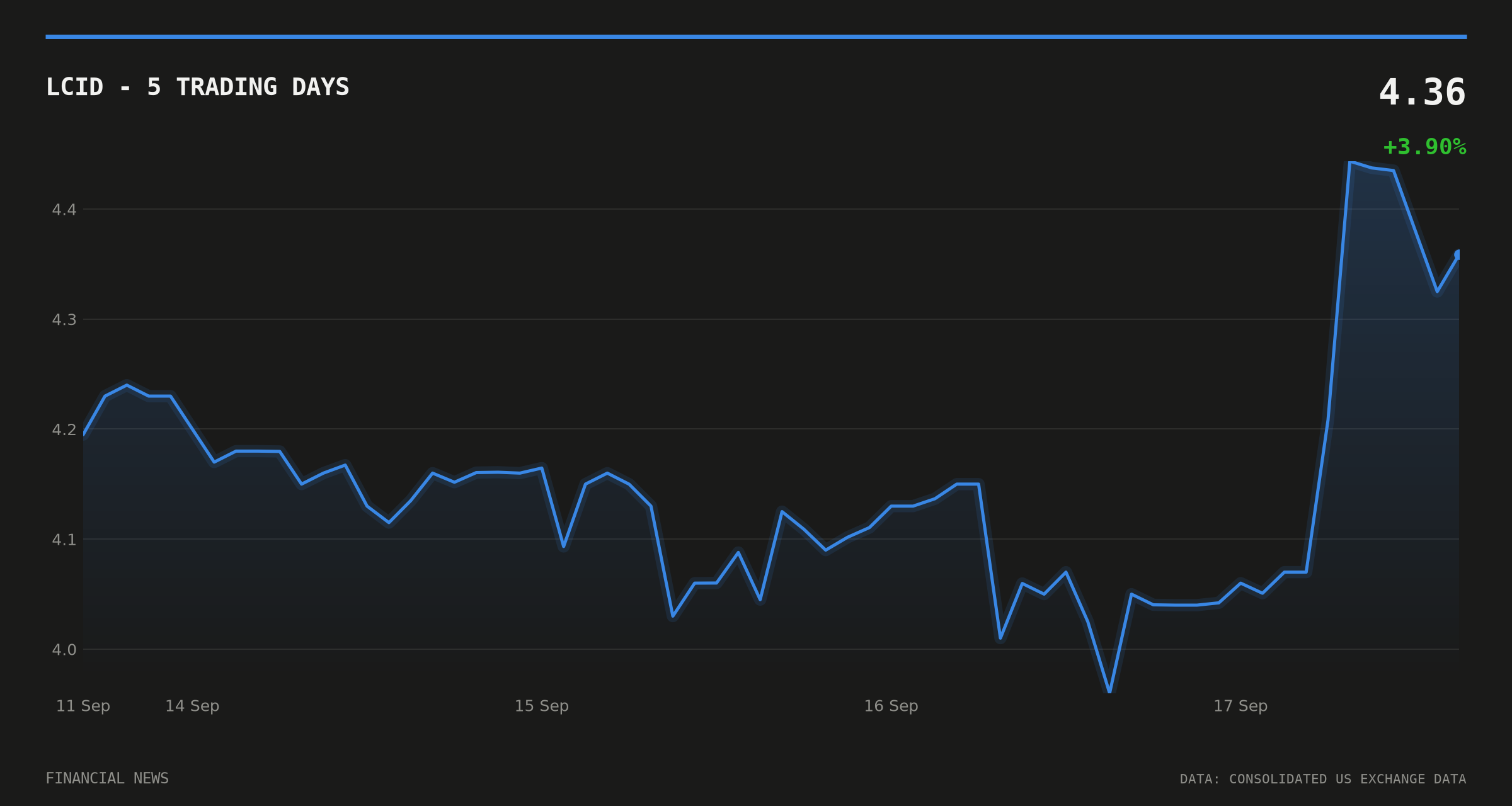

Shares in Lucid Group (NASDAQ: LCID) rose 6.14% to $4.32 on 17 September 2026 after the company unveiled a Bolt robotaxi deal to deploy autonomous vehicles across Europe, according to a joint statement from the two companies.
Bolt, which operates in more than 850 cities across over 50 countries, said it aims to deploy at least 25,000 fully autonomous Lucid vehicles, part of a wider target of 100,000 self-driving cars on its platform by 2035, as Benzinga first reported.
A minimum target, not a signed order
The vehicles would be built on Lucid’s Midsize platform and run on Nvidia’s (NASDAQ: NVDA) Hyperion computing architecture, targeting SAE Level 4 autonomy, according to the release. Neither company named an autonomous-driving software supplier for the rollout.
Bolt has placed no firm purchase order, and the two sides have disclosed no pricing or delivery schedule for the fleet, a gap noted by Gokhshtein Media. The 25,000-vehicle figure is framed as a minimum aspiration rather than a contracted commitment.
Midsize platform delay clouds timeline
The plan hinges on a vehicle line Lucid has not yet built. The company pushed back the Midsize platform’s launch from late 2026 to the second half of 2027 only weeks before the Bolt announcement, according to autoevolution. That leaves the Bolt fleet without a base vehicle for at least another year.
The Bolt tie-up adds to an existing US robotaxi commitment. Lucid has separately agreed with Uber and Nuro to supply at least 35,000 autonomous vehicles domestically, with on-road testing under way since December 2025, according to automotiveworld.com. Combined, the two pledges put Lucid’s stated autonomous-vehicle ambitions above 45,000 units across two continents, though the US deal is markedly further along than the European one.
Competition in Europe is building regardless. Uber, Verne and Pony.ai launched robotaxi rides in Zagreb in August 2026, while Waymo is testing in Munich ahead of a planned German launch in late 2027, according to Reuters reporting carried by Global Banking & Finance.
Losses mount as Lucid stacks robotaxi pledges
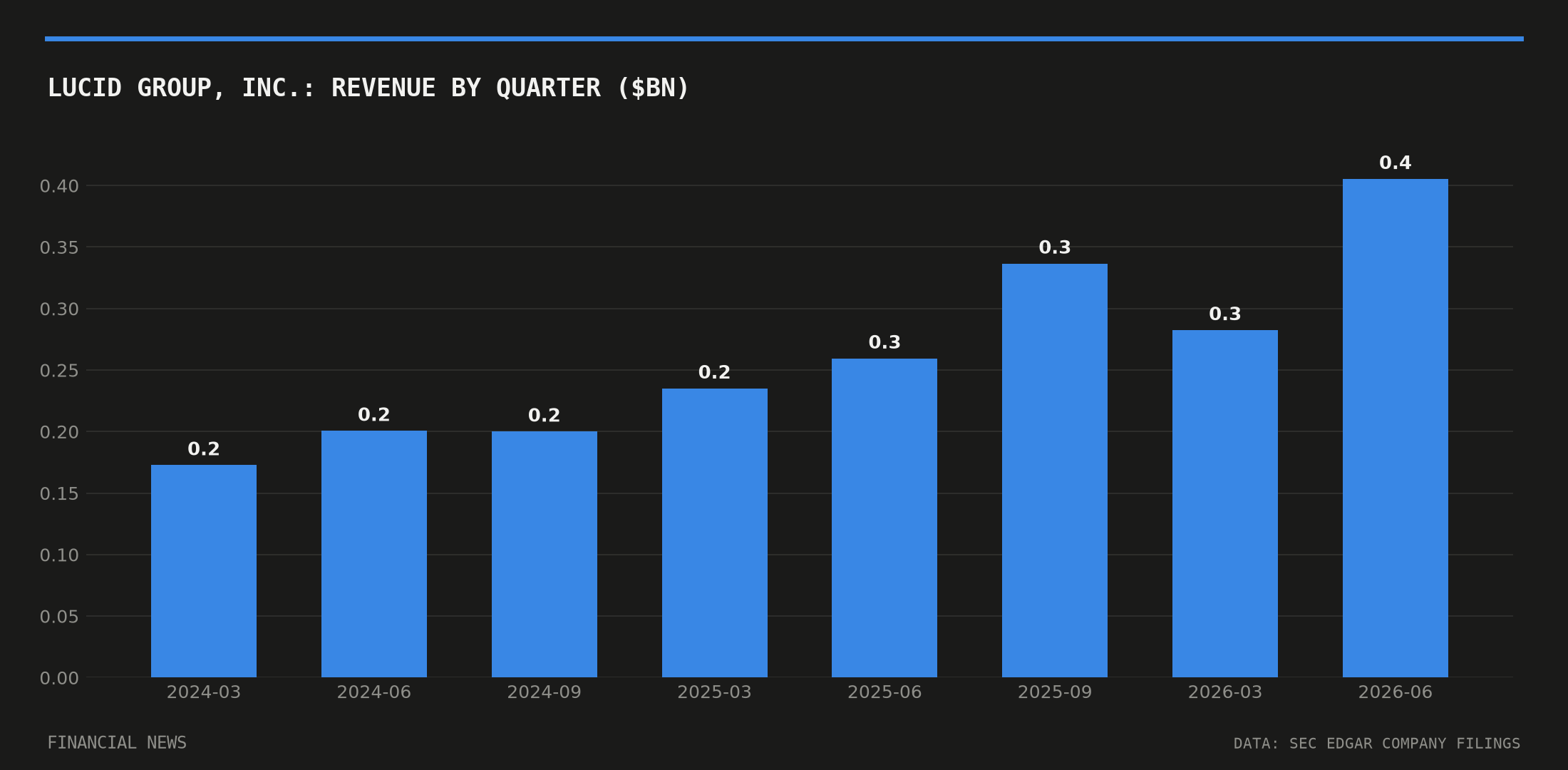
The announcement lands on a company still burning cash quarter after quarter. Lucid reported a net loss of $1.03bn for the second quarter of 2026, against revenue of $405m, according to its quarterly filing with the SEC. Diluted losses per share have widened sharply, reaching $3.30 in the second quarter of 2026 compared with a 28-cent loss a year earlier, the same filing shows.
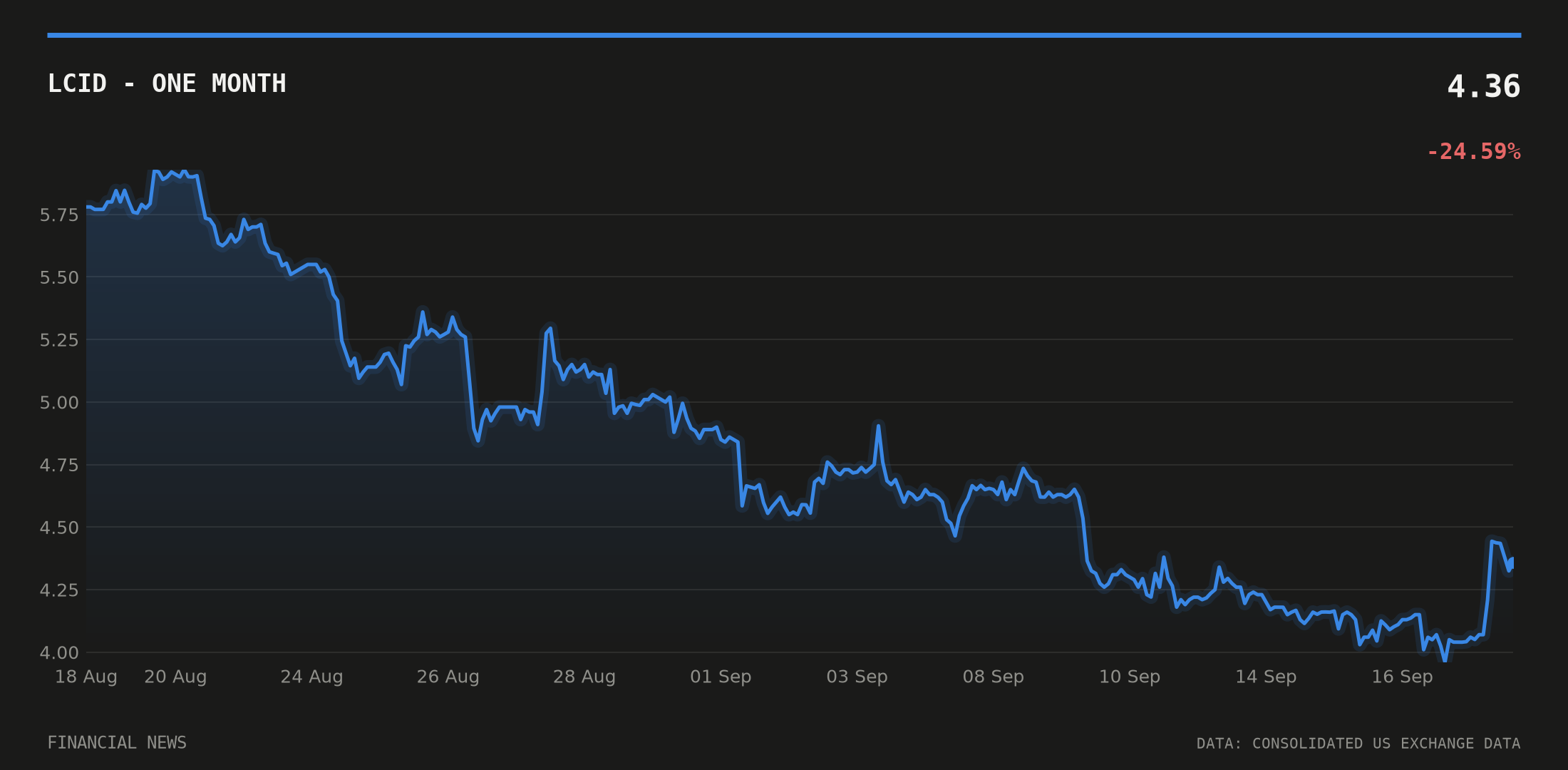
The stock remains volatile and thinly loved by short sellers watching for a turn. LCID’s FINRA short-sale volume ratio climbed from 0.56 on 2 September to 0.664 on 16 September, the day before the Bolt announcement, according to FINRA daily short sale data. Shares are still down 15.13% over the past 20 trading days despite the pop, with trading volume running 2.61 times the 20-day average on the announcement, according to consolidated exchange data.
What the deal actually commits to
Bolt describes itself as Europe’s largest shared-mobility platform, with more than 200 million customers across its network, according to Electrek. That scale gives any eventual robotaxi rollout a ready-made distribution channel, if and when vehicles, software partners and regulatory approvals fall into place.
For now, the Bolt robotaxi deal reads as a strategic framework rather than a delivery contract. No named autonomous-software partner, no firm order and a delayed base vehicle leave the 25,000-unit figure as a target for the back half of the decade, not a near-term production line. Investors will get their next read on Lucid’s cash position and platform progress when the company reports third-quarter results, with the Midsize launch date – now set for the second half of 2027 – the marker most likely to move the shares in the meantime.
This article is for information only and is not investment advice or a recommendation to buy or sell any asset. Markets move quickly; figures are correct as sourced at the time of writing. Always do your own research before making financial decisions.
