

Aon plc (NYSE: AON) has signed a definitive agreement to buy USI Insurance Services from KKR (NYSE: KKR) and its co-investors, the companies confirmed on 31 August 2026. The deal values USI at a total consideration of $17 billion.
The agreement follows a Wall Street Journal report published a day earlier that said Aon was nearing a roughly $17 billion, debt-inclusive deal for USI, with an announcement possible “as soon as Monday”. That timeline held.
From weekend scoop to signed deal
The Aon USI deal moved fast. Reuters corroborated the WSJ figure on Sunday afternoon, noting Aon and USI could not immediately be reached for comment and that KKR declined to comment at the time. By Monday morning, KKR’s press release confirmed the signing, closing the gap between report and record in under 24 hours.
USI is the tenth-largest US insurance broker, with roughly $3 billion in annual revenue, more than 10,500 staff and nearly 200 US offices, according to the company’s own investor materials. The business spans property and casualty, employee benefits, personal risk and retirement solutions for middle-market clients, run through its proprietary USI ONE platform.
Building on the NFP playbook
Aon describes the acquisition as building on its 2024 purchase of NFP, positioning the combined group as the leading platform in the US middle-market segment. That NFP integration has already prompted portfolio moves: Aon signed a separate definitive agreement in September 2025 to sell a significant majority of NFP’s wealth business to Madison Dearborn Partners, underlining how Aon has been reshaping the unit since taking it on.
For KKR, the sale marks another large-scale exit. Reuters notes it follows the private equity firm’s recent disposals of data-centre cooling business CoolIT and Circor’s commercial and defence aerospace unit, part of a broader run of monetisations across its holdings.
Aon’s balance sheet against the price tag
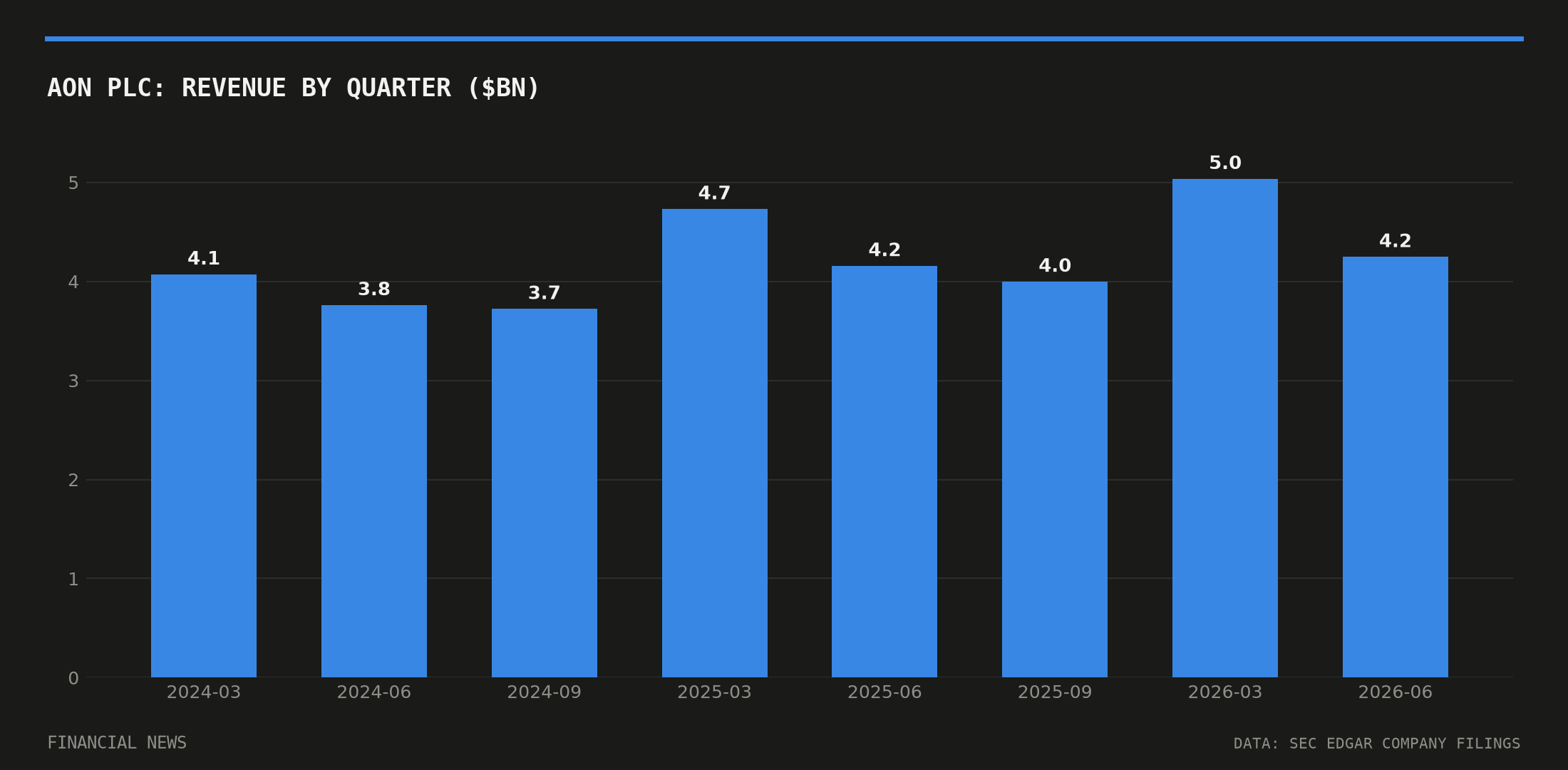
The $17bn price sits against a company generating meaningful but far smaller quarterly cash flows. Aon reported revenue of $4.246 billion for the quarter ended 30 June 2026, with net income of $551 million over the same three months, according to its most recent 10-Q filing with the SEC. That followed a stronger first quarter, when Aon posted revenue of $5.034 billion and net income of $1.212 billion, figures that reflect the seasonal skew typical of the brokerage’s fee cycle rather than a quarter-on-quarter decline.
The pattern has repeated across recent years: Aon’s first-quarter revenue has topped each subsequent quarter in both 2024 and 2025, according to its 10-Q filings, with first-quarter net income of $1.071 billion in 2024 and $965 million in 2025 versus smaller totals in the second and third quarters of each year. Diluted earnings per share followed the same seasonal shape, running from $5.35 in the first quarter of 2024 down to $1.57 by the third. A $17bn acquisition of this size, even partly debt-funded, represents a substantial commitment set against that quarterly earnings base.
Rates backdrop and positioning
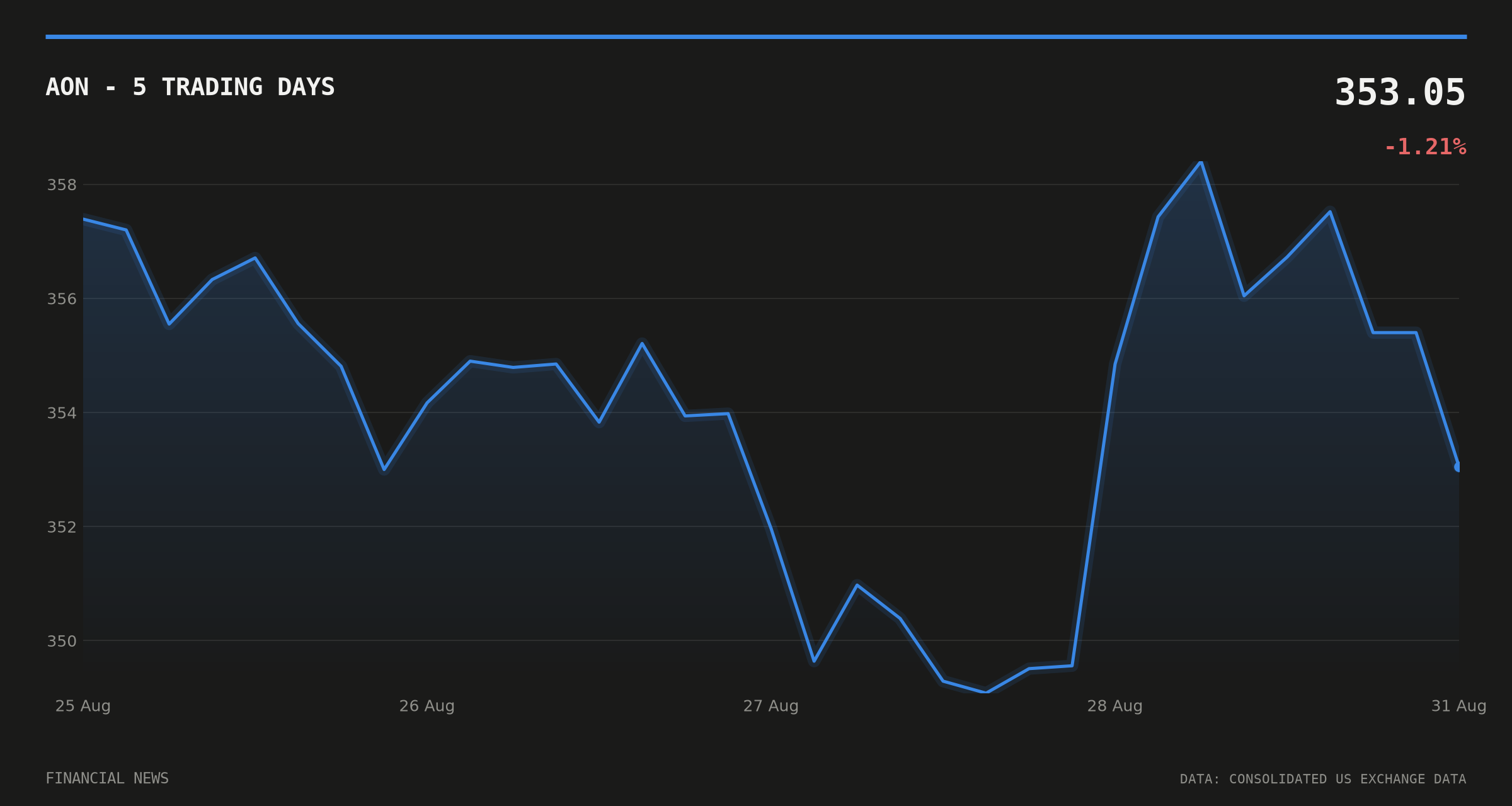
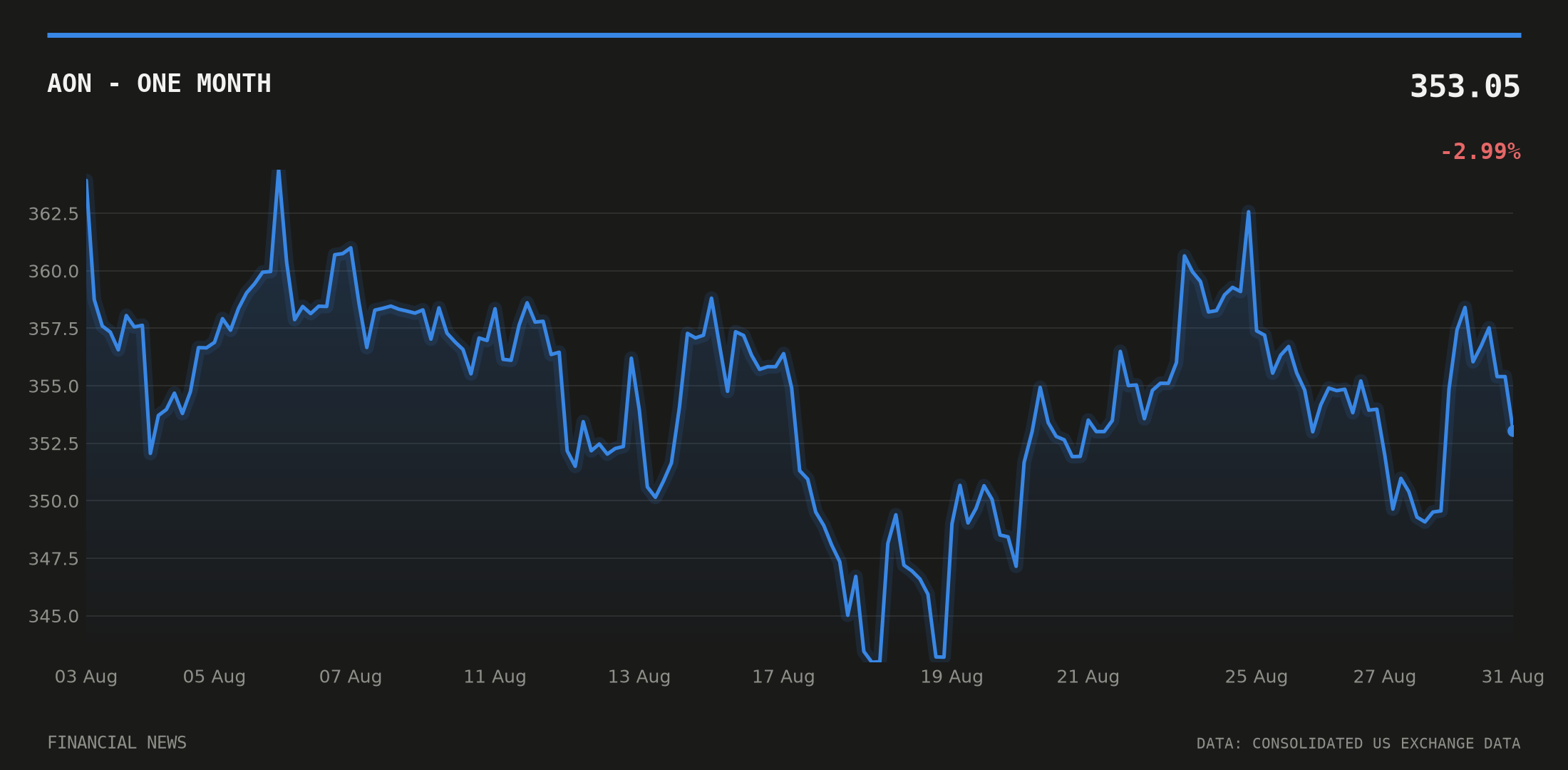
The deal lands with the 10-year US Treasury yield at 4.67% as of 27 August 2026, according to Federal Reserve data, a modestly elevated-rate backdrop for a large, debt-inclusive private equity exit. Aon shares closed at $353.00 on 31 August, down 1.24% on the day and 1.13% over 20 days, with trading volume broadly in line with its recent average.
Short-selling activity showed no unusual build-up ahead of the announcement: Aon’s FINRA daily short-sale ratio ranged roughly between 0.39 and 0.72 across the ten sessions before the reports broke, according to FINRA data, consistent with normal trading rather than a market anticipating the deal.
CNBC reported the transaction could expand Aon’s reach among midsize businesses and add to earnings per share as soon as 2028 — a marker investors are likely to watch when Aon next updates guidance.
This article is for information only and is not investment advice or a recommendation to buy or sell any asset. Markets move quickly; figures are correct as sourced at the time of writing. Always do your own research before making financial decisions.
