
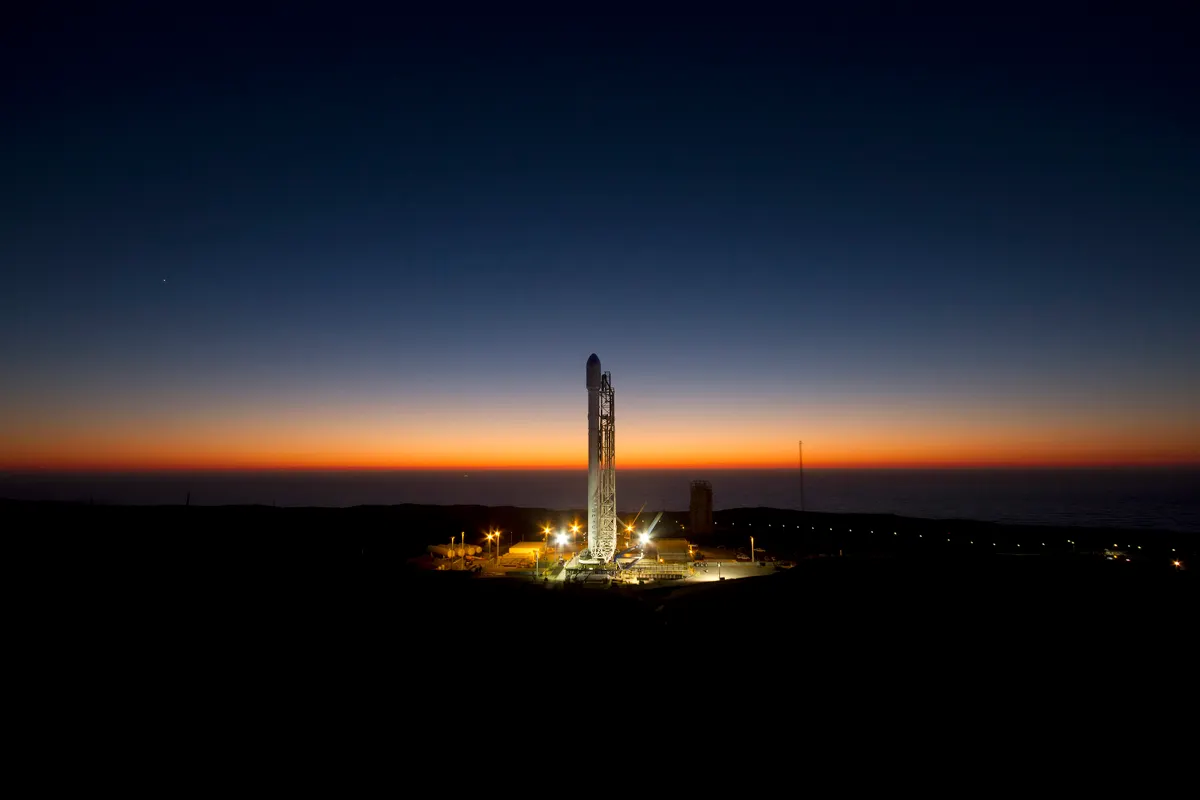

The SpaceX share price has lost half its value since mid-June, falling from $225 to $112 as investors weigh a high valuation, mounting losses, and an uncertain path to profitability. The stock trades under the ticker SPCX on Nasdaq.
What Analysts Say About the SpaceX Share Price
Raymond James analyst Brian Gesuale initiated coverage on 27 July 2026 with an $800 price target and a ‘Strong Buy’ rating, the highest target on Wall Street, according to Yahoo Finance. At the time of initiation, that implied roughly 425% upside from where the stock was trading.
The Street’s average target sits at $236, still more than double the current price. Both figures will likely soften in coming weeks as analysts revise down from a lower base.
Gesuale puts SpaceX’s total addressable market at nearly $30 trillion over the long run, slightly above the $28.5 trillion SpaceX itself cited in its S-1 filing. Even accepting that figure, the gap between ambition and current financials is wide.
Losses Are Real and Growing
SpaceX generated $18.674 billion in consolidated revenue for full-year 2025, with an operating loss of $2.589 billion and adjusted EBITDA of $6.584 billion, according to its IPO prospectus as reported by Yahoo Finance.
In Q1 2026, the company reported revenue of $4.694 billion, an operating loss of $1.943 billion, and adjusted EBITDA of $1.127 billion. Losses are not easing.
Analysts do not expect profits to arrive meaningfully before 2028, by which point consensus forecasts have revenue reaching $142 billion. That trajectory implies a market cap of $1.5 trillion priced against years of continued cash burn, and Starship spending alone runs at roughly $3 billion per year with no offsetting revenue yet, per a breakdown of SpaceX’s S-1 by Mostly Metrics.
SpaceX made a confidential IPO filing on 30 March 2026, targeting a raise of as much as $75 billion at a valuation near $1.8 trillion, before the public S-1 was dated 30 June 2026, according to an analysis of the draft prospectus by Deep Quarry. The stock now trades well below that implied float-entry level.
Key risks the market is pricing include: looming lock-up expirations that could bring insider selling; a high level of short-seller interest; and losses driven by AI-related capital expenditure.
The IPO prospectus addressed Starship’s importance directly. ‘If Starship does not achieve full reusability or rapid turnaround, we may experience higher per-launch costs, slower deployment timelines for our large-scale constellations (including our orbital AI compute program), delayed revenue growth, and increased overall capital requirements, and our brand and reputation may suffer,’ the filing stated.
That is not a minor caveat. It is the core of the bull case, and the bull case rests on Starship working reliably at scale.
Starship Flight 13 and What It Means for the Timeline
Starship’s 13th flight test deployed a small number of V3 Starlink satellites before the upper stage splashed down in the ocean. Each V3 satellite weighs approximately 4,400 pounds (2,000 kilograms), considerably more than its predecessor, meaning the full constellation will require thousands of Starship launches, a cadence far beyond what Falcon 9’s 165 flights in 2025 could support, according to Space.com.
Flight 13 was the first Starship mission since SpaceX began trading on Nasdaq, making it the first live operational test watched by public shareholders, Spaceflight Now reported. Commercial payloads on Starship are scheduled to begin in the second half of 2026, per the S-1.
The test went well. But a single successful flight does not establish the reliability or turnaround cadence the business model requires.
SpaceX is due to report second-quarter results on Tuesday 4 August. Those numbers will show whether Q1’s operating loss trajectory is narrowing or widening, and give investors the first quarterly read since the IPO. The Q2 print is the next concrete data point before the market can revisit either the $100 floor or the $236 average target.
