
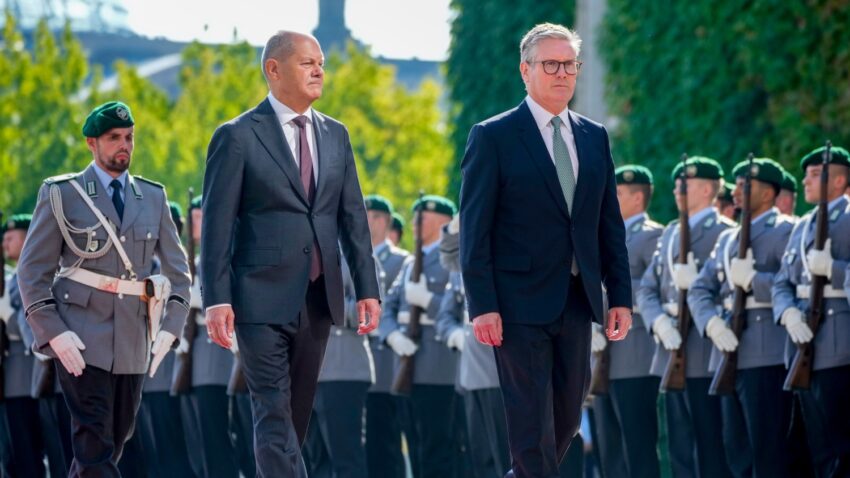

Keir Starmer is setting ambitious plans to rejuvenate post-Brexit relations with Germany.
His strategy is pivotal to expand UK business opportunities across European markets.
Strengthening Economic Ties
Keir Starmer sees a “once-in-a-generation opportunity” to recalibrate the UK’s economic relationship with Germany. His discussions with German Chancellor Olaf Scholz are set to address significant barriers confronting UK businesses, including certification challenges and intricate tender protocols. The ultimate aim is to secure broader market access while ensuring fair negotiations, marking a pivotal shift in the post-Brexit landscape.
Starmer’s ambitious strategy not only targets economic growth but also encompasses vital sectors like science, clean energy, and trade security. While the talks are not intended to establish a new EU trade agreement, they aim to bolster the existing frameworks, fostering a more collaborative and mutually beneficial association between the UK and Germany.
Navigating Political Challenges
The renewed efforts come amidst a challenging fiscal environment, with looming tax hikes hinted by Starmer himself. These economic pressures have prompted Starmer to seek innovative collaborations with European nations, balancing economic gains and political resilience.
Despite governmental reassurances, concerns linger about potential concessions. Reports suggest a possible youth mobility scheme allowing limited access for Europeans seeking work in the UK, raising questions about the extent of compromises necessary to achieve Starmer’s vision.
Broader Diplomatic Efforts
As part of his broader diplomatic mission, Starmer plans to meet with French President Emmanuel Macron. This highlights his commitment to strengthening ties not only with Germany but also with other European powers.
His diplomatic ventures are focused on creating cooperative partnerships addressing key issues such as security and migration. These talks signify the UK’s intention to engage constructively with its European counterparts.
The proposed initiatives are designed to foster a collaborative environment, enabling shared solutions to shared challenges across Europe.
Trade and Regulatory Frameworks
A significant aspect of Starmer’s agenda is the push for a veterinary agreement with the EU, which could significantly ease food export checks. This move is hypothesised to enhance trade flows across the Channel, thereby improving bilateral trade relations.
The proposed treaty, while not forming a conventional EU trade deal, seeks to address existing trade and regulatory complexities. By emphasising streamlined procedures, the UK aims to minimise bureaucratic barriers and facilitate smoother operations for businesses engaged in cross-border trade.
Security and Migration Cooperation
Security and migration are key focal points in the discussions with German leadership. Starmer and Scholz are expected to explore enhanced intelligence sharing to combat organised immigration crime, reflecting a shared commitment to tackling illegal migration.
These discussions underscore the importance of international cooperation in addressing complex security challenges. By working together, both nations aim to establish more robust mechanisms to deter and manage migration-related issues.
Impact on British Businesses
The potential outcomes of these discussions could significantly impact British businesses, especially those operating in Europe. By reducing regulatory hurdles, businesses are anticipated to experience more streamlined operations, fostering economic growth.
Starmer’s direction aims to revitalise the UK’s economic influence, providing British enterprises with access to broader markets and opportunities for expansion.
Future Prospects
Looking ahead, the success of these diplomatic initiatives could lay the groundwork for deeper integrations across various sectors. The reshaped economic landscape might offer an optimistic future with enhanced partnerships.
Starmer’s diplomatic efforts represent a step forward in enhancing UK-EU relations.
They promise to open new avenues for economic and political collaboration.
