Standing close to a gas turbine facility in upstate New York and realizing that the machines being loaded onto trucks won’t power neighborhoods in the conventional sense is a subtly strange experience. Many of them are going to data centers, which are expansive, bustling campuses with electricity consumption comparable to that of a mid-sized city. At the end of the first quarter of 2026, GE Vernova, one of the biggest turbine manufacturers in the world, revealed an order backlog valued at over $18 billion. The business is not by itself. Shortly before that, Siemens Energy reported a record quarter in orders, with about 40% of new turbines going to buyers in the United States.
This is the background for a figure that has garnered more attention than any other in the most recent energy investment report from the International Energy Agency: $50 billion. That is the estimated amount that the US will spend on coal and gas power plants in 2026, which is about $3 billion more than what China is spending on the same fuels this year. The United States has surpassed China in fossil fuel power investment for the first time in decades, and the reasons for this reversal provide insight into the current state of American energy policy and industrial ambition.
Data centers are the short answer. The longer response is more intricate. Large amounts of consistent, dependable electricity are required for AI infrastructure. Power requirements for modern AI facilities can range from one gigawatt to several gigawatts, which is equivalent to the consumption of a large western city. In an effort to obtain that power, tech firms like Alphabet, Amazon, and Meta have been moving more quickly than the public grid can handle. As a result, there is an increase in what the IEA refers to as “behind the meter” generation, in which businesses essentially construct their own private power plants and completely avoid the grid. The majority of the approximately 20 gigawatts of gas turbines that US clients ordered in the first quarter of 2026 seem to be moving in that direction.
When such concentrated demand reaches an unprepared market, the economics quickly become bizarre. Due to supply that hasn’t kept up, gas turbine prices have reportedly increased more than threefold, from about $800 per kilowatt to over $2,500. Even the announcement by Mitsubishi, another significant turbine manufacturer, that it would double its production capacity might not be sufficient. Every time a new data center is announced, more orders are placed, further tightening the market, giving the impression that the turbine shortage has taken on a life of its own and is partially self-reinforcing.
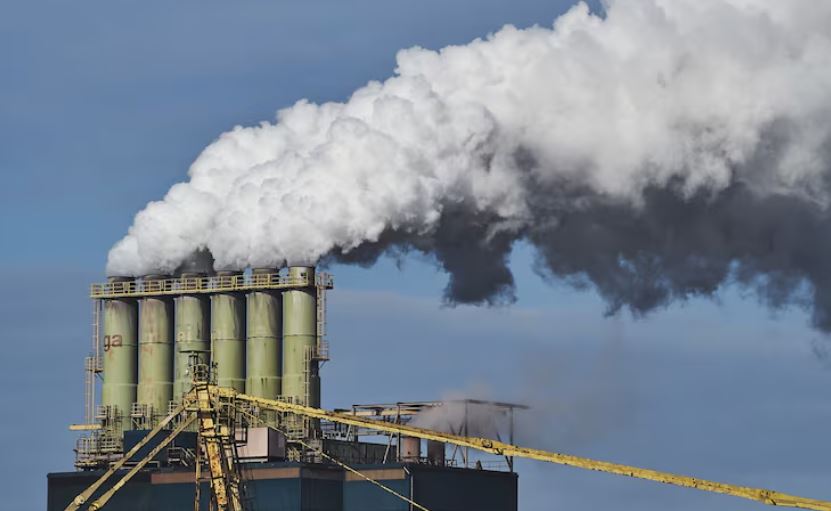
It’s important to consider the implications of this for the larger energy picture. For years, the United States has been progressively moving away from fossil fuels in its investment portfolio. According to the IEA, the percentage of yearly energy investment allocated to the supply of fossil fuels and the production of electricity based on them decreased from approximately 60% in 2015 to slightly less than 40% by 2024.
The trend hasn’t completely changed. Approximately $2.2 trillion will be spent on renewable energy this year compared to $1.2 trillion on fossil fuels worldwide, demonstrating the continued dominance of clean energy investment over fossil fuel investment. However, the US’s gas trajectory in particular has sharply increased in ways that were not anticipated even two years ago.
Coal further complicates the situation. In 2025, US coal consumption increased by 10%, which is unexpected considering how frequently the coal industry was deemed to be finished. Coal became more economically competitive due to a roughly 50% increase in gas prices, and this trend continued into 2026. This might not be a structural reversal, but rather a brief price-driven blip. However, it’s also possible that the grid pressures brought about by the AI buildout are significant enough to maintain higher demand for all available baseload sources for a longer period of time than most models predicted.
All of this has been made more complicated by the Trump administration’s elimination of clean energy tax credits, which has caused the IEA to lower its projections for new US wind and solar capacity. Through 2030, the demand for electricity is predicted to increase by an average of 2% annually, with data centers contributing about half of that growth. Gas is uniquely positioned to fill the gap created by the math because it is easily accessible and can be deployed more quickly than alternatives like nuclear.
As this develops, it’s difficult to ignore the conflict between two narratives that the US energy sector is attempting to maintain at the same time: the narrative of a nation that is rapidly developing AI infrastructure and the narrative of a nation that has spent years asserting that it is making a clear shift away from fossil fuels. At the moment, both tales are accurate. Simply put, they don’t fit together as well as the press releases imply.