

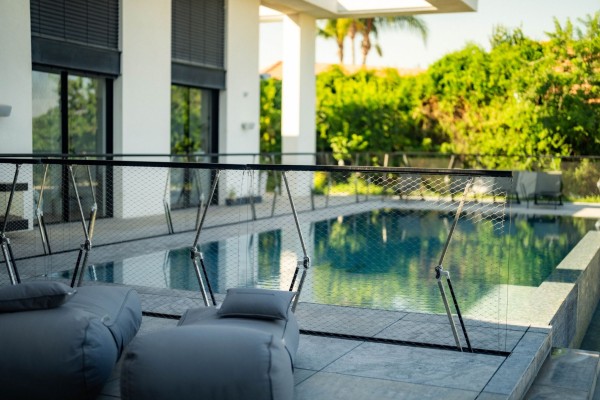
Drowning kills children. In most countries it ranks among the leading causes of accidental death in the under-15 age group, with a significant proportion of incidents occurring in and around private pools. The barriers, alarms, and covers that exist to prevent those deaths work — but only when people use them. Smart Pool Fence, an automated pool barrier company, has built its entire product philosophy around that gap.
“Traditional solutions such as fences, alarms, or basic covers are important, but they are not always used consistently, and they often depend on human attention,” said Guy Alon, the company’s Business Development Director. “Our vision with Smart Pool Fence was to create a solution that people actually want to use every day, because it is simple, reliable, and built into the way they manage their pool.”
The argument Alon makes is behavioural rather than technical. A safety product that creates inconvenience gets bypassed. One that integrates into routine gets used. Smart Pool Fence’s system acts as a physical barrier that activates quickly when the pool is not in use — designed to take seconds, not minutes, and to sit unobtrusively within the design of the surrounding space. “The idea is to support families and property owners with an extra layer of protection that works quietly in the background,” Alon said, “so that safety does not feel like a compromise.”
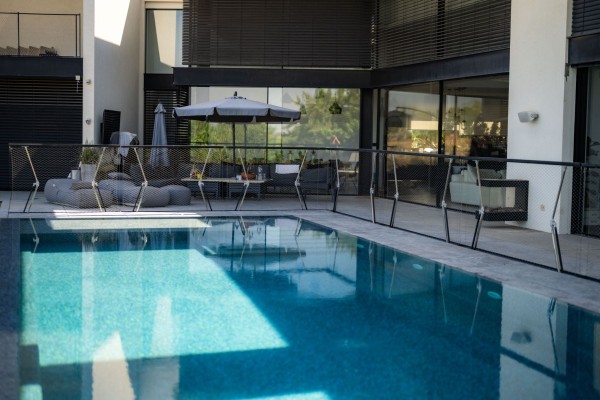
The company targets private homes, hotels, and residential communities across multiple markets. Alon emphasised from the outset that the product needed to work across climates, regulatory environments, and architectural styles. “We knew from day one that this had to be a global solution,” he explained. “That means durability in demanding outdoor conditions, flexibility for new builds and renovations, and a design language that fits high-end projects as well as more standard installations.” The system slots into the layered safety frameworks promoted by international drowning-prevention organisations — barriers, supervision, education, and emergency readiness operating together rather than separately.
On the question of what actually differentiates the product, Alon returns to behaviour. “For me, the revolution is not just technical, it’s behavioral,” he said. “When you have a safety solution that can be activated in seconds, that blends into the design, and that doesn’t create friction in daily life, people are far more likely to use it every single time the pool is unattended.” That consistency, he argued, is where preventable deaths actually get prevented.
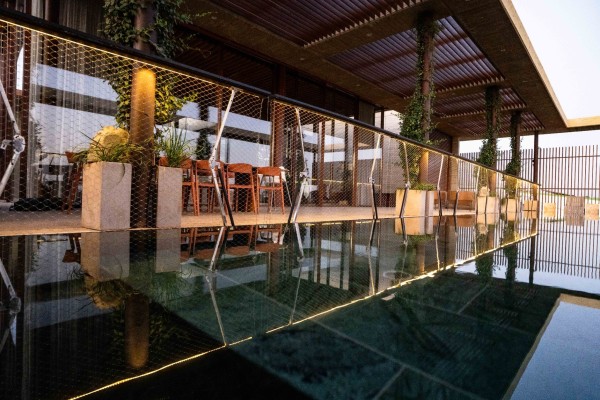
Smart Pool Fence is actively seeking distribution and construction partners. “We are actively looking to collaborate with distributors, pool builders, designers, engineers, and service companies who share our commitment to safety and quality,” Alon said. “Our partners receive more than a product. We work closely with them on training, technical support, and marketing so they can present Smart Pool Barrier as a high-value solution to their customers.”
The long-term ambition is standard-setting rather than niche. “If in a few years it becomes ‘normal’ that every pool includes advanced safety technology as standard, the way seat belts became standard in cars,” Alon said, “then we will know that this revolution has truly succeeded.”
