
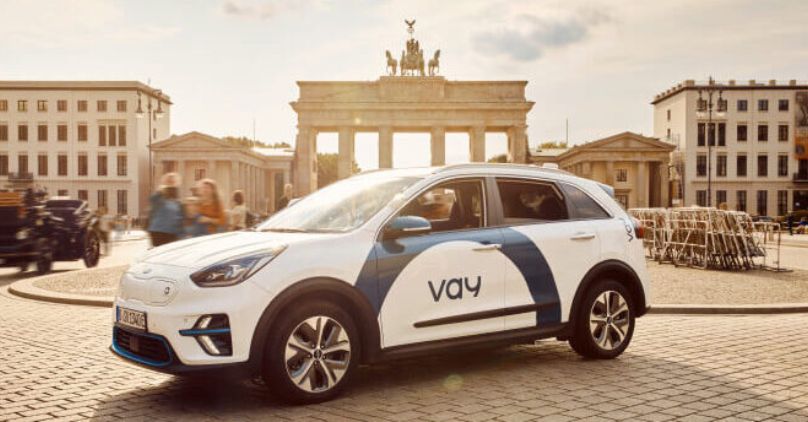

Vay, the frontrunner in European driverless technology, has achieved a significant financial milestone. This startup, specialising in teledriving, has secured €34 million in funding from the European Investment Bank (EIB).
This development marks a pivotal moment in Vay’s journey to revolutionise urban mobility. By operating vehicles on public roads without a safety driver, Vay has distinguished itself as a unique player in this competitive field, supported by robust investments aiming to shape the future of transportation.
Europe is increasingly seen as a significant hub for driverless technology. With the teledriving startup Vay leading the helm, the region witnesses promising developments. The European driverless cars market is projected to escalate remarkably from $41.2 billion in 2024 to an anticipated $345.2 billion by 2032. This growth is driven by innovations in safety and efficiency, making autonomous vehicles a strategic focus for development.
EIB Vice-President Nicola Beer highlighted their commitment to supporting innovative European tech companies like Vay. The investment is aimed at facilitating efficient and sustainable urban mobility solutions that are integral to modern metropolitan life. Such initiatives align with Europe’s broader strategic goals to promote cleaner and more efficient transportation solutions.
The company’s operations have received regulatory attention, particularly after conducting successful test drives without safety drivers in Hamburg. This milestone has poised Vay to launch commercially in Germany, marking a significant step in embedding teledriving technology within Europe’s transportation landscape.
As the technology matures, Vay’s model aims to combine the best of human intuition and machine precision, offering a reliable framework for the eventual transition to full autonomy.
These investments highlight not just the financial promise, but the transformative potential of driverless technologies in reshaping urban environments worldwide. Europe, spearheaded by startups like Vay, is setting itself as a critical player in this global narrative.
The future of transportation increasingly points towards autonomy, with Vay at the forefront of ensuring that this transition is both safe and efficient.
Vay’s success in securing substantial funding demonstrates the immense potential and readiness of Europe to lead in autonomous vehicle technology.
With ongoing support from significant financial entities like the EIB, the shift towards integrated driverless solutions appears not just viable but inevitable, promising a new era of mobility that balances innovation with sustainable urban living.

