Uber Technologies (NYSE: UBER) has appointed Rakesh Ranjan as its president for India and South Asia, effective 4 January 2027, the company confirmed on 26 November 2026.
The move ends a vacancy of roughly seven months in one of Uber’s most important regional posts, following a search process that Uber’s regional general manager for Asia Pacific, Dom Taylor, said ran longer than three months, as first reported by TradingView News.
Who is the new India and South Asia president
Ranjan joins Uber from outside the company. He currently serves as chief executive of edtech firm Allen Online and spent eight years at Zomato, now Eternal, rising to run its food ordering and delivery business, according to Reuters reporting carried by MarketScreener.
In the new role he will report to Taylor, Uber’s regional general manager for Asia Pacific, People Matters reported. The brief he inherits covers both ride-hailing and delivery operations across India and the wider South Asian market.
A leadership gap since June
The India and South Asia president post had sat empty since Prabhjeet Singh departed in June 2026 to become managing director of OpenAI’s India operations, the Reuters account via MarketScreener noted. His exit left Uber without a dedicated regional chief in a market it has repeatedly flagged as central to growth.
India ranks as Uber’s third-largest market by trip volume, and the group has invested heavily in local infrastructure to match that scale. Bengaluru already hosts one of Uber’s largest technology centres outside the United States, and the company is building its first India data centre with the Adani Group, due by the end of 2026, according to a report from Outlook Business.
The numbers behind the appointment
Uber has not filed an 8-K with the US Securities and Exchange Commission disclosing the appointment, a gap consistent with the regional president role typically falling outside the company’s roster of Section 16 officers who must be reported under SEC rules.
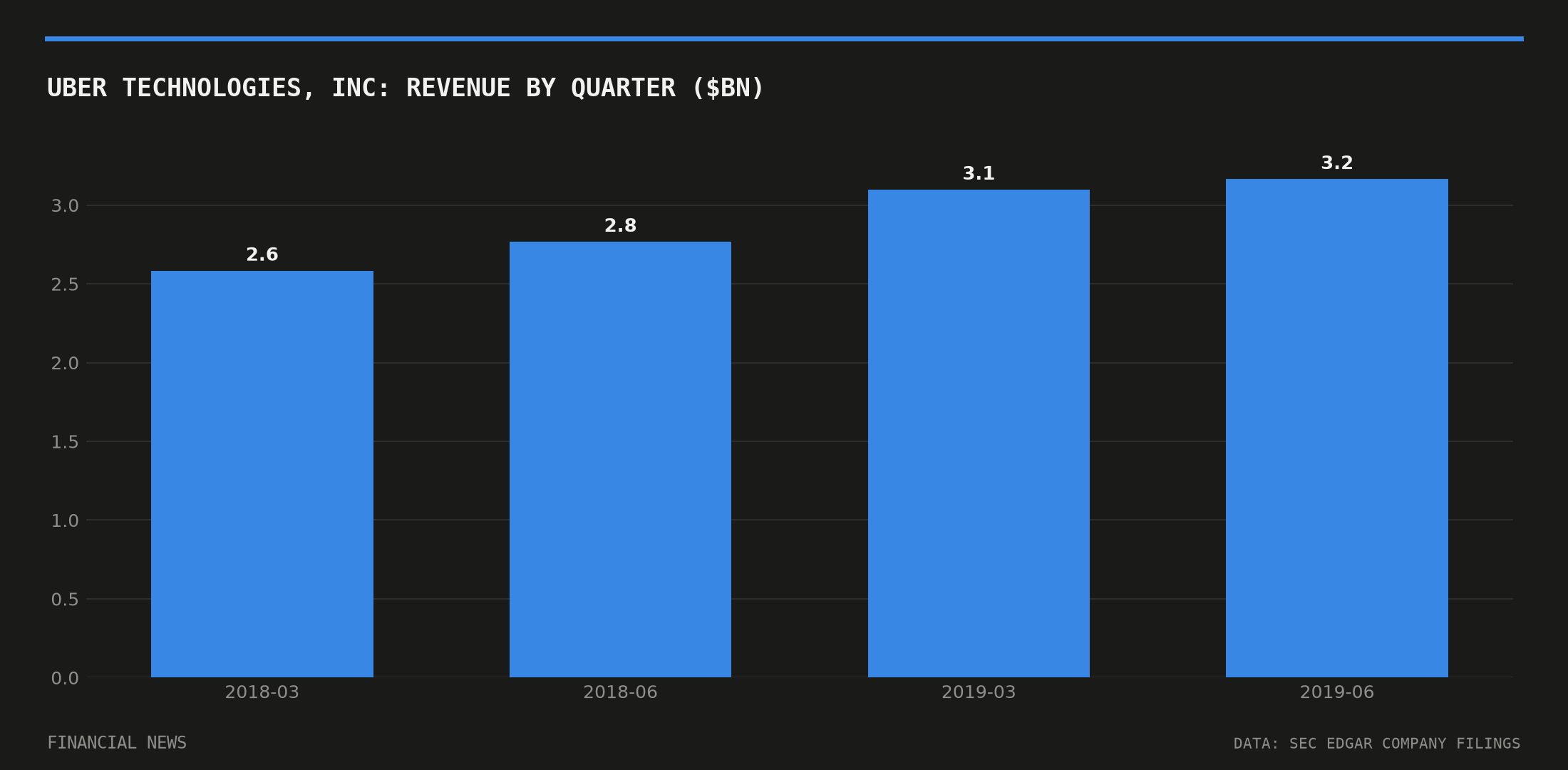
The new hire arrives as Uber’s quarterly results have swung sharply. Net income came to $263m in the first quarter of 2026, filed in a 10-Q with the SEC, before climbing to $2.39bn in the second quarter and falling back to $512m in the third quarter ended 30 September 2026, per the most recent 10-Q filing. Diluted earnings per share followed the same pattern, at $0.13, $1.17 and $0.25 across the three quarters respectively. A year earlier, Uber reported net income of $6.63bn for the third quarter of 2025 and $1.36bn for the second quarter, underscoring how much quarter-to-quarter swings have featured in its recent reporting history.
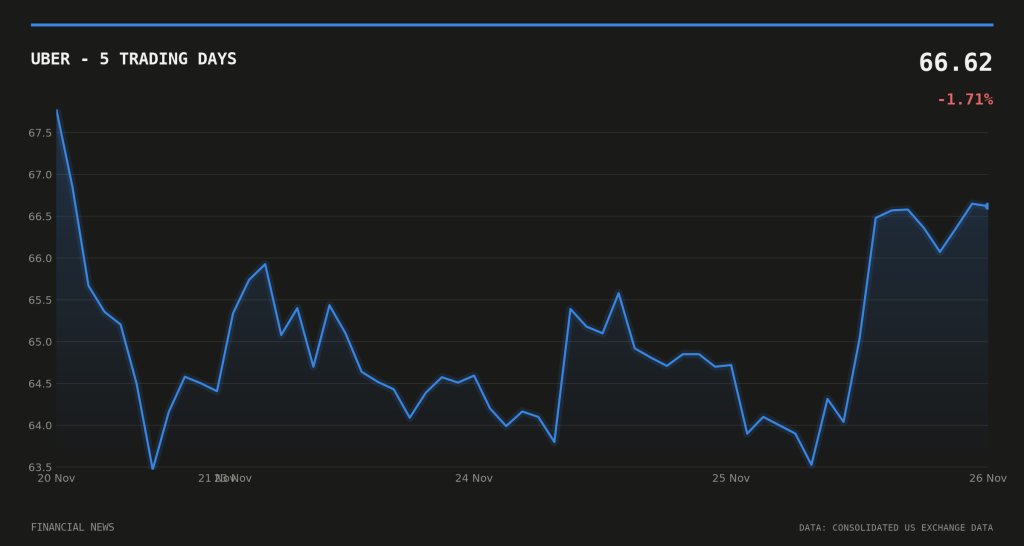
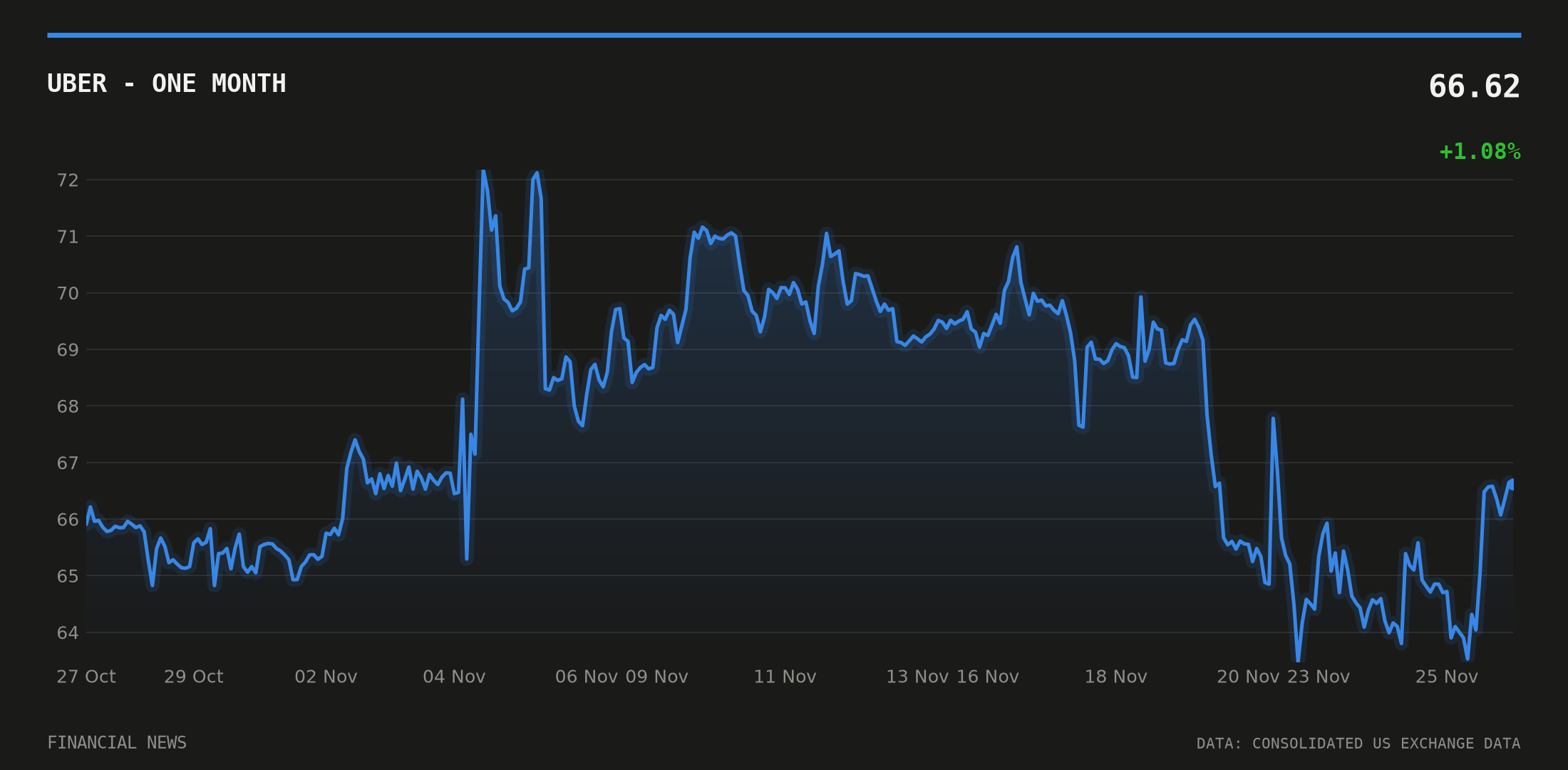
Shares closed at $66.62 on 26 November 2026, up 0.21% on the day, with trading volume running 36% above the 20-day average, according to consolidated US exchange data in the pack. The stock remains down 2.47% over the preceding 20 sessions, having traded as high as $71.16 and as low as $63.47 in that window. FINRA short-sale volume data show the daily short ratio for Uber fluctuating between 0.219 and 0.406 over the ten sessions to 25 November, with no clear directional build either side of the appointment news.
Wider market backdrop
The appointment lands against a steady US rates backdrop. The 10-year Treasury yield stood at 4.91% on 24 November 2026, barely changed from 4.92% a session earlier, while the 2-year yield held flat at 4.63%, according to data from the Federal Reserve Bank of St Louis. The 10-year/2-year spread narrowed slightly to 0.24 percentage points from 0.28, and US unemployment ticked down to 4.1% in October from 4.2% a month earlier, per the same Federal Reserve data series. None of this macro backdrop is specific to Uber, but it frames a period in which ride-hailing and delivery operators have faced a relatively stable US funding environment even as competition for executive talent in markets such as India has intensified.
Ranjan takes up the India and South Asia president role on 4 January 2027. Market participants will be watching Uber’s next quarterly filing for any update on regional strategy under the new leadership, alongside further SEC disclosures tied to the company’s broader executive roster.
This article is for information only and is not investment advice or a recommendation to buy or sell any asset. Markets move quickly; figures are correct as sourced at the time of writing. Always do your own research before making financial decisions.